
If you’re considering solar for your North Carolina home, 2026 is an important year to pay attention to.
North Carolina homeowners who install solar in 2026 will be eligible for Duke Energy’s Bridge Rate, also known as Net Metering. One of the biggest benefits is that solar energy your home produces and uses can directly offset the electricity you’d otherwise buy from Duke Energy.
Beginning January 1, 2027, the rate structure for new residential solar customers will change.
Why Consider Solar Now?
The Bridge Rate gives eligible homeowners a valuable advantage when it comes to the solar energy their system produces.
Get Full Value From the Solar Energy You Use
The Bridge Rate makes it easier to understand how the energy your solar system produces can reduce the amount of electricity you need to purchase from Duke Energy.
For example, if your home uses 1,000 kWh and your solar system produces 1,000 kWh during the month, your solar production can cover the electricity your home would otherwise purchase from Duke Energy. This gives you a clearer picture of how your solar system can lower your electricity costs.
Simple, Predictable Savings
The Bridge Rate also makes it easier to see how solar can contribute to your monthly energy savings. When your system produces electricity that your home can use, you rely less on electricity purchased from Duke Energy.
What Changes in 2027?
Beginning January 1, 2027, new residential solar customers will move to Duke Energy’s newer solar rate structure. That doesn’t mean solar stops making sense in North Carolina. It means the way your solar energy is credited will be different, so system design and energy use will become even more important.
What Do Duke Energy Customers Need to Know Right Now?
The 2027 changes will affect homeowners differently depending on whether they already have solar, are installing solar now, or are considering solar after the transition.
Already Have Solar Under Rider NM?
If you’re currently on Duke Energy’s legacy Rider NM, you can remain on that rate through December 31, 2026. After that, you’ll transition to the Bridge Rate, also known as Rider NMB, under Duke Energy’s transition plan.
Already on the Bridge Rate?
If you’re already on Rider NMB, you can remain on the Bridge Rate for your applicable eligibility period, which can last up to 15 years from your interconnection application date.
When that period ends, you’ll transition to Rider RSC or another applicable rate in place at that time.
Considering Solar Before 2027?
For homeowners considering solar in 2026, the important date is December 31, 2026. Duke Energy’s transition guidance identifies a complete interconnection application submitted before that date as the key requirement for NMB eligibility.
You don’t necessarily have to have your system installed before January 1, 2027. The interconnection application date is what matters for this eligibility.
Pro Tip: A battery isn’t required to go solar. If backup power is important to you, your solar system can be designed with battery storage in mind.
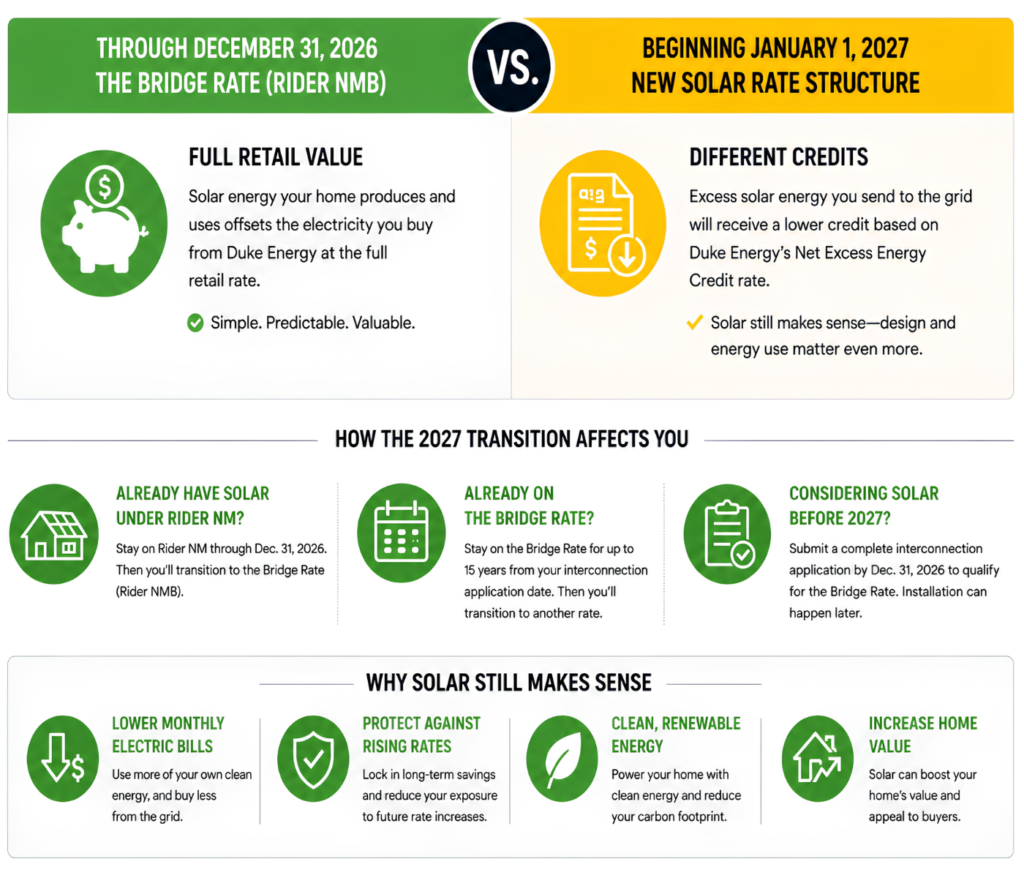
Questions North Carolina Homeowners Are Asking About the 2027 Rate Changes
What Is Changing With Duke Energy Solar Rates in 2027?
Beginning January 1, 2027, Duke Energy’s legacy Rider NM will close to new residential participation. Existing customers will transition to the Bridge Rate, while customers who have reached the end of their Bridge Rate eligibility period will transition to the rate in place at that time.
Will Duke Energy Eliminate Net Metering in 2027?
Not exactly. Duke Energy is changing how residential solar is credited, but the transition includes the Bridge Rate for eligible customers. The important difference for homeowners is which rate they’re on and when that rate applies to them.
What Is the Duke Energy Bridge Rate?
The Bridge Rate, also known as Rider NMB, is Duke Energy’s transitional net-metering structure between the legacy Rider NM and the newer solar rate structure.
For eligible homeowners, it provides an opportunity to receive the full retail value for solar energy their home produces and uses during the month.
What Happens to My Solar Panels in 2027?
Your solar panels don’t need to be replaced because of the rate change. The change is to the billing and rate structure, not the equipment on your roof.
Will My Duke Energy Bill Increase in 2027?
There’s no single answer for every homeowner. The impact will depend on your current rate, how much electricity your home uses, how much your solar system produces, and the rate structure you transition to.
What Is the Deadline to Qualify for the Bridge Rate?
The Bridge Rate is the transition rate for eligible residential solar customers. Duke Energy’s current net-metering transition information explains that customers can remain on Rider NMB for up to 15 years from the date of their interconnection request application.
8MSolar can help determine which rate structure and eligibility requirements apply to your project.
Will Solar Still Save Money After 2027?
Yes, solar can still help lower your electricity costs after 2027. The difference is that the rate structure will change, so your system design and how your home uses energy will play an even bigger role.
A properly sized system can help you use more of the electricity you generate rather than relying as heavily on electricity from the grid.
What Happens When My Bridge Rate Eligibility Ends?
When your Bridge Rate eligibility period ends, you’ll transition to Rider RSC or another rate that is in place at that time.
What Does This Mean for Your Solar Investment?
The biggest takeaway is simple: the rate you receive matters when you’re choosing and designing a solar system.
If you’re already a solar customer, knowing which rate you’re on and when your transition happens will help you understand what to expect.
If you’re considering solar in 2026, the Bridge Rate is worth understanding before the current opportunity changes.
And if you’re planning to go solar after 2027, your system should be designed around your home’s energy use and the rate structure you’ll be using.
That’s where 8MSolar can help. Our team looks at how your home actually uses energy and designs your system around those needs instead of simply recommending the biggest system possible.
Ready to Explore Solar for Your Home?
Whether you’re already a solar customer or you’re considering making the switch, 8MSolar can help you understand your options and how Duke Energy’s changes may affect your home.