
Pros and Cons of Tesla Solar Roof
Tesla’s solar tiles are among the top-tier options for integrating solar power into your home. However, expect to pay significantly more compared to traditional solar panel installations.
Pros:
- High wattage per square foot: Provides strong energy generation from a small surface area, ideal for homes with limited roof space.
- Robust warranty coverage: 25-year product, weatherization, and performance warranty — one of the best in the solar roofing market.
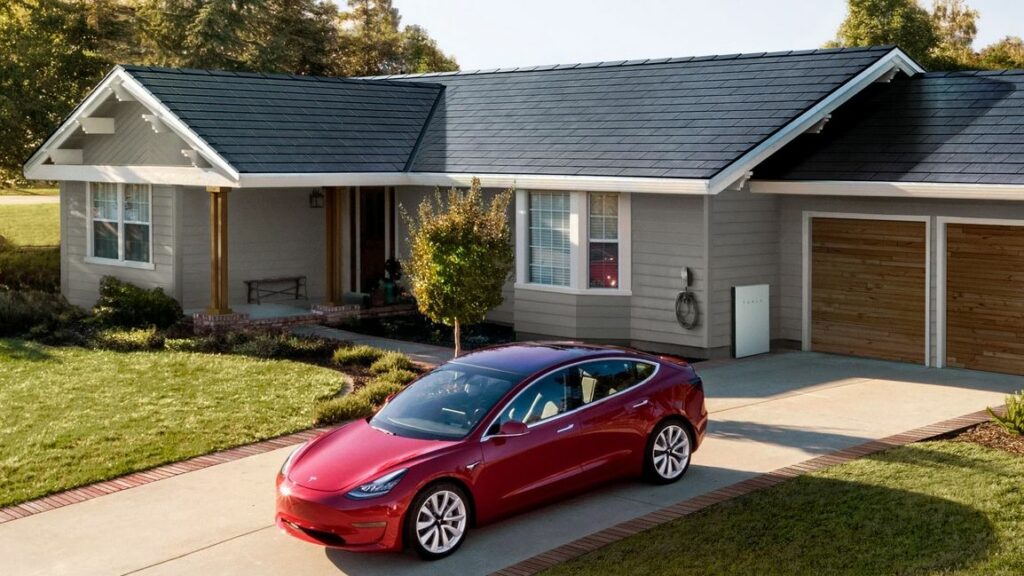
- Aesthetically pleasing design: Low-profile, seamless integration into the roofline with a sleek, modern look compared to traditional solar panels.
- Powerwall 3 integration: Pairs natively with Tesla’s latest Powerwall 3 battery for whole-home backup and optimized energy management.
Cons:
- High cost: Significantly more expensive than traditional solar panels in both materials and installation — often 3–5x the cost per watt.
- Lower wind resistance than some competitors: Rated at 110 mph — adequate for most areas but some alternatives offer higher ratings.
- Fixed positioning: Tiles are integrated into the roof at a fixed angle, unlike adjustable traditional panels that can be optimized for sun exposure.
- Customer service challenges: Some homeowners have reported delays and communication issues with installation and post-installation support.
Tesla solar tiles offer top-tier performance and a visually appealing design but come with a premium price tag and practical limitations that should be carefully weighed before committing.

Table of Contents
While Tesla is well-known for its electric vehicles, it has also become a major player in the US solar energy market with the Tesla Solar Roof. This product combines solar technology with roofing materials to create a subtle, integrated solar solution — replacing traditional shingles with photovoltaic tiles that generate electricity while maintaining the look of a conventional roof.
For homeowners who find traditional panels unsightly or are already due for a roof replacement, the Solar Roof is an attractive — albeit significantly more expensive — alternative. Unlike standard solar panels, the Solar Roof requires installation of at least one Tesla Powerwall 3 battery alongside the tiles, adding to the overall system cost and complexity.
Benefits of Choosing Tesla Solar Roof
Tesla’s Solar Roof stands out as one of the most prominent solar roofing products on the market, combining aesthetics and energy generation in a single integrated system. For homeowners who want solar without the visual footprint of traditional panel arrays, it’s one of the only mainstream options that truly disappears into the roofline.
The Solar Roof replaces your existing roofing shingles entirely with solar tiles — meaning most homes will need a full roof removal before installation. In some cases, Tesla may be able to install over a newer single-layer roof, but this is the exception rather than the rule. Tesla also requires the installation of at least one Powerwall 3 battery, which provides energy storage and whole-home backup capability.
Coverage and Specifications
| Category | Specification |
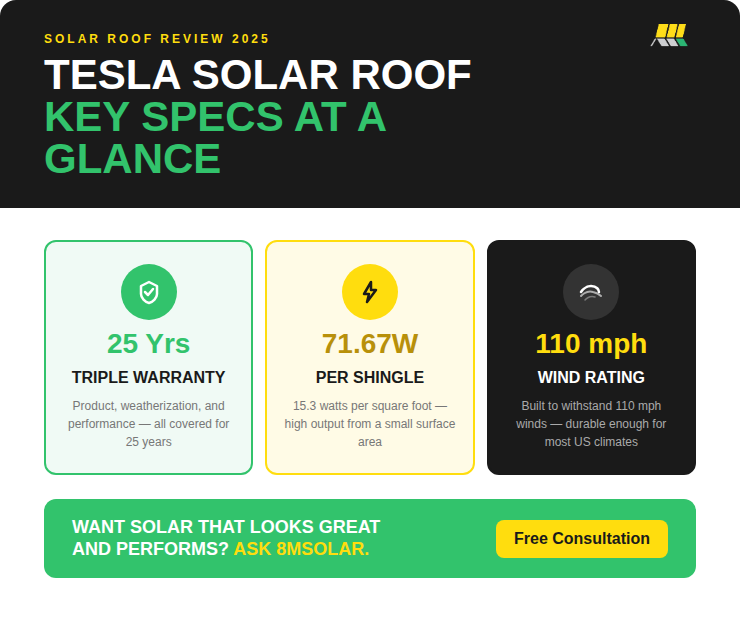
| Wattage per shingle | 71.67 W |
| Wattage per square foot | 15.3 W |
| Wind rating | 110 mph |
| Hail rating | Class 3 |
| Warranty | 25 years (product, weatherization, performance) |
Tesla’s Warranties
Tesla’s Solar Roof comes with three separate 25-year warranties — one of the most comprehensive warranty packages in the solar roofing market.
| Warranty Type | Years | What’s Covered |
| Product warranty | 25 | Manufacturing defects in design and materials |
| Weatherization warranty | 25 | Protection against wind and rain damage |
| Performance warranty | 25 | Output won’t drop below 95% in the first 5 years; maximum 0.5% annual decline thereafter |
Power Output
Each Tesla solar shingle generates 71.67 watts under optimal conditions, with a density of 15.3 watts per square foot. This makes the Solar Roof competitive with many traditional panels on an output-per-area basis — and particularly well-suited to homes with smaller roofs where maximizing generation from every square foot matters.
Durability Against Wind
The Tesla Solar Roof is rated for winds up to 110 mph. While adequate for most regions including North Carolina and Virginia, some competing solar shingle products offer higher wind ratings — up to 200 mph. If your area is prone to severe weather, this is worth comparing before making a final decision.
Powerwall 3: The Required Battery
Every Tesla Solar Roof installation requires at least one Powerwall 3 battery. The Powerwall 3 is Tesla’s latest and most capable home battery, replacing the older Powerwall 2 and Powerwall Plus models in Tesla’s current lineup. Here’s what the Powerwall 3 brings to a Solar Roof installation:
| Feature | Tesla Powerwall 3 |
| Usable capacity | 13.5 kWh |
| Continuous power output | 11.5 kW AC |
| Solar input | Up to 20 kW DC (built-in inverter) |
| Round-trip efficiency | 89% |
| Scalability | Up to 4 units per system |
| Warranty | 10 years |
The Powerwall 3 includes a built-in solar inverter — meaning fewer components and a cleaner installation overall. It delivers 11.5 kW of continuous AC power, enough to run a full home including large appliances during a grid outage. Multiple Powerwall 3 units can be stacked for additional capacity and backup duration.
Cost Overview
Cost Considerations for Tesla Solar Roof
The Tesla Solar Roof is significantly more expensive than a traditional solar panel installation. Costs vary based on roof size, complexity, and location — but the premium over standard solar is substantial. For context, Tesla once estimated a Dallas home with 12.46 kW of solar capacity and one Powerwall at approximately $168,400 for the Solar Roof, compared to roughly $26,966 for equivalent traditional panels and a Powerwall. That’s a cost premium of over $140,000 for the same energy output.
On a per-watt basis, Solar Roof installations typically run between $5.72 and $12.87 per watt depending on roof complexity and size — compared to the national average of around $2.50–$3.50 per watt for traditional solar in 2025. The 30% Federal Investment Tax Credit applies to Solar Roof installations, which can meaningfully reduce the net cost.
When the Cost Makes More Sense
The Solar Roof becomes more financially competitive in two specific scenarios: when your existing roof needs full replacement anyway (combining roofing and solar costs into one), and for smaller roofs where the per-watt cost is closer to traditional panels. If your roof is in good condition and doesn’t need replacing, traditional solar panels will almost always offer a stronger financial return.
Maintenance and Regulatory Considerations
Tesla recommends periodic professional maintenance for the Solar Roof, though specific intervals are not publicly detailed. As with any roofing system, keeping gutters clear and monitoring for debris accumulation on the tiles is advisable to maintain optimal performance.
Regulatory Scrutiny on Tesla’s Solar Practices
In December 2021, the SEC was reportedly investigating whistleblower claims regarding Tesla’s handling of solar panel replacements that posed a fire hazard — specifically, allegations that Tesla did not shut off at-risk systems or communicate transparently with customers. Tesla has discontinued its press office, so public statements on the matter are limited. Prospective Solar Roof buyers should be aware of this history and conduct their own due diligence.
How to Order the Tesla Solar Roof
Determining Tesla’s Service Coverage
To check if Tesla’s Solar Roof is available in your area, visit Tesla’s energy design tool and input your address to receive an estimate. Tesla has expanded nationally through a mix of in-house and certified third-party installers, though some areas may still have limited availability.
The Ordering Process
After creating a Tesla account, the company uses satellite imagery to generate a preliminary design and cost estimate based on your roof’s size and location. This estimate is subject to change after an in-person inspection that evaluates roof complexity, pitch, angle, and access. Once the design is finalized, Tesla handles all permitting and coordinates installation with its team of in-house and certified third-party installers.
Is the Tesla Solar Roof Worth It?
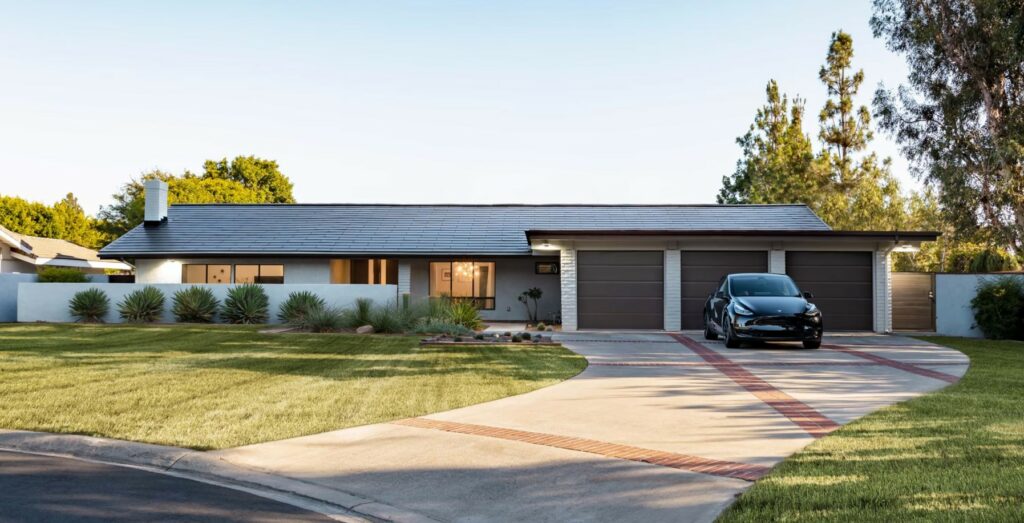
The Tesla Solar Roof is worth it for a specific type of homeowner: one who values seamless aesthetics above all else, is already replacing their roof, and is willing to pay a significant premium for a product that blends invisibly into their home’s exterior. For those homeowners, it delivers excellent performance, strong warranties, and the most integrated solar roofing experience available.
For most homeowners — particularly those whose roofs are in good condition or who are primarily motivated by financial return — traditional solar panels paired with a Powerwall 3 battery will deliver the same energy output at a fraction of the cost, with a significantly faster payback period.
Comparing Your Options
When making a major solar investment, it’s always wise to compare quotes from multiple providers — including local installers who often offer more competitive pricing than large national companies. 8MSolar is North Carolina and Virginia’s trusted local solar installer. We install both traditional solar panel systems and Tesla Powerwall batteries, and we’ll help you determine the right solution for your home, energy goals, and budget. Contact 8MSolar today for a free consultation.
Tesla Solar Roof FAQ
How durable is the Tesla Solar Roof?
Tesla’s Solar Roof carries a 25-year warranty, and the tiles are built to match or exceed the lifespan of traditional roofing materials. They’re rated Class 3 for hail and 110 mph for wind. Real-world long-term durability data is still accumulating given the product’s relative newness, but the warranty coverage provides strong protection.
Is there a risk of leaks with the Tesla Solar Roof?
Improper installation is the primary source of leak risk with any solar roofing product. Tesla backs the Solar Roof with a 25-year weatherization warranty covering wind and water damage — including potential leak-related issues from covered causes. Using Tesla’s certified installation network is essential to ensuring warranty coverage and proper waterproofing.
Does Tesla use subcontractors to install the Solar Roof?
Yes — Tesla uses a combination of in-house staff and certified third-party contractors for Solar Roof installations. These contractors are trained to Tesla’s installation standards. Availability of in-house vs. third-party installation varies by region.
Does the Tesla Solar Roof qualify for the federal tax credit?
Yes. The solar generating portion of a Tesla Solar Roof installation qualifies for the 30% Federal Investment Tax Credit (ITC) through 2032. The non-solar roofing tiles do not qualify, but the solar tiles and Powerwall battery do — potentially saving homeowners tens of thousands of dollars on a full installation.