
In recent years the adoption of solar energy has skyrocketed as homeowners look to reduce their reliance on traditional power grids and minimize their carbon footprint. One of the most significant challenges facing solar energy users is the ability to store excess energy generated during the day for use during periods of low or no sunlight. This is where solar energy storage solutions like solar batteries come into play.
Solar batteries, like the Tesla Powerwall 3, are designed to capture and store the surplus energy generated by your solar panels. This stored energy can be utilized to power your home during the night, on overcast days, or in the event of a sudden grid failure. By harnessing the power of stored solar energy, homeowners can significantly reduce their electricity expenses, especially in areas where net metering systems are unavailable or where electricity providers charge higher rates during peak usage times.
First introduced in 2015, the Tesla Powerwall has evolved through multiple generations — the current model, the Powerwall 3, is the most powerful and capable version yet. Its sleek design, impressive storage capacity, built-in solar inverter, and seamless integration with solar panel systems have made it a top choice among homeowners looking to maximize the benefits of their solar energy investment.
In this comprehensive Tesla Powerwall review, our team at 8MSolar will examine the Powerwall 3’s performance efficiency, explore its latest technological advancements, and discuss the cost considerations involved in installing one as part of your home’s solar energy system. By the end of this article, you will have a thorough understanding of the Tesla Powerwall 3 and be well-equipped to determine whether it is the right solar energy storage solution for your home.
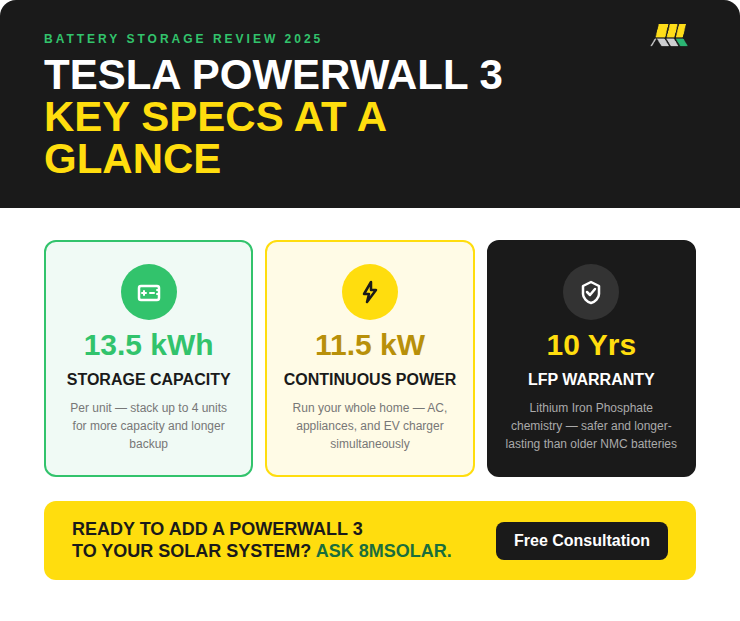
Tesla Powerwall 3 Specifications
Considerations of the Tesla Powerwall 3
- Integration with both new and pre-existing solar panel installations
- Assures 70% storage capacity retention at the closure of the 10-year warranty period
- Tesla App provides access to monitor and fine-tune the system
- Built-in solar inverter replaces need for a separate inverter — simpler, cleaner installation
- 11.5 kW continuous power output handles high-demand homes with ease
- Installation requires a Tesla Certified Installer
- Available in one size per unit — scale by adding up to 4 units
Tesla Powerwall Availability
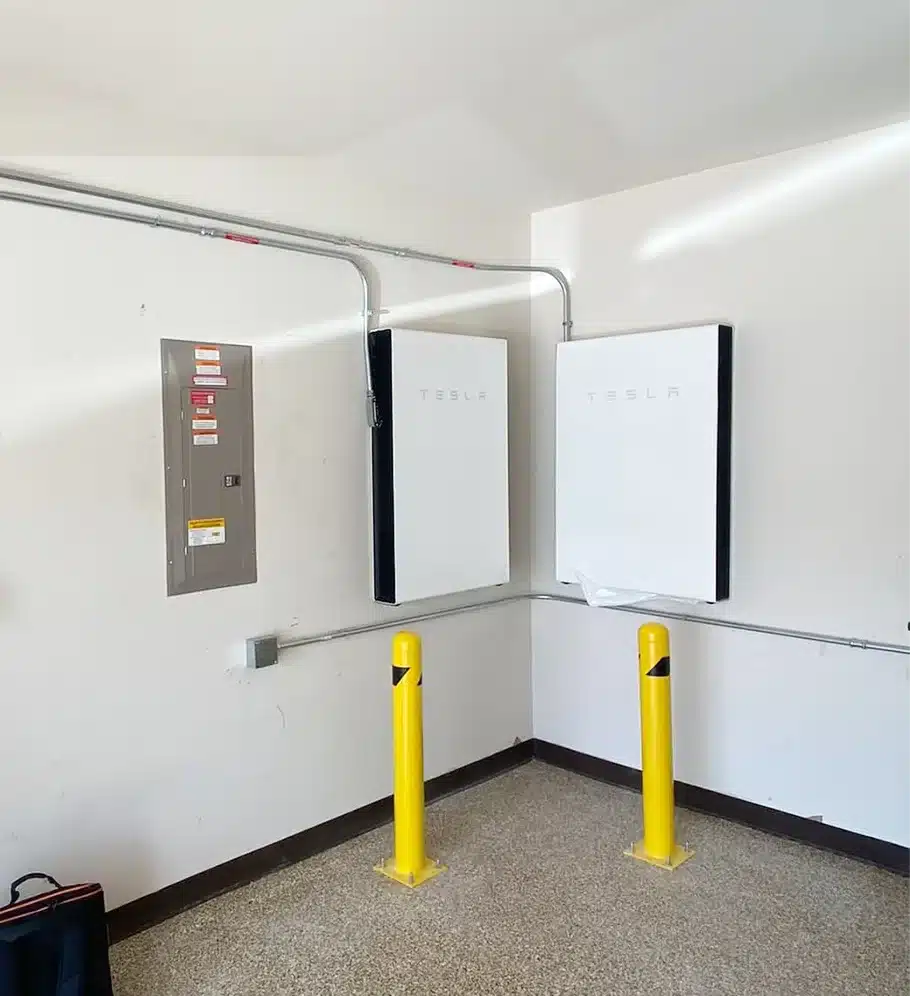
Tesla’s certified professionals, like 8MSolar, can install Powerwalls across all U.S. states except Alaska. 8MSolar provides Powerwall 3 installation in North Carolina and Virginia.
Finding and Installing a Tesla Powerwall 3 — A Step-by-Step Guide
Step 1: Find a Certified Installer
Tesla offers a user-friendly online tool that allows you to locate authorized installers in your area. By entering your location, you can access a list of certified professionals who have the expertise to properly install your Powerwall 3.
Step 2: Site Evaluation
Once you’ve selected a certified installer, a solar expert will visit your home to analyze your energy needs and existing solar panel setup. This evaluation will help determine the optimal Powerwall configuration and quantity required to meet your specific energy storage requirements.
Step 3: Order Placement
After the site evaluation, your installer will place the order on your behalf. 8MSolar handles the ordering process for our clients, streamlining the experience and ensuring seamless integration with your solar panel system.
Step 4: Installation
The installation team will mount the unit(s) at your home, install the necessary electrical equipment, and connect the Powerwall(s) to your home’s electrical system. The Powerwall 3’s built-in solar inverter simplifies installation compared to earlier models — fewer components, cleaner setup.
Step 5: Testing and Activation
After installation, the system is tested to verify proper operation, including simulated power outage scenarios to ensure your home can seamlessly transition to backup power. Once testing is complete, your Powerwall 3 system will be ready for use.
Step 6: Monitoring and Upkeep
Tesla provides ongoing monitoring and support through the Tesla App, including regular software updates that optimize performance. You can track real-time energy production, storage, and usage from anywhere via Wi-Fi, Ethernet, or cellular.
Tesla Powerwall Warranty
The Tesla Powerwall 3 comes with a 10-year product warranty covering unlimited charging and discharging cycles, with a guaranteed 70% capacity retention over the warranty period. The LFP battery chemistry used in the Powerwall 3 is known for superior longevity — many LFP batteries continue performing well beyond their warranty period, making the real-world lifespan potentially much longer than 10 years.
Tesla Powerwall Cost Structure
The Tesla Powerwall 3 typically costs between $13,000 and $16,000 installed, depending on your location, installation complexity, and whether additional electrical work is required. The 30% Federal Investment Tax Credit (ITC) — available through 2032 — applies when the Powerwall is installed alongside a solar panel system, significantly reducing your net cost. In North Carolina, the Duke Energy PowerPair program offers up to $5,400 in additional rebates for eligible customers. Tesla also offers financing options for qualified buyers.
Customer Reviews and Ratings
Rating: 4.3/5
Customers appreciate the sleek design, high power output, and cost-saving benefits of the Powerwall 3. Some report dissatisfaction with Tesla’s customer service communication — working with a certified local installer like 8MSolar helps ensure you have a reliable point of contact throughout the entire process.
Features of the Tesla Powerwall 3
The Powerwall 3 is Tesla’s most capable home battery yet. With 13.5 kWh of energy storage and 11.5 kW of continuous AC power output — nearly double the output of the older Powerwall 2 — it can handle the full energy demands of most homes, including running central air conditioning, a well pump, an EV charger, and kitchen appliances simultaneously during an outage.
The Powerwall 3’s biggest upgrade is its built-in solar inverter, which handles up to 20 kW DC of solar input. This means it can replace a standalone solar inverter entirely — simplifying the installation, reducing components, and ensuring perfect optimization between your panels and battery from day one.
Battery Chemistry
The Powerwall 3 uses Lithium Iron Phosphate (LFP) battery chemistry — a significant upgrade from the nickel manganese cobalt (NMC) chemistry used in older Powerwall models. LFP offers several key advantages:
- Superior safety: LFP is inherently more thermally stable, with a significantly lower risk of thermal runaway compared to NMC batteries.
- Longer cycle life: LFP handles more charge/discharge cycles before degrading, extending the useful lifespan of your battery well beyond the 10-year warranty.
- Cobalt-free: LFP contains no cobalt, making it a more environmentally responsible and ethically sourced chemistry.
The Powerwall 3 operates in temperatures ranging from -4°F to 122°F, making it suitable for the full range of climate conditions across North Carolina and Virginia. Up to 4 units can be connected together for homes that need additional storage or longer backup capability.
Tesla Powerwall Performance Metrics
The Powerwall 3 delivers impressive real-world performance. Its 11.5 kW continuous output handles the energy needs of even high-demand households comfortably. It features a 100% Depth of Discharge (DoD), meaning you can use the full 13.5 kWh of stored capacity without worrying about reducing the battery’s lifespan.
The Powerwall 3 offers flexible operating modes — self-consumption, time-based control, and backup-only — so you can manage your energy in the way that makes the most financial sense for your household. The Tesla App provides real-time visibility into your energy storage, solar production, and home consumption from anywhere.
What Are You Waiting For?
The Tesla Powerwall 3 is hands-down one of the best solar batteries on the market for homeowners. It comes with a higher price tag than some alternatives, but when you factor in the massive power output, LFP battery chemistry, built-in solar inverter, and proven Tesla reliability, it’s clear the Powerwall 3 delivers exceptional value over the long run.
Not only does the Powerwall 3 give you the freedom to store and use your solar energy as you please, but it also provides peace of mind. If the grid goes down, your Powerwall will keep your lights on, your fridge running, and your home comfortable. Combined with the 30% Federal ITC and North Carolina’s Duke Energy PowerPair rebate program, there’s never been a better time to add a Powerwall 3 to your solar system.
At 8MSolar, we’re here to help you navigate the world of solar energy storage. We’ve got the know-how and the equipment to guide you in making the right choice for your home. If you decide that the Tesla Powerwall 3 is the way to go and you’re in North Carolina or Virginia, give us a call. We’ll be more than happy to help you unlock the full potential of your solar power setup.