Duke Energy has proposed a rate increase that could raise residential electricity costs for North Carolina customers by approximately 18% over a multi-year period. As of this writing, the proposal is under review by the North Carolina Utilities Commission (NCUC), which has the final authority to approve, reduce, or deny the request. It is a proposal, not yet a finalized rate, and the exact impact on your bill will depend on the Commission’s decision.
Here is what North Carolina homeowners need to know right now:
- Is it real? Yes, Duke Energy has formally requested a rate increase. The widely reported figure is approximately 18% for residential customers, phased in over time rather than applied all at once.
- Has it been approved? Rate requests must be reviewed and approved by the NCUC. Check the current status before assuming the full increase is in effect, as regulators frequently modify utility rate requests.
- Why the increase? Duke Energy cites grid modernization, infrastructure upgrades, storm recovery costs, growing electricity demand, and investments in cleaner energy generation.
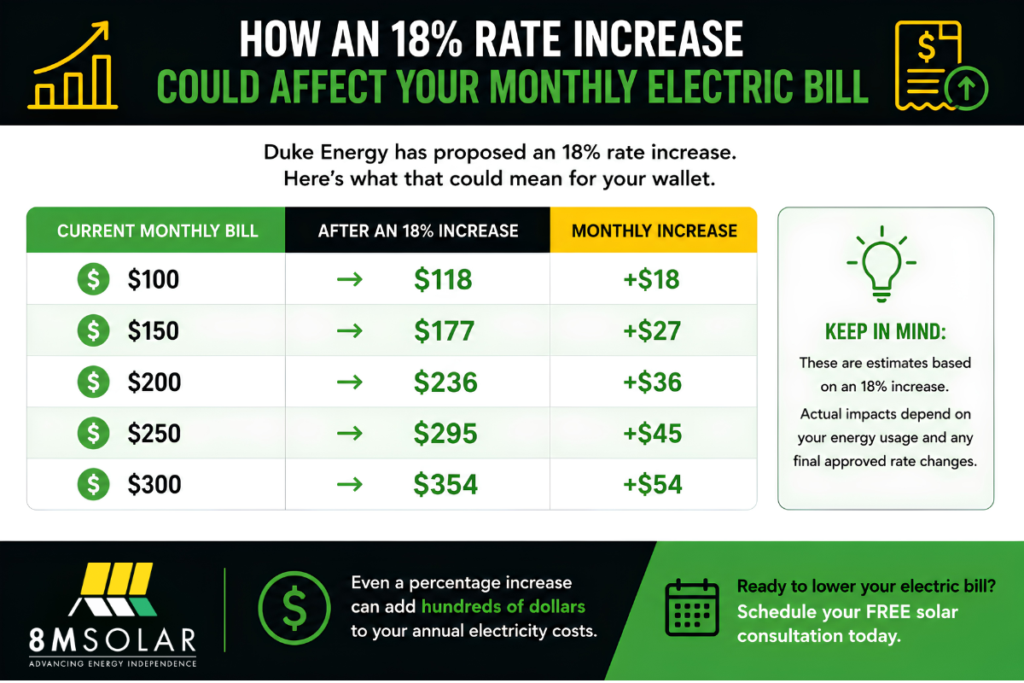
- How much could it cost you? An 18% increase would add roughly $18 to a $100 monthly bill, or about $54 to a $300 bill, which adds up to hundreds of dollars per year.
- What can you do? Homeowners can reduce the impact of rising rates through energy efficiency, smart usage habits, and by generating their own electricity with solar to buy less power from the grid.
The rest of this article breaks down what the proposal means, why electricity costs keep climbing across North Carolina, and the practical steps homeowners can take to protect their budgets from future increases.
Why Is Everyone Talking About Duke Energy’s Proposed 18% Rate Increase?
Duke Energy is the largest electric utility in North Carolina, serving millions of residential and commercial customers across the state. When it files a rate case, it affects a huge share of North Carolina households, which is why a proposed increase of this size draws significant attention.
The proposal made headlines because the figure being discussed, approximately 18% for residential customers, represents a meaningful jump for households already feeling the pressure of rising costs across the board. For a typical family, an increase of that magnitude is not a rounding error. It is a noticeable change in a recurring monthly expense.
It is important to understand the process here. In North Carolina, a utility cannot simply raise rates on its own. It must file a formal request with the North Carolina Utilities Commission, an independent regulatory body that reviews the request, holds public hearings, considers input from consumer advocates, and ultimately decides whether to approve the increase, approve a smaller increase, or deny it. Rate cases frequently result in an approved increase that is lower than what the utility originally requested.
As of this writing, the proposal remains under NCUC review, which means the final approved figure could differ from the 18% originally requested.
Key takeaway: Duke Energy has proposed the increase, but the North Carolina Utilities Commission decides the final outcome. Homeowners should stay informed about the current status and, regardless of the exact figure, recognize that electricity rates have been trending upward for years.
Why Does Duke Energy Want to Increase Rates?
Utility rate increases are rarely about a single factor. Duke Energy has cited several reasons for its proposal, and understanding them helps put the request in context. This section sticks to the stated reasons without assigning blame or taking a political position.
Grid Modernization
Much of the existing electrical grid was built decades ago and was not designed for today’s demands, including distributed solar, electric vehicle charging, and smart home technology. Duke Energy has pointed to the need to modernize grid infrastructure with smart meters, automated systems, and improved distribution technology as a driver of its rate request.
Infrastructure Improvements
Aging poles, transformers, substations, and power lines require ongoing maintenance and replacement. Utilities argue that sustained investment in physical infrastructure is necessary to maintain reliable service, and those investments are typically recovered through customer rates.
Population Growth and Increased Demand
North Carolina is one of the fastest-growing states in the country. The Charlotte and Triangle regions in particular have seen substantial population growth, which increases overall electricity demand and requires additional generation and distribution capacity to serve new customers reliably.
Storm Recovery and Grid Reliability
North Carolina experiences hurricanes, tropical storms, ice storms, and severe thunderstorms that damage electrical infrastructure. The cost of repairing storm damage and hardening the grid against future events is significant, and utilities seek to recover these costs through rates.
Investments in Cleaner Energy
Duke Energy has also cited investments in cleaner energy generation and the transition away from older generation sources as part of its long-term planning. Building new generation capacity and retiring older facilities involves substantial capital expenditure.
How Much Could an 18% Increase Affect Your Monthly Electric Bill?
The practical question most homeowners have is simple: what does this mean for my bill? The table below shows the estimated impact of an 18% increase across a range of typical monthly bills.
| Current Monthly Bill | After an 18% Increase | Additional Annual Cost |
| $100 | $118 | $216 |
| $150 | $177 | $324 |
| $200 | $236 | $432 |
| $250 | $295 | $540 |
| $300 | $354 | $648 |
These are simplified estimates that apply an 18% increase to the total bill for illustration. Actual impacts depend on your specific usage, your rate schedule, and the final increase approved by the NCUC, which may differ from the proposed figure. Rate increases are also often phased in over multiple years rather than applied all at once.
Key takeaway: Even a single-digit or moderate percentage increase can add hundreds of dollars to your annual electricity costs. Over the span of several years, compounding rate increases add up to a substantial recurring expense.
Concerned about rising electricity costs? An 8MSolar energy consultation can help you understand how a custom solar system could reduce your reliance on utility power and lower long-term energy expenses.
Why Are Electricity Costs Rising Across North Carolina?
Duke Energy’s proposal is not happening in isolation. Electricity costs have been climbing across North Carolina and the country as a whole, driven by several overlapping factors.
- Inflation: The cost of materials, equipment, and labor required to operate and maintain the electrical grid has risen significantly in recent years, and those costs flow through to rates.
- Rising fuel costs: The price of the fuels used to generate electricity fluctuates, and increases in fuel costs are typically passed on to customers through rate adjustments.
- Increased electricity demand: Population growth, electrification of transportation, and increased use of air conditioning and electric heating all push overall demand higher.
- Aging infrastructure: Much of the grid is decades old and requires costly upgrades and replacements to maintain reliability.
- Grid improvements: Investments in modern grid technology, while beneficial for reliability and efficiency, require capital that is recovered through rates.
- Long-term energy investments: The transition to new generation sources and the retirement of older facilities involves major long-term capital expenditure.
The broader point for homeowners is that electricity rates have generally trended upward over time, and there is little indication that trend will reverse. Whether or not this specific 18% proposal is approved in full, the long-term direction of utility rates has been consistently higher. That reality is what makes energy planning increasingly relevant for North Carolina households. Our guide to time-of-use electricity rates covers another way that utility rate structures are evolving in ways that affect your monthly costs.
What Can Homeowners Do to Reduce Rising Energy Costs?
While you cannot control whether Duke Energy raises its rates, you have more control over your energy costs than you might think. Here are practical steps that can help, ranging from simple habits to longer-term investments.
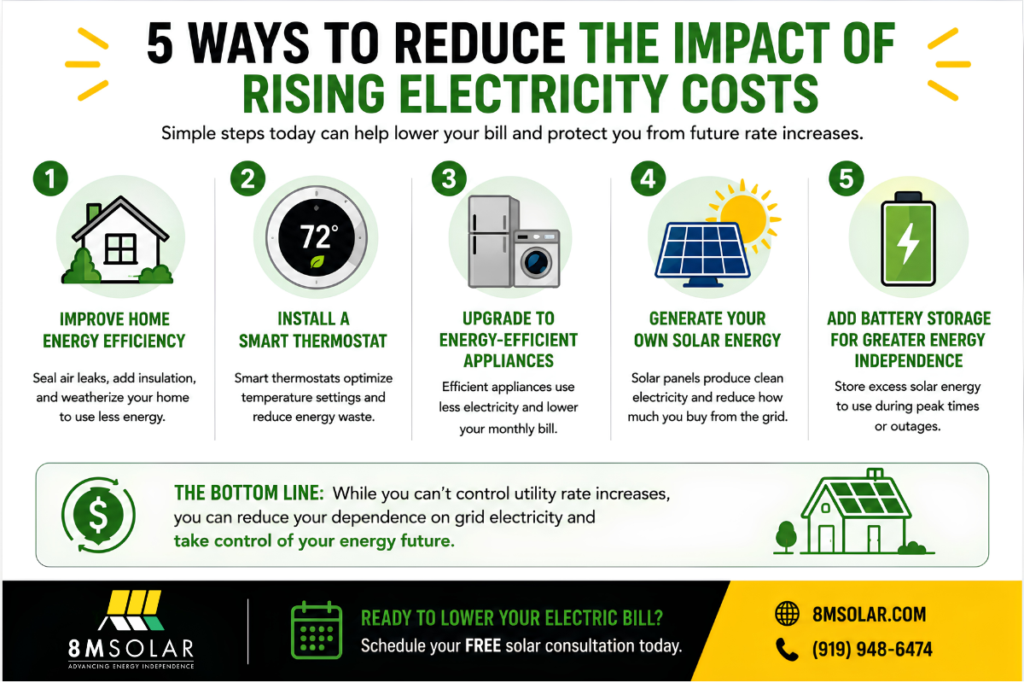
Improve Home Energy Efficiency
Sealing air leaks, adding insulation, and upgrading windows reduce the amount of energy your home wastes. A more efficient home requires less electricity to heat and cool, which directly reduces your bill regardless of what happens with rates. Energy efficiency improvements are often the most cost-effective first step.
Upgrade HVAC Equipment
Heating and cooling typically account for the largest share of a home’s electricity use in North Carolina. Older, inefficient HVAC equipment consumes significantly more power than modern high-efficiency systems. Upgrading to an efficient heat pump or air conditioner can meaningfully reduce your largest energy expense.
Install Smart Thermostats
Smart thermostats optimize heating and cooling schedules automatically, reducing energy use when you are away or asleep. They are a relatively low-cost upgrade that can produce ongoing savings by eliminating wasted conditioning of empty or sleeping spaces.
Reduce Peak Energy Usage
Shifting energy-intensive activities like laundry, dishwashing, and EV charging to off-peak hours can reduce costs, particularly for customers on time-of-use rate plans. Being mindful of when you use the most electricity becomes increasingly valuable as utilities move toward time-based pricing structures.
Explore Renewable Energy Options
Generating your own electricity through solar reduces the amount of power you buy from the utility, which directly reduces your exposure to rate increases. Solar is a longer-term investment, but it is one of the few options that fundamentally changes your relationship with utility pricing rather than just trimming around the edges.
How Solar Can Help Reduce Your Dependence on Rising Utility Rates
It is worth being precise about what solar does and does not do. Solar does not stop Duke Energy from raising its rates. No homeowner action can prevent a utility from filing rate requests. What solar does is reduce how much electricity you need to buy from the grid, which makes future rate increases less impactful on your budget.
Here is the logic. If you produce a significant portion of your own electricity, then a rate increase applies to a smaller amount of grid power. The less you buy from the utility, the less a percentage increase actually costs you in dollars. In this way, solar acts as a hedge against rising rates rather than a way to stop them.
The benefits of solar for homeowners concerned about rising rates include:
- Producing your own electricity: Every kilowatt-hour your panels generate is one you do not purchase from Duke Energy at whatever the current rate happens to be.
- Predictable long-term costs: Once your system is installed, your cost of solar production is essentially fixed, unlike utility rates that continue to change. Understanding your potential solar savings in North Carolina helps you see how this plays out over time.
- Lower monthly bills: A properly sized system can substantially reduce your monthly electricity costs, and that reduction grows more valuable each time rates increase.
- Optional battery storage: Adding battery storage lets you store solar energy for use in the evening and during outages, further reducing your reliance on the grid and providing energy independence.
The value of this hedge compounds over time. A homeowner who installed solar five years ago is watching each subsequent rate increase pass them by on the portion of their energy they generate themselves. As rates continue climbing, the savings from an owned solar system grow correspondingly larger.
Is Solar Right for Every Home?
Solar is a strong option for many North Carolina homeowners, but it is not automatically the right fit for every home. An honest assessment depends on several factors, and any reputable installer should evaluate these before recommending a system.
- Roof condition: Your roof should be in good condition with enough remaining lifespan to support a system for decades. A roof nearing replacement should typically be addressed first.
- Sun exposure: Roofs with good sun exposure and minimal shading produce more energy. Heavy shading from trees or nearby structures reduces production, though it does not always disqualify a home.
- Energy usage: Homes with higher electricity usage generally see greater savings from solar because there is more grid electricity to offset.
- Financing options: The right solar financing approach depends on your budget and goals. Options range from cash purchase to loans to lease programs, each with different implications for savings and ownership.
- Long-term homeownership plans: Solar delivers the most value over time. Homeowners who plan to stay in their home for many years capture more of the long-term savings.
A trustworthy installer will tell you honestly whether solar makes sense for your specific situation rather than promising unrealistic savings. The goal is an accurate assessment, not a hard sell.
How 8MSolar Helps North Carolina Homeowners Plan for the Future
At 8MSolar, we have spent more than 20 years helping North Carolina homeowners navigate their energy decisions. As utility rates continue to rise, our role is to help you understand your options clearly and make the choice that fits your home and budget.
Here is how we approach it:
- Customized solar designs: We design every residential solar system around your specific roof, energy usage, and goals rather than using a generic template.
- Energy usage analysis: We review your actual electricity usage to determine what size system makes sense and what savings you can realistically expect.
- Financing options: We walk you through cash purchase, loans, and lease programs, including no-money-down solar options, so you can choose the path that fits your budget.
- Battery storage solutions: We help you evaluate whether battery storage makes sense for your situation, particularly given the direction of Duke Energy’s rate structures.
- Professional installation: Our in-house team handles permitting, utility interconnection, and installation, so you do not have to coordinate multiple vendors.
- Ongoing support: Our relationship with you continues after installation. We monitor performance, address warranty questions, and remain your point of contact for the life of your system.
Understanding the Duke Energy Bridge Rate deadline and how it interacts with rising rates is one more reason to explore your options sooner rather than later. Homeowners who act before the December 31, 2026 deadline may lock in more favorable solar compensation terms, and because the solar permitting process takes time, starting early matters.
Common Questions About Duke Energy Rate Increases and Solar
Is Duke Energy increasing rates by 18%?
Duke Energy has proposed a rate increase of approximately 18% for residential customers in North Carolina. As of this writing, the proposal is under review by the North Carolina Utilities Commission, which has the authority to approve, reduce, or deny the request. Check the current status, as the final approved figure may differ from the proposal.
Has Duke Energy’s proposed rate increase been approved?
[VERIFY: Update with current status.] Rate requests must be approved by the North Carolina Utilities Commission before taking effect. The Commission reviews the request, holds hearings, and often approves an increase smaller than what was originally requested. Confirm the current status before assuming the full 18% is in effect.
Why is my Duke Energy bill so high?
Higher bills can result from a combination of factors: increased usage during extreme weather, seasonal heating or cooling demand, previously approved rate adjustments, and general upward trends in electricity costs. If your bill increased suddenly, compare your current usage to the same period last year to identify whether the change is driven by usage or rates.
How much could my monthly bill increase?
An 18% increase would add roughly $18 to a $100 bill, $36 to a $200 bill, and $54 to a $300 bill. Over a full year, that adds up to between $216 and $648 or more depending on your usage. Actual impacts depend on your specific rate schedule and the final approved increase.
Why are electricity rates increasing in North Carolina?
Rates are rising due to inflation, higher fuel costs, growing electricity demand from population growth, aging infrastructure requiring upgrades, storm recovery costs, and long-term investments in grid modernization and new generation. These pressures have driven a general upward trend in utility rates over time.
Can solar lower my electric bill?
Yes. Solar reduces the amount of electricity you buy from Duke Energy by generating your own power. A properly sized system can substantially lower your monthly bill, and the savings grow more valuable each time utility rates increase.
Does solar protect against future utility rate increases?
Solar does not prevent utilities from raising rates, but it reduces how much those increases affect you. By generating your own electricity, you buy less from the grid, so a percentage rate increase applies to a smaller amount of power and costs you less in real dollars.
Is battery storage worth adding with solar?
Battery storage adds value by letting you store solar energy for evening use and providing backup power during outages. It is especially valuable for homeowners on time-of-use rate plans and those seeking greater energy independence. Modern batteries like the Tesla Powerwall 3 offer whole-home backup and time-based control. Whether it makes financial sense depends on your usage patterns and rate structure.
Take Control of Your Long-Term Energy Costs
Utility rates may continue to change, but your energy strategy does not have to be at their mercy. By generating more of your own electricity, you can reduce your dependence on the grid and gain greater control over your long-term energy costs. Whether Duke Energy’s 18% proposal is approved in full, reduced, or denied, the broader trend of rising electricity rates makes energy planning increasingly worthwhile for North Carolina homeowners.
Contact 8MSolar today to schedule a free solar consultation and explore whether solar is the right fit for your home. Our team will review your energy usage, evaluate your roof, and give you an honest assessment of what solar could do for your budget, no pressure and no unrealistic promises.