Electrify the Triangle is being launched by the same team behind previous Solarize campaigns in the region. The model is familiar: bring homeowners together, aggregate that demand, and connect them with participating solar contractors.
On the surface, that can sound like a straightforward way to make going solar easier. But homeowners should ask another question before signing up:
Is the price you’re being offered actually the best price available?
What Is Electrify the Triangle?
Electrify the Triangle is a new community-focused program launching October 9 to help Triangle-area homeowners explore solar and other home electrification options. The program follows a model similar to previous Solarize campaigns in North Carolina. By bringing a group of homeowners together, these programs create an aggregated customer base for participating contractors.
For homeowners, the appeal is easy to understand. Instead of starting from scratch, a community program can introduce you to solar providers and create a structured path toward getting a system.
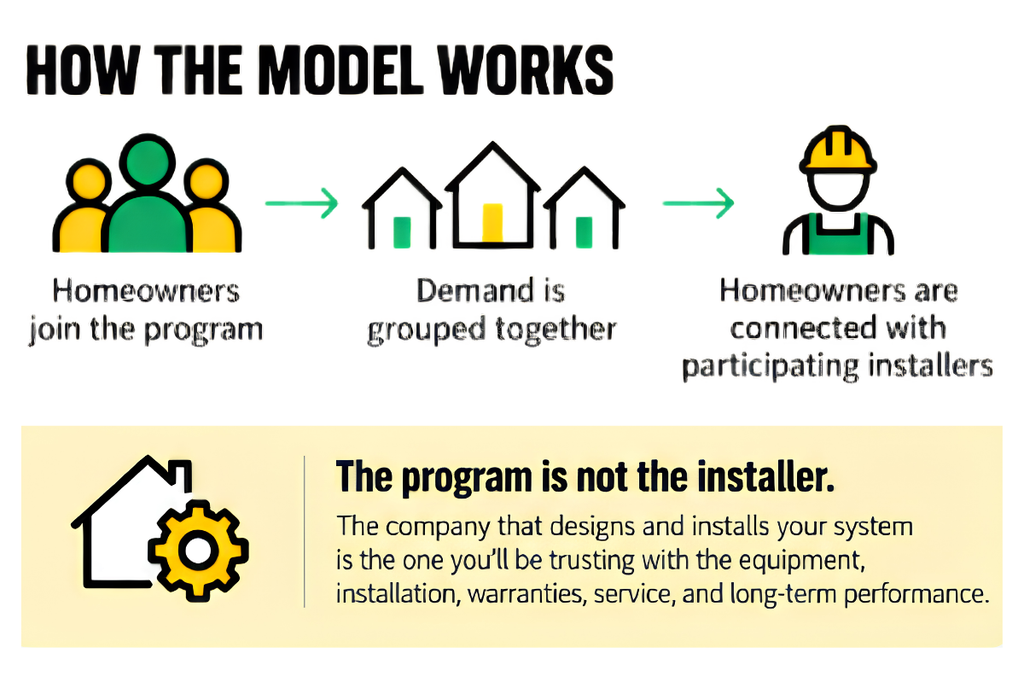
But there is an important distinction:
The program is not the installer.
The company ultimately designing and installing your system is the company you’ll be trusting with the equipment, installation, warranties, service, and long-term performance of your system.
And there’s another factor homeowners should compare carefully: price.
The Question Homeowners Should Be Asking About Price
Community solar programs can establish pricing structures or thresholds for participating contractors. That doesn’t automatically mean those prices are the lowest a homeowner could find.
8MSolar has historical pricing data from previous Solarize campaigns. When that information is compared with pricing available to homeowners outside the program, there can be a meaningful difference.
To give homeowners a clearer picture, we’re putting that historical program pricing side by side with publicly available data and comparable market pricing.
Solarize Charlotte
Program period: June 25, 2025 through April 15, 2026
Pricing comparison: November 2025, the final month of enrollment
Solarize program pricing: $1.95/W
8MSolar solar-only pricing: $1.80/W
Difference: $0.15/W
Estimated difference on a 10 kW system: $1,500
Solarize the Triangle
Program period: August 2022 through December 31, 2023
Pricing comparison: December 2023
Solarize program pricing: $2.65/W
8MSolar solar-only pricing: $2.30/W
Difference: $0.35/W
Estimated difference on a 10 kW system: $3,500
Solarize the Triad
Program period: July 23, 2024 through December 15, 2024
Pricing comparison: March 2025
Solarize program pricing: $2.30/W
8MSolar solar-only pricing: $2.10/W
Difference: $0.20/W
Estimated difference on a 10 kW system: $2,000
The point isn’t to tell homeowners what decision to make. It’s to give them enough information to compare the numbers for themselves.
A Community Program Doesn’t Mean You Should Stop Shopping Around
A community program can make it easier to find a solar provider, but homeowners should still compare their options.
Ask what the same or comparable system would cost outside of the program. Compare the price per watt, equipment, financing terms, warranties, and service. And make sure you’re comparing systems with similar specifications.
A community program may make it easier to find a contractor. It shouldn’t make you stop shopping.
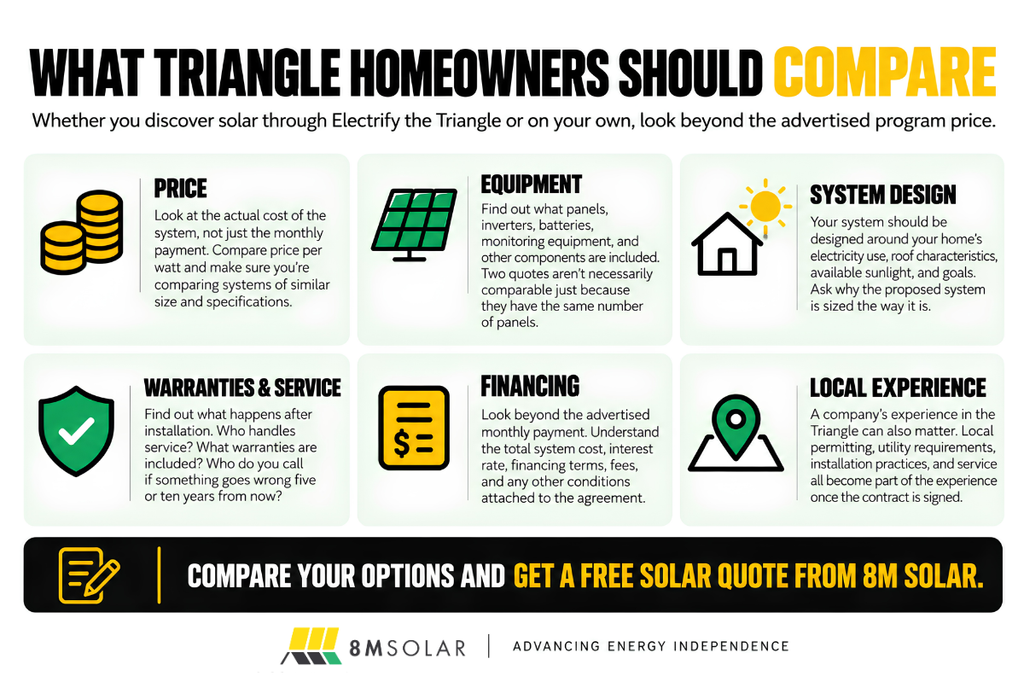
What Should Triangle Homeowners Compare?
Whether you discover solar through Electrify the Triangle, another community program, or your own research, don’t stop at the advertised program price.
Price
Look at the actual cost of the system, not just the monthly payment. Compare price per watt and make sure you’re comparing systems of similar size and specifications.
Equipment
Find out what panels, inverters, batteries, monitoring equipment, and other components are included. Two quotes aren’t necessarily comparable just because they have the same number of panels.
System Design
Your system should be designed around your home’s electricity use, roof characteristics, available sunlight, and goals. Ask why the proposed system is sized the way it is.
Warranties and Service
Find out what happens after installation. Who handles service? What warranties are included? Who do you call if something goes wrong five or ten years from now?
Financing
Look beyond the advertised monthly payment. Understand the total system cost, interest rate, financing terms, fees, and any other conditions attached to the agreement.
Local Experience
A company’s experience in the Triangle can also matter. Local permitting, utility requirements, installation practices, and service all become part of the experience once the contract is signed.
Considering Solar in the Triangle?
If you’re exploring solar through Electrify the Triangle or simply researching your options, compare quotes from reputable local installers before making a decision. The right choice depends on the system, price, financing, equipment, warranties, and service you’re being offered.
Request a Solar Consultation / Get Your Free Solar Quote From 8M Solar