Remember when solar panels were those clunky blue rectangles that screamed “I care about the environment!” from every rooftop? Those days are gone. Today’s solar technology bears little resemblance to the systems installed even five years ago. Modern panels are sleeker, smarter, and more powerful. They blend into your home’s architecture while generating more electricity than ever before.
If you’re considering solar for your home, you’re entering the market at the perfect time. The convergence of breakthrough materials science, artificial intelligence, and supportive policy has created a solar renaissance. Panel efficiency has soared. Battery technology has matured. Smart energy management systems can predict your needs before you do. The result is solar installations that deliver more value, better performance, and better aesthetics than anyone thought possible a decade ago.
This guide will walk you through seven transformative trends reshaping residential solar in 2025 and beyond. These are technologies you can install on your roof today, and understanding them will help you make smarter decisions about your home’s energy future.
Table of Contents
- Trend 1: Next-Generation Solar Cells Are the New Standard
- Trend 2: Panel Design Focuses on Power and Aesthetics
- Trend 3: Energy Storage Gets Smarter and More Versatile
- Trend 4: AI-Powered Home Energy Management
- Trend 5: Policy and Manufacturing are Reshaping the Industry
- What Do These Solar Trends Mean For You?
- Frequently Asked Questions
- Harness the Latest Solar Technology with 8MSolar
Trend 1: Next-Generation Solar Cells Are the New Standard
The solar cell is the beating heart of every panel, converting sunlight into usable electricity. For years, the industry standard was PERC (Passivated Emitter and Rear Cell) technology. While PERC created an advancement over older designs, it has efficiency limitations that engineers couldn’t overcome.
TOPCon Overtakes PERC as the Dominant Technology
Today, TOPCon (Tunnel Oxide Passivated Contact) cells have emerged as the new mainstream standard. If you’re shopping for solar panels in 2025, there’s a strong chance your installer will recommend TOPCon-based systems, and for good reason.
TOPCon cells achieve higher efficiency ratings by using an ultra-thin layer of silicon oxide that reduces electron recombination. In practical terms, this means TOPCon panels convert more sunlight into electricity than their PERC predecessors. Many TOPCon panels exceed 22% efficiency, with premium models approaching 23%. That might not sound dramatic, but it translates to generating more power from the same roof space.
The benefits go beyond efficiency. TOPCon panels perform better in high temperatures, an advantage in hot climates where panels lose efficiency as they heat up. They also experience less degradation over time, meaning your panels will maintain their power output longer into their 25-year warranty period and beyond.
For homeowners, this translates to more electricity production, better long-term value, and the ability to meet your energy needs with fewer panels. If you have limited roof space or want to maximize your system’s output, TOPCon technology makes that possible.
The Game-Changing Potential of Perovskites
While TOPCon dominates today’s market, researchers are already developing the next revolution in solar technology. Perovskite solar cells are one of the most exciting frontiers in renewable energy.
Perovskites are a class of materials that can be manufactured at lower temperatures and costs than traditional silicon cells. Laboratory tests have achieved efficiency ratings approaching 30%, and tandem cells that stack perovskite layers with silicon show even more promise. These cells can be produced in flexible, lightweight formats, opening possibilities for solar applications beyond traditional rooftop installations.
Commercial viability remains a few years away as researchers work to improve the long-term stability of perovskite cells. However, the rapid pace of development suggests that perovskite technology could become mainstream within the next five to ten years, offering another leap forward in solar performance and affordability.
Trend 2: Panel Design Focuses on Power and Aesthetics
Solar technology isn’t just about what’s inside the panel. How panels are designed and how they look on your roof matters enormously to homeowners. The industry has responded with innovations that boost performance while improving aesthetics.
Bifacial Panels: Capturing Sunlight From Both Sides
Traditional solar panels only capture sunlight from their front surface. Bifacial panels, as the name suggests, can generate electricity from both sides. The rear side of a bifacial panel captures sunlight reflected from the surface below it, whether that’s a light-colored roof, concrete, or the ground.
This reflected light phenomenon, called albedo, can boost energy production by 5% to 15% depending on the installation conditions. Bifacial panels are especially effective for ground-mounted systems, solar carports, and pergolas where both sides of the panel are exposed to light.
For homeowners with ample property space who are considering ground mounts or those adding solar structures like carports, bifacial panels offer a compelling way to maximize energy generation. The additional output can help offset the higher upfront cost, leading to faster payback periods and greater long-term savings.
All-Black Panels and Integrated Roofing
Many homeowners hesitate to install solar because they worry about how panels will look on their roof. The industry has heard this concern loud and clear.
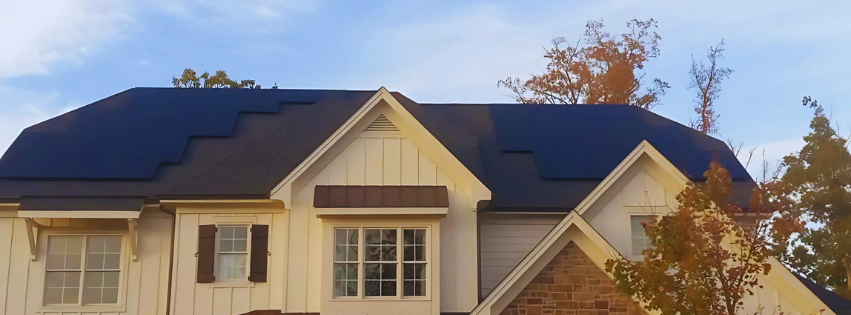
All-black solar panels have surged in popularity over the past few years. These panels feature black frames, black backsheets, and black cells, creating a uniform, sleek appearance that blends seamlessly with many roof colors. While all-black panels may sacrifice a fraction of a percentage point in efficiency compared to traditional panels with white backsheets, most homeowners find the aesthetic upgrade well worth the minor tradeoff.
For those planning a roof replacement or building a new home, solar shingles represent the ultimate in integrated design. Products like the Tesla Solar Roof replace traditional roofing materials entirely, creating a roof that generates electricity while looking like a conventional high-end roof. Solar shingles come with premium pricing and slightly lower efficiency than traditional panels, but they eliminate any aesthetic concerns.
The takeaway is that you no longer need to choose between performance and appearance. Modern solar systems can be powerful and beautiful.
Trend 3: Energy Storage Gets Smarter and More Versatile
Solar panels only generate electricity when the sun shines. For years, that meant most homeowners remained dependent on the grid for nighttime power. The explosion in home battery technology has changed everything.
Battery attachment rates for new solar installations have skyrocketed in regions with frequent power outages, time-of-use electricity rates, or attractive incentive programs. The batteries themselves have evolved rapidly, becoming safer, longer-lasting, and more capable.
LFP Becomes the Standard for Home Batteries
Battery chemistry might sound like a technical detail, but it has enormous practical implications for safety and sustainability. For years, most home batteries used NMC (Nickel Manganese Cobalt) chemistry, the same chemistry found in many electric vehicle batteries.
Today, the industry is shifting toward LFP (Lithium Iron Phosphate) batteries. LFP chemistry offers several advantages over NMC. First, LFP batteries are safer, with a reduced risk of thermal runaway, the phenomenon that can cause lithium batteries to overheat or catch fire. Second, LFP batteries can handle more charge and discharge cycles over their lifetime, lasting 6,000 cycles or more compared to 3,000 to 4,000 for NMC batteries.
LFP batteries are also cobalt-free, addressing concerns about cobalt mining practices and making them more environmentally friendly. Major manufacturers, including Tesla with the Powerwall 3, have transitioned to LFP chemistry for their home battery products.
For homeowners, this means home batteries are safer, last longer, and align better with sustainability values. It’s a win across the board.
Your EV is Now a Home Battery
Here’s a trend that still sounds like science fiction but is becoming mainstream reality. Many new electric vehicles can now power your home during an outage or periods of high electricity prices. This capability, called Vehicle-to-Grid (V2G) or Vehicle-to-Home (V2H), requires a bidirectional charger that can both charge your EV and draw power from it to supply your home.
A typical electric vehicle has a battery capacity of 60 to 100 kilowatt-hours, roughly four to seven times larger than most home batteries. Your EV becomes a massive battery on wheels. During a power outage, your vehicle could power essential loads in your home for days. During peak electricity rate periods, you could draw from your EV instead of paying premium grid prices.
V2G technology is gaining traction quickly. Ford’s F-150 Lightning was an early adopter, and many new EV models from major manufacturers now include bidirectional charging capability. As the technology becomes standard, the line between your home’s energy system and your vehicle’s energy system will blur.
Trend 4: AI-Powered Home Energy Management
Modern solar installations are no longer just hardware. They’re intelligent systems powered by sophisticated software and artificial intelligence. Your solar system can predict, optimize, and adapt to your energy needs in ways that were impossible just a few years ago.
Advanced home energy management systems use AI and machine learning algorithms to make real-time decisions about energy use. They learn your household patterns, monitor weather forecasts, track electricity rates, and optimize when to charge your battery, when to draw from it, and when to export power to the grid.
For example, if your utility offers time-of-use rates, your system can automatically charge your battery when electricity is cheap and discharge it during expensive peak hours, maximizing your savings without any action on your part. If a severe weather event is forecast, your system can pre-charge your battery to full capacity, ensuring you have backup power if the grid goes down.
Some systems can even communicate with smart appliances, shifting energy-intensive tasks like running your dishwasher or charging your EV to times when solar production is high or grid rates are low. The result is a home that manages its own energy intelligently, working to reduce your costs and increase your energy independence.
This technology is available today through leading solar and battery manufacturers. The level of optimization and automation would have seemed impossible a decade ago.
Trend 5: Policy and Manufacturing are Reshaping the Industry
While technology innovations grab headlines, policy developments and manufacturing trends are equally important for homeowners considering solar.
Virtual Power Plants Are Gaining Ground
Here’s an emerging opportunity that could put money back in your pocket. Virtual Power Plants (VPPs) aggregate thousands of home batteries into a coordinated network that can support the grid during periods of peak demand.
If you opt into a VPP program, your utility or a third-party aggregator can draw a small amount of power from your home battery during critical periods, usually for just an hour or two. In exchange, you receive compensation, in the form of bill credits or direct payments.
VPP programs are expanding quickly across the country. They provide grid operators with flexible, distributed resources to manage peak demand without building expensive new power plants. For homeowners, they represent a new revenue stream from your solar and battery investment.
What Do These Solar Trends Mean For You?
These technological and policy trends translate into concrete benefits for homeowners making the switch to solar today.
More Power, Less Space: Higher efficiency panels mean you can meet your household’s energy needs with fewer panels on your roof. If you have limited roof space or architectural constraints, today’s technology makes solar viable where it might not have been before.
Better ROI: Panels that produce more power for longer, combined with smart batteries that maximize your savings, create shorter payback periods and greater long-term returns on your investment. Modern systems pay for themselves years faster than older technology.
Enhanced Resilience: Advanced battery technology and emerging V2G capabilities mean your home can maintain power through grid outages. For families in areas with unreliable power or frequent severe weather, this peace of mind is invaluable.
Frequently Asked Questions
Should I wait for the “next big thing” in solar technology?
No. While technology will always continue improving, today’s TOPCon panels and LFP batteries represent mature, proven, and highly advanced technology. The energy savings you’ll accumulate by installing solar today will almost always outweigh any marginal improvements from waiting a year or two for the next incremental advance. The best time to install solar was yesterday. The second-best time is today.
What is the most efficient solar panel I can buy today?
As of late 2025, the most efficient residential solar panels available on the market achieve efficiency ratings in the 22% to 23% range. These premium panels convert nearly a quarter of the sunlight hitting them into usable electricity. For most homeowners, the sweet spot is panels in the 21% to 22% efficiency range, which offer excellent performance at a more accessible price point.
Can my electric car really power my house?
Yes, if you have a compatible electric vehicle with bidirectional charging capability and install the proper home charging equipment. Many new EV models from major manufacturers now support this feature. The technology is proven and becoming increasingly common. Your EV can serve as a backup battery during outages or help you avoid peak electricity rates.
Are solar shingles better than regular solar panels?
It depends on your priorities. Solar shingles offer superior aesthetics, creating a roof that looks like a conventional high-end roof rather than having panels mounted on top. However, they come with higher costs and lower efficiency than traditional panels. Solar shingles make the most sense for homeowners who need a new roof anyway and place a premium value on appearance.
Harness the Latest Solar Technology with 8MSolar
The future of solar energy is here. The combination of ultra-efficient panels, intelligent battery systems, and powerful AI-driven energy management makes 2025 the best time in history to invest in home solar. Today’s systems deliver more power and superior value than ever before.
Technology will continue advancing, but waiting means sacrificing real savings and energy independence. Every month you delay is another month of high electricity bills and continued dependence on the grid. The systems available today are sophisticated, proven, and backed by comprehensive warranties.
Don’t settle for outdated technology or miss out on the current incentives. Contact 8MSolar for a free consultation and discover how the latest high-efficiency solar panels and smart battery solutions can transform your home’s energy future. Our team of experienced professionals will design a system tailored to your specific needs, ensuring you harness the potential of modern solar technology. Take the first step toward energy independence today.