A solar interconnection agreement is the formal approval required by your electric utility before your solar energy system can be legally connected to and operate on the electrical grid. It is separate from your county building permit, and it is required for nearly every grid-connected solar installation in North Carolina, including residential, commercial, and battery storage systems.
Most homeowners never have to fill out this paperwork themselves. An experienced installer like 8MSolar prepares and submits the interconnection application, communicates with the utility throughout the review, and coordinates the final approval, known as Permission to Operate, before your system is turned on. This guide explains what interconnection actually involves, why it exists, how long it typically takes, and what to expect during the process.
Solar Interconnection Agreement
An interconnection agreement is a contract between you and your utility, in most North Carolina cases Duke Energy, that authorizes your solar system to connect to the public electrical grid. The agreement confirms that your system meets the utility’s technical and safety standards and establishes the terms under which your system can send and receive electricity through the grid. This is a separate consideration from homeowners insurance coverage for your system, which protects against a different category of risk entirely.
Every solar system that connects to the grid, whether on a home, a business, or a farm, requires this approval before it can legally begin operating. A system can be fully installed and physically complete, but it cannot be turned on until interconnection is approved. This is one of the most misunderstood steps in the solar process, and understanding it upfront helps set realistic expectations for your project timeline.
Quick answers to the most common questions homeowners have about interconnection:
- Why is it required? To protect the grid, utility workers, and your own equipment, and to confirm your system meets code and engineering standards.
- Who submits it? Your solar installer, in nearly all cases, on your behalf.
- How long does it take? Typically 2 to 6 weeks, depending on your utility’s current workload and your project’s complexity.
- Can you use your system before approval? No. Operating a grid-connected solar system before receiving Permission to Operate is not permitted and can create safety risks.
Why Is a Solar Interconnection Agreement Required?
Protects Utility Workers
One of the most important safety functions of interconnection approval is confirming that your system includes proper anti-islanding protection. This means your solar system is engineered to automatically and mechanically disconnect from the grid the moment a power outage is detected. Without this protection, a solar system could continue feeding electricity backward into grid lines that utility crews believe are de-energized and safe to work on, creating a serious hazard. Interconnection review confirms this protection is properly installed and functioning before your system is approved to operate.
Keeps the Electrical Grid Safe
Utilities need to understand how much solar generation capacity exists on their grid and where it is located. This information helps them manage grid stability, voltage regulation, and overall system reliability as more homes and businesses add solar. Interconnection review ensures your system’s output is compatible with the local grid infrastructure in your specific area.
Confirms Code Compliance
The utility’s interconnection review verifies that your system meets relevant electrical codes and engineering standards, including proper equipment ratings, correct wiring configurations, and appropriate disconnect switches. This is a separate review from your county’s electrical permit inspection, though both are evaluating related aspects of your installation.
Allows Excess Solar Energy to Flow to the Grid
Interconnection approval also establishes how your system interacts with utility billing programs like net metering or Duke Energy’s Bridge Rate and Residential Solar Choice programs. The interconnection agreement defines the technical terms under which excess solar energy your system produces can be exported to the grid and credited to your account under whichever billing program you are enrolled in.
How Does the Solar Interconnection Process Work?
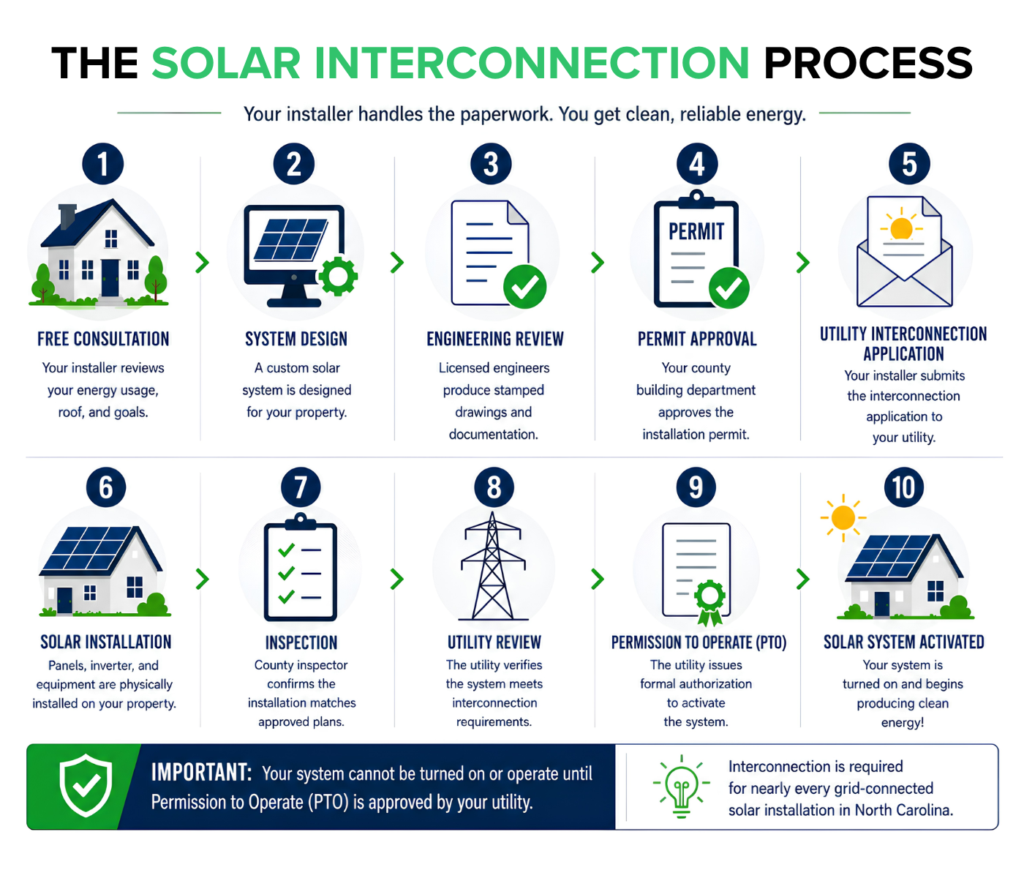
Here is how interconnection fits into the broader solar installation timeline:
| Step | What Happens |
| 1. Free consultation | Your installer reviews your energy usage, roof, and goals |
| 2. System design | A custom solar system is designed for your property |
| 3. Engineering review | Licensed engineers produce stamped drawings and documentation |
| 4. Permit approval | Your county building department approves the installation permit |
| 5. Utility interconnection application | Your installer submits the interconnection application to Duke Energy |
| 6. Solar installation | Panels, inverter, and equipment are physically installed |
| 7. Inspection | County inspector confirms the installation matches approved plans |
| 8. Utility review | The utility verifies the system meets interconnection requirements |
| 9. Permission to Operate (PTO) | The utility issues formal authorization to activate the system |
| 10. Solar system activated | Your system is turned on and begins producing energy |
Notice that the interconnection application is typically submitted early, often in parallel with the county permitting process, while final utility approval and PTO come after installation and inspection are complete. This is why interconnection has two distinct touchpoints in the timeline: the initial application and the final approval. You can read more about how the county side of this process works in our guide to solar permitting timelines in NC.
Who Completes the Interconnection Agreement?
In nearly all residential and commercial solar projects, the installer completes and submits the interconnection agreement on the customer’s behalf. Homeowners are rarely, if ever, expected to handle this paperwork themselves, and for good reason: the application requires specific technical documentation, including engineering specifications, equipment data sheets, and electrical diagrams, that most homeowners are not equipped to produce.
At 8MSolar, this means our team handles:
- Preparing all required utility paperwork and technical documentation
- Submitting engineering documents that meet Duke Energy’s interconnection standards
- Completing and filing the interconnection application itself
- Communicating directly with the utility throughout the review process
- Scheduling any required inspections tied to interconnection approval
Your role as the homeowner is largely limited to providing your utility account information and being available if the utility or your installer needs to confirm details. The heavy lifting happens behind the scenes.
How Long Does Solar Interconnection Take?
Most interconnection applications in North Carolina are processed within 2 to 6 weeks, though this can vary based on several factors.
Utility Workload
Duke Energy’s interconnection review timelines fluctuate based on how many applications are in their queue at a given time. Periods of high solar adoption can extend review times across the board, independent of how well-prepared your specific application is.
Inspection Scheduling
Both county inspections and any utility-required inspections need to be scheduled, and availability varies by location and time of year. Coordinating these efficiently is part of what an experienced installer manages on your behalf.
Engineering Review
If your system design includes unusual configurations, such as a large battery storage addition or a complex commercial installation, the engineering review on the utility side may take longer than a standard residential system. Submitting complete, accurate engineering documentation from the start reduces the likelihood of delays caused by clarification requests.
Local Utility Requirements
While Duke Energy serves the majority of North Carolina, other utility providers and municipal electric systems may have different interconnection requirements and timelines. Your installer should be familiar with the specific requirements of your utility provider.
What Is Permission to Operate (PTO)?
Permission to Operate, often abbreviated as PTO, is the formal authorization from your utility confirming that your solar system has passed all required reviews and is approved to begin operating on the grid. PTO is the final step in the interconnection process and the point at which your system can legally be turned on.
It is important to understand that installation completion and system activation are two different milestones. Your solar panels can be fully installed, wired, and physically ready to produce energy, but until PTO is issued, the system must remain off. Turning on a grid-connected solar system before receiving PTO is not permitted under utility interconnection rules and can create safety and liability issues.
Once PTO is received, your installer will activate your system, and it will begin producing energy immediately. From that point forward, your solar savings begin accumulating, and your system starts offsetting your electricity usage according to whichever billing program you are enrolled in.
Is Interconnection the Same as Solar Permitting?
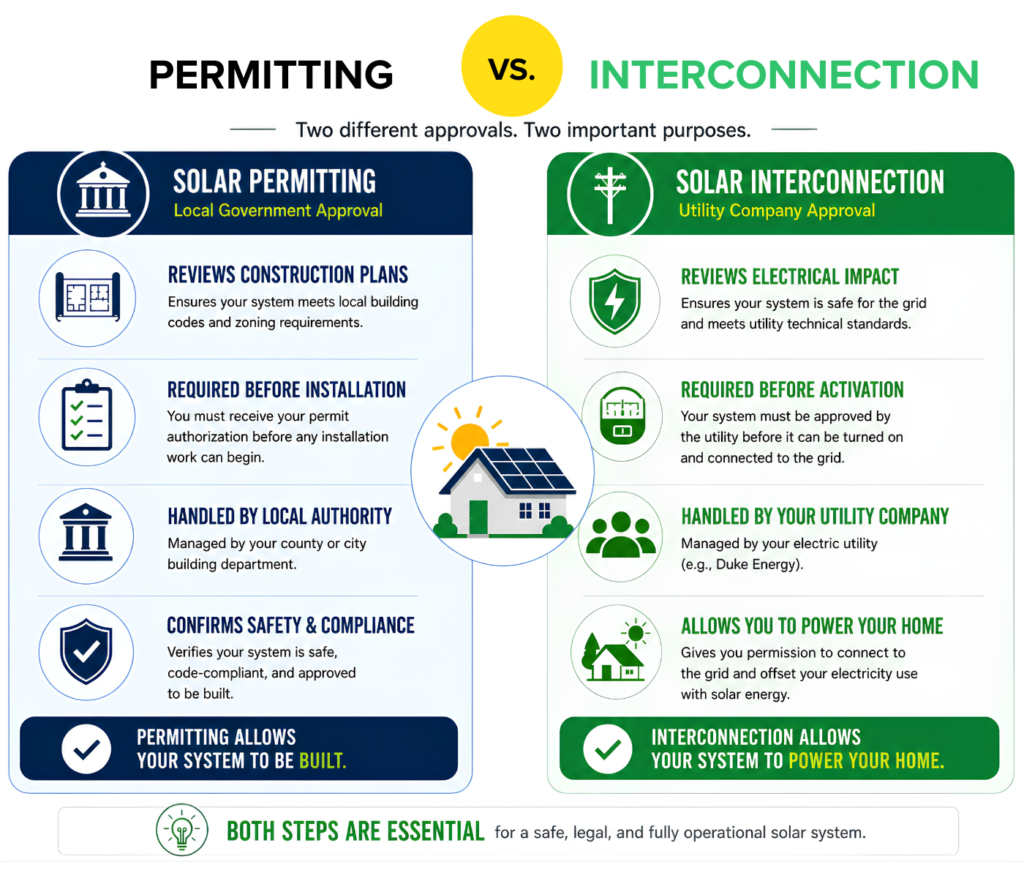
No, though the two are closely related and often confused. Here is how they differ:
| Solar Permitting | Solar Interconnection |
| Local government approval | Utility company approval |
| Allows installation to begin | Allows the system to operate |
| Happens before installation | Application submitted early; final approval happens before activation |
| Reviews building and electrical plans | Reviews the electrical connection to the grid |
In short, permitting allows your system to be built. Interconnection allows it to power your home. Both are required, and both run on somewhat independent timelines, though an experienced installer manages them in parallel to keep your overall project moving efficiently.
Common Questions About Solar Interconnection
Will My Power Be Shut Off?
No. The interconnection process does not interrupt your existing electric service. You will continue to receive power from the grid as normal throughout the entire installation and approval process. The only thing that happens at the end is the activation of your new solar system, which begins working alongside your existing grid connection rather than replacing it.
Does Interconnection Cost Extra?
Utility interconnection applications sometimes involve a small application fee, which varies by utility and system size. This cost is typically included in your overall project quote from your installer rather than billed separately, so it should not come as a surprise if you are working with a transparent installer. If you are exploring solar financing options, your installer should walk you through exactly what is and is not included in your project cost upfront.
What Happens If the Utility Requests Changes?
Occasionally, a utility’s review may identify a detail that needs clarification or adjustment, such as additional documentation on a piece of equipment. This is a normal part of the review process and is typically resolved quickly when your installer maintains direct communication with the utility. This is one of the reasons working with an installer experienced in your specific utility’s requirements helps minimize back-and-forth delays.
Does Battery Storage Affect Interconnection?
Yes, adding battery storage to your solar system introduces additional technical considerations into the interconnection review, since the utility needs to understand how the battery interacts with the grid, particularly around backup power configurations and anti-islanding requirements. This does not typically prevent approval, but it can add some complexity and time to the engineering documentation required. An installer experienced with battery interconnections, like 8MSolar, accounts for this in the project timeline from the start.
How 8MSolar Simplifies the Interconnection Process
At 8MSolar, our goal is for homeowners to never have to think about utility paperwork, engineering documentation, or interconnection requirements. Here is how we handle it:
- Site assessment. We evaluate your property and electrical infrastructure to understand what your specific interconnection application will require.
- Engineering. Our in-house engineering team produces the technical documentation required for both county permitting and utility interconnection review.
- Permit coordination. We manage your county building permit application in parallel with the interconnection process to keep your project moving efficiently.
- Utility paperwork. We prepare and submit your interconnection application directly to Duke Energy or your local utility provider.
- Inspection scheduling. We coordinate any required inspections tied to both permitting and interconnection approval.
- PTO coordination. We track your application’s status and follow up with the utility to keep your Permission to Operate moving toward approval.
- Final system activation. Once PTO is issued, we activate your system and confirm it is producing energy as designed.
Connecting your solar system to the electrical grid is one of the final steps before you begin producing clean energy. From engineering and permitting to utility approval and Permission to Operate, 8MSolar manages every step of the process so you can enjoy a seamless transition to residential solar. Schedule your free solar consultation today.
Frequently Asked Questions
What is a solar interconnection agreement?
A solar interconnection agreement is the formal approval from your electric utility authorizing your solar system to connect to and operate on the electrical grid. It confirms your system meets safety and technical standards before it can be activated.
Is a solar interconnection agreement required?
Yes. Every grid-connected solar system, residential or commercial, requires utility interconnection approval before it can legally begin operating. This applies regardless of system size or installer.
Who files the interconnection paperwork?
In nearly all cases, your solar installer files the interconnection application and manages all required documentation on your behalf. Homeowners typically only need to provide their utility account information.
How long does solar interconnection take?
Most interconnection applications in North Carolina are processed within 2 to 6 weeks, though timing varies based on utility workload, system complexity, and inspection scheduling.
What is Permission to Operate (PTO)?
Permission to Operate is the final authorization from your utility confirming your solar system has passed all required reviews and can legally be turned on. It is the last step before your system is activated.
Can I use my solar panels before utility approval?
No. Operating a grid-connected solar system before receiving Permission to Operate is not permitted under utility interconnection rules and can create safety risks. Your system must remain off until PTO is issued. This applies regardless of how you financed your system, whether through no-money-down financing or a cash purchase.
Is interconnection different from permitting?
Yes. Permitting is local government approval that allows your system to be built. Interconnection is utility approval that allows your system to operate. Both are required and run on separate but related timelines.
Does every utility require an interconnection agreement?
Yes. Every utility that allows grid-connected solar requires some form of interconnection approval, though specific requirements and timelines vary by provider. In North Carolina, Duke Energy is the primary utility most homeowners will work with.