Yes. Solar panels can be installed on most metal roofs, and in many cases metal roofs are one of the best roofing materials for solar. Their durability, long lifespan, and compatibility with modern mounting systems make them an excellent foundation for a solar energy system. The specific installation method depends on the type of metal roof you have, but for the vast majority of metal roof configurations, solar is a straightforward and practical option.
If you have a metal roof and have been wondering whether solar is possible, the answer is almost certainly yes. This guide explains why metal roofs work so well for solar, how panels are attached depending on your roof type, and what to expect from the installation process.
Solar on a Metal Roof?
Yes, and metal roofs are among the best roofing materials for solar installations for several reasons. Their lifespan often matches or exceeds the expected life of a solar system, their surface is durable and weather-resistant, and certain metal roof types allow for mounting systems that require no roof penetrations at all. For homeowners with metal roofs, solar is not a workaround, it is often the ideal combination.
Why Metal Roofs Are Great for Solar Panels
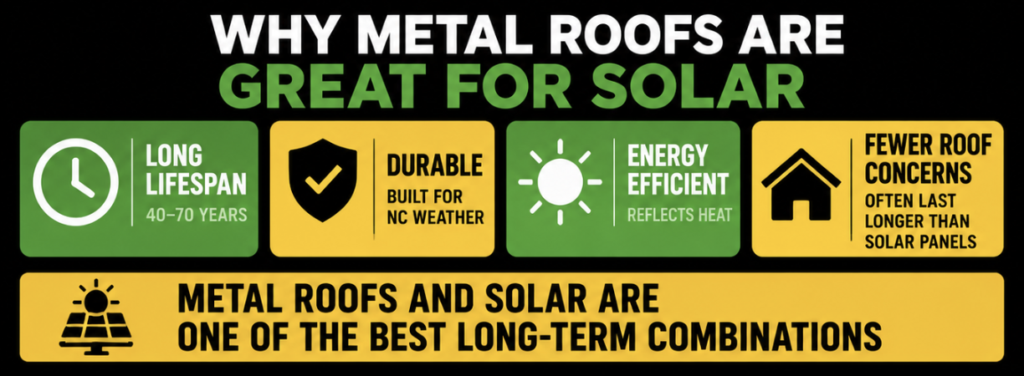
Long Lifespan
One of the most important factors in a solar installation decision is whether the roof will last as long as the panels. Modern solar panels are designed to produce energy for 25 to 30 years. A metal roof typically lasts 40 to 70 years depending on the material and maintenance. That lifespan alignment means a homeowner with a metal roof is unlikely to face the cost and disruption of removing and reinstalling solar panels to replace the roof, which is one of the most common complications for homeowners with aging asphalt shingles. You can read more about how long solar panels last and why lifespan planning matters.
Durability
Metal roofs are engineered to withstand significant weather stress, including high winds, heavy rain, hail, and snow loads. North Carolina’s weather includes tropical storms, severe thunderstorms, and occasional ice events, all of which a quality metal roof handles well. That same durability provides a stable, long-lasting mounting surface for solar panels.
Energy Efficiency
Metal roofs reflect more solar radiation than asphalt shingles, which can reduce heat absorption and lower cooling loads in summer. When paired with solar panels, which also shade the roof surface and further reduce heat gain, the combination can improve a home’s overall thermal performance. The two systems complement each other in ways that a standard shingle roof and solar array do not.
Reduced Roof Replacement Concerns
Because metal roofs last so much longer than asphalt, the question of “will I need to replace my roof before the solar system pays off?” rarely applies. Homeowners with metal roofs can typically install solar with confidence that the roofing surface will remain viable for the entire production life of the system.
What Types of Metal Roofs Can Support Solar Panels?
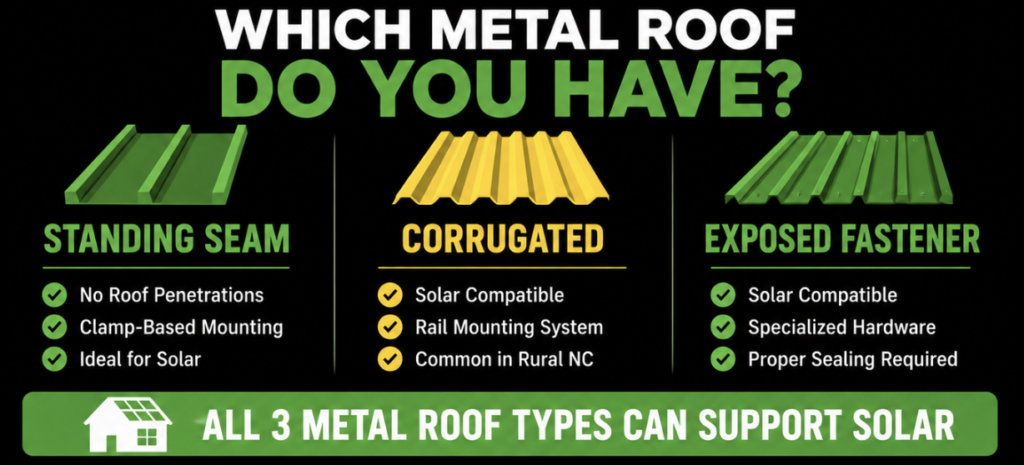
Not all metal roofs are the same, and the installation approach differs depending on which type you have. Here is how the three most common metal roof types compare:
| Roof Type | Solar Compatibility | Mounting Method | Common Applications |
| Standing seam | Excellent | Clamp-based, no penetrations required | Residential, commercial, agricultural |
| Corrugated metal | Good | Specialized rail mounting with sealed penetrations | Residential, agricultural, rural |
| Exposed fastener (screw-down) | Good | Rail mounting through existing fastener points or new sealed penetrations | Agricultural, older residential, commercial |
Standing Seam Metal Roofs
Standing seam is the most solar-friendly metal roof type available. The raised seams that run vertically along the roof panel provide attachment points for clamp-based mounting systems that grip the seam without penetrating the roof surface. This means panels can be installed without drilling a single hole in the roof, eliminating the leak risk associated with roof penetrations entirely. Standing seam roofs are increasingly common on newer residential construction in North Carolina and are an ideal foundation for solar.
Corrugated Metal Roofs
Corrugated metal roofs, which feature a wave-like profile, are very common on older homes, farmhouses, and agricultural buildings across rural North Carolina. Solar can be installed on corrugated metal, though it requires a different approach than standing seam. Rails are typically mounted using specialized brackets designed to fit the corrugated profile, and any penetrations are sealed with weatherproof flashing and sealants. When installed correctly by an experienced team, corrugated metal roof solar installations are durable and reliable.
Exposed Fastener Metal Roofs
Exposed fastener roofs, sometimes called screw-down panels, have visible fasteners along the panel surface rather than hidden seams. Mounting solar on these roofs typically involves rail systems secured through or alongside existing fastener points. The mounting approach requires careful attention to waterproofing at any penetration points. As with corrugated roofs, experienced installation teams handle this routinely and can design a system that does not compromise the roof’s integrity.
How Are Solar Panels Attached to a Metal Roof?
Clamp-Based Systems
Clamp-based mounting is the gold standard for standing seam metal roofs. Specially designed clamps grip the raised seam of the roof panel without penetrating the metal surface. Rails are then attached to the clamps, and panels are mounted to the rails. Because no holes are drilled in the roof, there is no risk of leaks from the mounting hardware. This system is simple, strong, and widely considered the cleanest installation method available for any roofing type.
Rail Mounting Systems
For corrugated and exposed fastener roofs, rail-based systems are the standard approach. Mounting brackets are secured to the roof structure, rails are attached to the brackets, and panels are mounted to the rails. The key consideration is proper sealing and flashing at any penetration points. The quality of this work matters significantly, which is why choosing an experienced installer with metal roof experience is important.
Penetrating vs. Non-Penetrating Mounts
Non-penetrating mounts, like the clamp systems used on standing seam roofs, are preferred when available because they eliminate the primary source of potential leaks. Penetrating mounts, required for corrugated and exposed fastener roofs, are perfectly reliable when installed correctly with proper sealing and flashing. The distinction is worth understanding when evaluating your options, but it should not discourage homeowners with non-standing-seam roofs from pursuing solar.
Does Installing Solar Damage a Metal Roof?
No, when installed correctly by an experienced team. This is one of the most common concerns homeowners raise, and it is worth addressing directly.
For standing seam roofs, clamp-based mounting leaves no marks on the roof surface. The clamps grip the seam mechanically and can be removed without leaving any trace. For corrugated and screw-down roofs, properly sealed penetrations do not compromise the roof’s weather resistance. Manufacturer-approved flashing and sealant systems are designed specifically for this application and carry their own warranties when installed per specifications.
The risk of damage comes from improper installation, not from solar installation in general. Installers who are unfamiliar with metal roofing or who use incorrect mounting hardware can cause problems. This is one of the reasons working with a licensed, experienced installer who has documented metal roof installation experience matters. At 8MSolar, our in-house engineering team handles every installation, which means metal roof work is performed by our own staff rather than subcontracted to crews with variable experience levels.
Are Metal Roofs Better Than Asphalt Shingles for Solar?
In several respects, yes. Here is a direct comparison:
| Feature | Metal Roof | Asphalt Shingle Roof |
| Typical lifespan | 40 to 70 years | 20 to 30 years |
| Solar panel lifespan match | Excellent | Moderate (may need replacement mid-system-life) |
| Mounting flexibility | Excellent (clamp options available) | Good (standard rail and flashing systems) |
| Leak risk with solar mounts | Low to none (standing seam) | Low when properly installed and flashed |
| Durability in severe weather | Excellent | Good |
| Roof replacement disruption risk | Low (long lifespan) | Moderate (may need replacement during solar system life) |
| Reflectivity and heat performance | Higher reflectivity, cooler surface | Absorbs more heat |
Asphalt shingle roofs are perfectly functional for solar and represent the majority of solar installations in North Carolina simply because they are the most common roofing type. But if you are comparing the two in a vacuum, metal roofs have real advantages particularly around lifespan alignment and mounting options.
What Are the Potential Challenges?
Roof Complexity
Metal roofs with multiple planes, valleys, and dormers can limit available panel space and require more complex mounting designs. Complex roof geometries are manageable but may increase installation cost compared to a simple single-plane roof.
Roof Pitch
Very low-pitch or very steep metal roofs can present challenges for installation access and panel placement. Most standard residential pitches are well within the range that solar installers work with routinely, but unusually pitched roofs may require additional design consideration.
Older Roof Conditions
While metal roofs last a long time, very old metal roofs may have rust, loose panels, or compromised fasteners that should be addressed before solar installation. A professional roof inspection as part of the site assessment will identify any conditions that need attention first.
Custom Mounting Requirements
Non-standard metal roof profiles may require custom or specialty mounting hardware that is not stocked by every installer. This is less common but can add cost and lead time for unusual roof types. An experienced installer will identify this early in the design process rather than discovering it during installation.
Should You Replace Your Roof Before Installing Solar?
New Metal Roofs
If your metal roof is new or in excellent condition, install solar without hesitation. You have a durable, long-lasting surface that will serve as an ideal foundation for your solar system for decades.
Older Metal Roofs
If your metal roof is older but still in good structural condition with no significant rust or panel issues, it is likely still a good candidate. A professional inspection will confirm whether the roof surface is sound enough to support an installation without near-term repairs.
Roof Inspection Considerations
If there are questions about your roof’s condition, have it inspected before committing to solar. Installing solar on a roof that needs significant repairs in the next few years means facing the cost of panel removal and reinstallation when those repairs happen. Addressing roof issues first is always the cleaner path. 8MSolar’s site assessment includes a roof condition review and will give you an honest recommendation about whether the roof is ready for solar or whether repairs should come first.
How 8MSolar Evaluates Metal Roofs for Solar
At 8MSolar, metal roof solar installations are a standard part of our work across North Carolina. Here is how we approach them:
- Roof inspection. We evaluate your roof type, profile, condition, age, and any existing concerns before design begins. This ensures we select the right mounting system for your specific roof and identify any issues that should be addressed beforehand.
- Mounting system selection. We choose the mounting hardware appropriate for your roof type, prioritizing clamp-based systems for standing seam roofs and properly engineered rail systems for corrugated and screw-down profiles.
- Engineering review. Our in-house engineering team reviews the structural load calculations and mounting design before installation begins. Every installation is built to code and backed by engineering documentation.
- Custom system design. We design your system around your roof’s specific geometry, available surface area, and orientation, not a generic template. That means maximizing production within the real constraints of your property.
- Long-term performance planning. We select equipment with warranties that match the long-term horizon of your metal roof, and we remain your service contact throughout the system’s life.
Metal roofs are often one of the best foundations for a long-lasting residential solar installation. If you are considering solar, 8MSolar can evaluate your roof and design a system tailored to your home’s needs. Schedule your free solar consultation today.
Frequently Asked Questions
Can solar panels be installed on a metal roof?
Yes. Solar panels can be installed on most metal roofs. The specific mounting method depends on your roof type, but standing seam, corrugated, and exposed fastener metal roofs are all compatible with solar installations when the right hardware and techniques are used.
Are metal roofs good for solar panels?
Yes, often excellent. Metal roofs are durable, long-lasting, and compatible with mounting systems that can minimize or eliminate roof penetrations. Their lifespan typically exceeds that of a solar system, which means homeowners are unlikely to need a roof replacement during the solar system’s production life.
Does installing solar damage a metal roof?
Not when installed correctly. Clamp-based systems for standing seam roofs require no penetrations. For other metal roof types, properly sealed penetrations using manufacturer-approved flashing do not compromise the roof’s integrity. Choosing an experienced installer with metal roof expertise is the key factor.
What is a standing seam metal roof?
A standing seam roof has raised vertical seams that run from the ridge to the eave of the roof. These seams serve as attachment points for clamp-based solar mounting systems, allowing panels to be installed without drilling holes in the roof surface. Standing seam is widely considered the most solar-friendly metal roof type.
Do solar panels require roof penetrations on metal roofs?
Not always. Standing seam roofs can use clamp-based mounting that requires no penetrations. Corrugated and exposed fastener roofs typically require some penetrations, which are sealed with weatherproof flashing. Both approaches are reliable when installed by experienced professionals.
How long do metal roofs last?
Most metal roofs last 40 to 70 years depending on the material, coating, and maintenance. This far exceeds the 25 to 30-year expected life of most solar systems, which is one of the primary reasons metal roofs are such good solar candidates.
Are metal roofs better than shingles for solar?
In terms of lifespan alignment, durability, and mounting flexibility, metal roofs have real advantages over asphalt shingles for solar. That said, asphalt shingle roofs are perfectly viable for solar and represent the majority of NC solar installations simply because they are the most common roofing type.
Do metal roofs reduce solar installation costs?
Standing seam metal roofs can reduce installation complexity and eliminate the need for certain flashing components, which may slightly reduce hardware costs. However, the overall cost difference compared to a standard asphalt shingle installation is typically modest. The bigger financial benefit of a metal roof is avoiding mid-system roof replacement costs over the solar system’s 25 to 30-year life.