In most cases, solar panels stay with the home when it is sold. If the system is owned outright, it typically transfers to the new homeowner as part of the property with no additional steps required. If the system is financed through a solar loan or leased through a third-party program, additional steps are involved to transfer or resolve the financing during the sale process.
The process is more straightforward than many homeowners expect, but the details vary significantly depending on how the system is owned or financed. This guide covers each scenario, what documentation sellers should prepare, and how solar typically factors into the home sale conversation in North Carolina.
Selling Your Home With Solar Panels
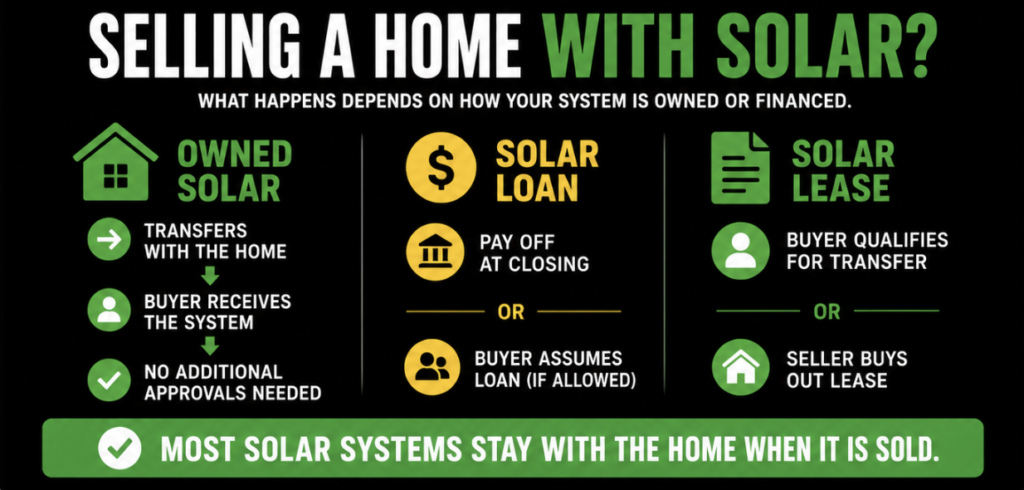
Solar panels are considered a permanent fixture attached to the home, similar to a roof or HVAC system. They stay with the property when it is sold. The buyer assumes the solar system as part of their purchase, and in most cases, the ongoing energy production and savings transfer with it.
Here is how the process differs by ownership structure:
| Ownership Structure | What Happens During Sale | Complexity |
| Owned outright (cash purchase) | System transfers with home as a fixture | Low |
| Solar loan (system owned by homeowner) | Loan paid off at closing or buyer assumes terms | Moderate |
| Solar lease or PPA | Lease transferred to buyer or seller buys it out | Moderate to high |
Do Solar Panels Increase Home Value?
Research suggests that owned solar systems often add value to homes in markets where solar is understood and valued by buyers. A widely cited study from Lawrence Berkeley National Laboratory found that homes with owned solar systems sold for a premium compared to comparable non-solar homes in several major markets. The National Association of Realtors has also reported growing buyer interest in energy-efficient and solar-equipped homes.
That said, the actual impact on your home’s value depends on local market conditions, buyer awareness of solar benefits, the age and condition of the system, and critically, whether the system is owned or leased. Owned systems are generally viewed as assets that add value. Leased systems can be viewed more neutrally, and in some cases require additional explanation for buyers who are unfamiliar with lease transfer processes.
North Carolina’s solar market has grown significantly in recent years, and buyer familiarity with solar is increasing. Homes in the Triangle, Charlotte, and surrounding areas increasingly encounter buyers who understand and value the energy savings a solar system provides. Whether solar adds measurable value to your specific home depends on your market, your buyer, and your system.
What Happens If You Own Your Solar Panels Outright?
If you purchased your solar system with cash or paid off your solar loan before listing your home, the sale process is straightforward.
System Transfers With the Home
An owned solar system is a permanent fixture of the property and transfers to the buyer at closing just like the roof, appliances, or any other fixed feature. No separate agreement is required. The buyer takes ownership of the system and all associated warranties from the date of closing.
No Loan Approval Needed
Because there is no financing attached to the system, the sale does not require coordination with a lender or leasing company. This simplifies the transaction for both the seller and the buyer.
Potential Selling Advantages
An owned solar system is generally the cleanest scenario from a buyer’s perspective. There is no lease to qualify for, no ongoing third-party relationship, and no question about who owns the equipment on the roof. Buyers who are interested in energy savings and energy independence can simply factor the system into their offer without additional complexity.
What Happens If You Have a Solar Loan?
If your solar system is financed through a loan and you have not yet paid it off, there are a few ways to handle it during a home sale.
Paying Off the Loan Before Closing
The most common approach is to pay off the remaining solar loan balance using proceeds from the home sale, similar to how a mortgage is paid off at closing. Once the loan is paid off, the system is owned outright and transfers to the buyer as a fixture with no additional conditions. This is the cleanest outcome and what most sellers with solar loans do.
Including Loan Payoff in the Sale Price
In some cases, the remaining loan balance is factored into the negotiated sale price. The seller’s net proceeds are reduced by the payoff amount, but the buyer receives a system with no outstanding financing. This requires clear communication during the negotiation process so the buyer understands what they are getting and why the price reflects it.
Potential Loan Transfer Options
Some solar loan products allow the loan to be assumed by the buyer, though this is less common and depends entirely on the lender’s policies. If loan assumption is available, the buyer would take over the remaining payments, and the monthly solar savings would help offset the payment obligation. Not all buyers are willing to assume financing, and not all lenders allow it, so this should not be relied upon as the primary strategy.
The most important step if you have a solar loan is to contact your lender early in the listing process. Understanding your payoff amount and your options well before closing prevents surprises at the closing table.
What Happens If You Have a Solar Lease?
Selling a home with a leased solar system involves an additional step that does not exist with an owned system. Because a third-party company owns the panels, the lease agreement must be resolved before the sale can close.
Lease Transfer Process
The most common resolution is transferring the lease to the buyer. The buyer agrees to assume the remaining lease term and takes over the monthly payments. For this to work, the buyer must qualify under the leasing company’s credit requirements, and both parties must sign the transfer documentation.
Programs like LightReach through Palmetto Solar have established transfer processes for exactly this scenario. Your installer and the leasing company should be able to walk you through the steps well before your closing date.
Buyer Qualification Requirements
Leasing companies typically require the buyer to meet minimum credit score requirements before approving a transfer, similar to the requirements the original homeowner met when the lease was established. If a buyer does not qualify, the transfer cannot proceed and other options must be explored.
Lease Buyout Options
If the buyer does not want to assume the lease or does not qualify for the transfer, the seller can buy out the remaining lease term. Buyout amounts vary by leasing company and how much time remains on the agreement. The buyout can be funded from sale proceeds, similar to paying off a loan. Once the buyout is complete, the system either becomes owned property that transfers with the home or is removed by the leasing company depending on the agreement terms.
Potential Challenges
Leased systems add a layer of complexity that some buyers are unfamiliar with or hesitant about. Buyers who do not understand the lease structure may be uncertain about what they are agreeing to. Sellers can address this proactively by preparing clear documentation about the lease terms, monthly payment amounts, remaining term, and the energy savings the system provides. A well-informed buyer is far more likely to be comfortable with a lease transfer than one who encounters the process for the first time during due diligence.
What Documents Should You Provide Buyers?
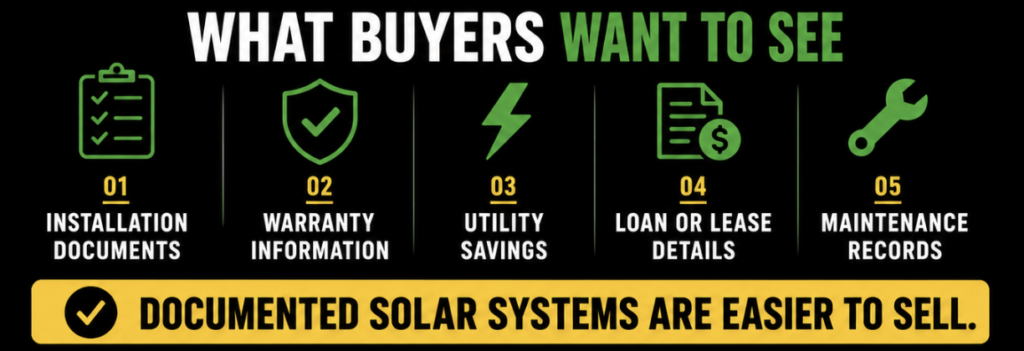
Regardless of your ownership structure, providing thorough documentation makes the solar component of your home sale easier and more transparent. Here is what sellers should prepare:
Installation Documents
Your original installation contract, permit approvals, and inspection certificates establish the system’s history and confirm it was installed correctly and to code. These documents also give buyers confidence in the quality of the work.
Warranty Information
Provide copies of all manufacturer warranties and your installer’s workmanship warranty. Include contact information for warranty claims. Buyers want to know who to call if something goes wrong after they move in.
Utility Savings Records
Print 12 months of utility bills showing the actual energy savings your system has produced. Real production data is far more persuasive than projected estimates and gives buyers a concrete picture of what to expect. Buyers considering the value of your system will want to see actual numbers, not marketing projections.
Loan or Lease Documents
If your system is financed, provide the current loan or lease agreement including the remaining balance or term, monthly payment amount, and any escalator provisions. Buyers need this information to evaluate what they are taking on.
Maintenance Records
Document any maintenance performed on the system, including panel cleanings, inverter checks, or repairs. A well-maintained system is easier to sell and supports the case that it has been properly cared for.
Will Solar Make My House Easier to Sell?
Energy-Conscious Buyers
Buyer interest in energy efficiency and reduced utility costs has grown significantly. Homeowners with documented solar savings have a concrete selling point that goes beyond general “green” appeals. Showing a buyer that the home’s electricity costs have been reduced by $100 to $200 or more per month is a meaningful differentiator in a competitive market.
Utility Savings Appeal
Rising Duke Energy rates make solar savings increasingly attractive to buyers. A home that already has a producing solar system eliminates the upfront cost and installation timeline that a buyer would otherwise face if they wanted to add solar themselves.
Local Market Conditions
Solar’s impact on sale ease and price varies by market. In areas with high solar adoption and buyer awareness, solar is increasingly expected and valued. In markets where solar is newer, buyers may need more education. Working with a real estate agent familiar with solar homes can help you position the system appropriately.
Financing Structure Impact
Owned systems are the easiest to sell. Leased systems require more buyer education and an additional transfer step, which can slow the process slightly. This is one of the reasons many homeowners prefer loan-based ownership over leasing when their primary concern is long-term flexibility.
Common Mistakes Homeowners Make When Selling a Home With Solar
Waiting Too Long to Contact Financing Providers
If you have a solar loan or lease, contact your lender or leasing company as soon as you list your home. Getting payoff amounts, transfer procedures, and required documentation in advance prevents delays at closing. Last-minute financing surprises are one of the most common reasons solar-related closings get complicated.
Missing Documentation
Buyers and their agents will ask for documentation. Sellers who cannot produce installation records, warranties, or financing documents create uncertainty that can slow or derail a sale. Gathering this paperwork before you list is a simple step that pays dividends in the transaction.
Not Explaining Solar Benefits
Do not assume buyers understand what solar means for their utility bills. Proactively explain the system’s production history, the savings it has generated, and what the buyer can expect going forward. A buyer who understands the value is more likely to embrace it as an asset than one who views it as an unknown complication.
Failing to Share Utility Savings Data
Actual utility bills showing before-and-after savings are your most powerful marketing tool for your solar system. If you have 12 months of bills showing reduced electricity costs, include that data in your listing documentation. Real numbers close deals more effectively than general claims.
How 8MSolar Helps Homeowners Protect Their Investment
At 8MSolar, our relationship with customers does not end at installation. We support homeowners throughout the life of their system, including when it is time to sell.
- Quality system design. A well-designed system from quality equipment is easier to sell and commands more confidence from buyers than a system with unknown or budget components.
- Comprehensive warranty coverage. We install equipment with strong manufacturer warranties and back our work with an installation workmanship warranty. Those warranties transfer with the home and provide buyers with the protection they expect.
- Documentation support. We provide complete installation documentation at project completion and can supply copies to sellers who need them for a home sale. Our records include permits, engineering drawings, inspection results, and equipment specifications.
- Long-term system monitoring. We monitor system performance and can provide production records that sellers can share with buyers as part of the sales process.
- Ongoing customer support. If you have questions about how your system factors into a home sale, our team can help you understand your options and prepare the right documentation.
For many homeowners, solar is a long-term investment that continues to provide value even when they eventually move. Whether you are considering residential solar installation today or planning for a future home sale, 8MSolar can help you understand how ownership, solar financing options, and resale considerations fit into your decision. Schedule your free solar consultation today.
Frequently Asked Questions
Do solar panels stay with the house when you sell?
Yes. Solar panels are considered a permanent fixture of the property and stay with the home when it is sold. The buyer assumes ownership of the system, along with any associated warranties, as part of the purchase.
Can I take my solar panels with me when I move?
Technically possible but rarely practical. Removing panels voids warranties, can damage the roof, and requires reinstallation at the new property which involves new permits and utility approvals. In almost all cases, leaving the system with the home and factoring it into the sale price is the better financial decision.
What happens to a solar loan when I sell my house?
The most common approach is paying off the loan balance at closing using proceeds from the sale. Some lenders allow loan assumption by the buyer, but this depends on the lender’s policies. Contact your lender early in the listing process to understand your options and payoff amount.
Can a solar lease be transferred to a buyer?
Yes, in most cases. The buyer must meet the leasing company’s credit requirements and agree to assume the remaining lease term. If the buyer does not qualify or does not want to assume the lease, the seller can buy out the remaining term using sale proceeds.
Do solar panels increase home value?
Research from Lawrence Berkeley National Laboratory suggests owned solar systems often add value to homes in markets where buyers understand solar’s benefits. The actual impact varies by local market conditions, system ownership structure, and buyer preferences. Leased systems have a less predictable impact on value than owned systems.
Will buyers want a home with solar panels?
Buyer interest in solar homes has been growing, particularly as utility rates rise and energy costs become a more significant household concern. Buyers who understand solar savings tend to view an owned system as a meaningful benefit. Leased systems require more explanation but can still appeal to buyers interested in immediate energy savings with no upfront cost.
What paperwork should I provide during the sale?
Provide installation contracts, permit approvals, all warranty documentation, 12 months of utility bills showing savings, and any loan or lease agreements. The more complete your documentation, the easier and more confident the buyer’s evaluation of the system will be.
Is it harder to sell a home with leased solar panels?
It can add a step to the process. The lease must either be transferred to the buyer or bought out before closing. Buyers who are unfamiliar with lease transfers may need additional education. Working with a real estate agent experienced in solar homes and being proactive with documentation reduces this friction significantly.