Electricity rates continue to rise, leaving homeowners looking for ways to take more control over their monthly energy costs. Solar can help reduce your reliance on electricity from the grid, but the upfront cost of a solar system can make going solar feel out of reach.
Solar financing gives homeowners different ways to pay for a system, including purchasing it outright, using a solar loan, traditional leasing, or a prepaid solar agreement.
A prepaid solar agreement, sometimes called synthetic-cash financing, offers a different approach. Instead of making traditional monthly lease payments, homeowners make an upfront payment toward the solar system and receive an immediate discount. A financing provider covers the remaining system cost and owns the solar system under the agreement.
For homeowners looking for an alternative to buying a system outright or taking on long-term monthly payments, it’s worth understanding how this model works.
Table of Contents
- Understanding the Rising Cost of Electricity
- What Are Your Solar Financing Options?
- What Is Prepaid Solar Financing?
- How Does Prepaid Solar Financing Work?
- How Much Does a Solar Lease Cost?
- Can Solar Payments Increase Over Time?
- Who Owns the Solar System?
- How Do Tax Credits Fit Into Prepaid Solar Financing?
- Does Prepaid Solar Financing Require a Credit Check?
- Does Prepaid Solar Financing Put a Lien on Your Home?
- Can You Finance the Upfront Payment?
- What Happens If You Sell Your Home?
- What Happens to the Solar System After the Agreement?
- Is Prepaid Solar Financing Right for You?
- Take Control of Your Energy Costs
Understanding the Rising Cost of Electricity
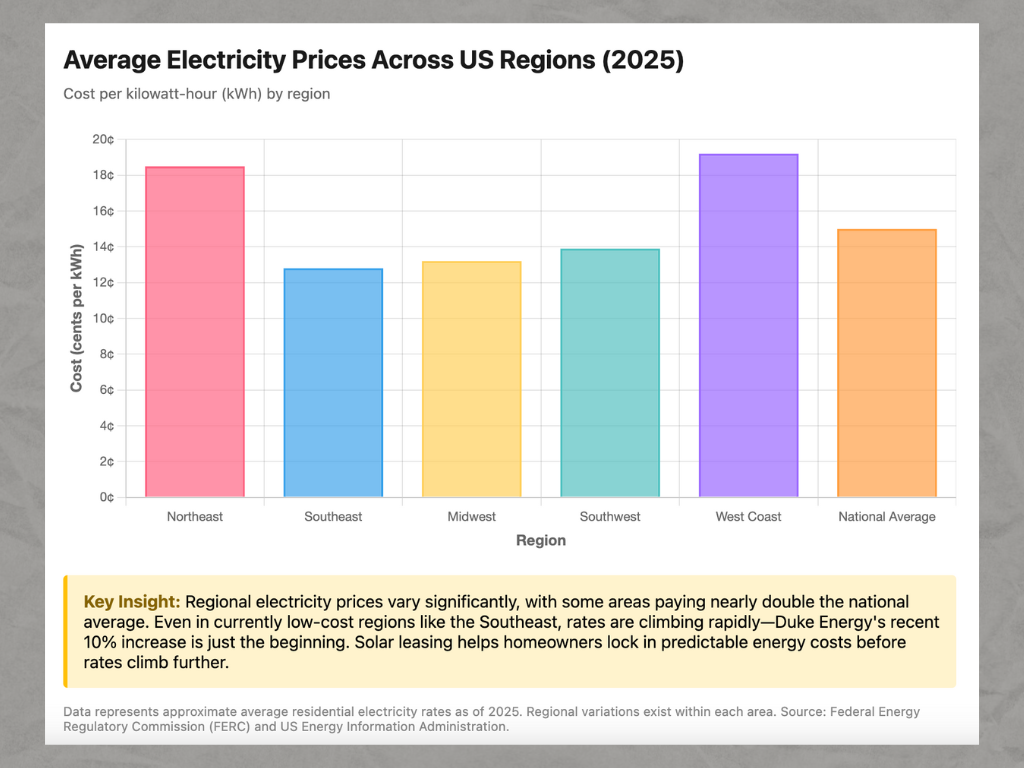
Electricity prices vary by location, but the cost of powering a home has continued to put pressure on household budgets. In North Carolina, utility rate increases can make it difficult for homeowners to predict what their electricity bills will look like from one year to the next.
As electricity costs rise, generating your own energy with solar can help reduce the amount of electricity you need to purchase from your utility.
But the way you pay for your solar system matters, too. Homeowners have several financing options, and each one comes with different upfront costs, payment structures, and ownership arrangements
What Are Your Solar Financing Options?
There isn’t one right way to pay for solar. The most common options include purchasing a system with cash, using a solar loan, entering a traditional solar lease, or using a prepaid solar financing structure.
Buying Solar With Cash
A cash purchase means you pay for the solar system upfront and own the equipment. There are no loan or lease payments after the system is purchased.
The biggest drawback is the initial cost. A solar system can require a significant upfront investment, which isn’t practical for every homeowner.
Using a Solar Loan
A solar loan allows you to finance the cost of the system over time while owning the equipment. Instead of paying the full cost upfront, you make loan payments according to the terms of your financing agreement.
This can make solar more accessible without requiring the full system cost upfront, but you are still taking on a long-term financial obligation.
Traditional Solar Leasing
Traditional solar leases typically involve a third party owning the solar system while the homeowner makes recurring payments under the lease agreement.
The specific terms, payment structure, escalators, maintenance responsibilities, and ownership options can vary by provider and agreement.
Prepaid Solar Financing
Prepaid solar financing works differently.
Instead of making traditional monthly lease payments, the homeowner makes one upfront payment under the agreement. The payment includes an immediate upfront discount, while a financing provider covers the remaining cost of the solar system and owns the equipment.
This creates a third-party ownership arrangement without the traditional ongoing monthly lease payment structure.
What Is Prepaid Solar Financing?
Prepaid solar financing, sometimes called synthetic-cash financing, is a way to access a solar system through a single upfront payment rather than traditional monthly lease payments.
Under the prepaid structure offered through 8MSolar, the homeowner makes an upfront payment and receives an immediate discount. A financing provider covers the remaining system cost and owns the solar system under the agreement.
The homeowner then uses the solar energy produced by the system without traditional ongoing monthly lease payments or additional fees for the stated 25-year period.
This structure can be an alternative for homeowners who want to avoid paying the full retail cost of a solar system upfront while also avoiding a traditional monthly solar lease.
How Does Prepaid Solar Financing Work?
The process is different from a traditional solar lease or solar loan, but the basic concept is straightforward.
1. Your Solar System Is Designed
The first step is determining what type and size of solar system makes sense for your home and energy needs.
2. You Make an Upfront Payment
Instead of committing to traditional monthly lease payments, you make a single upfront payment under the prepaid agreement.
That payment includes an immediate upfront discount, giving you value at the beginning of the agreement rather than requiring you to wait for a future rebate or payment.
3. A Financing Provider Covers the Remaining System Cost
The financing provider covers the remaining cost of the system and owns the solar equipment under the agreement.
This is what makes the arrangement a third-party ownership structure. You are receiving the benefits of the solar system without owning the equipment yourself at the beginning of the agreement.
4. Your Solar System Is Installed
Once the agreement and project are completed, the solar system is installed on your home and begins producing electricity.
5. You Use the Solar Energy Your System Produces
Your solar system generates electricity for your home, helping reduce your reliance on electricity purchased from the utility.
Under the prepaid structure, there are no traditional ongoing monthly lease payments for the stated 25-year period.
How Much Does a Solar Lease Cost?
The cost of solar depends on the system, the home, the agreement, and the financing structure. There isn’t one monthly price or cost per kilowatt-hour that applies to every solar lease.
That’s especially important when comparing a traditional solar lease with prepaid solar financing.
A traditional lease may involve recurring monthly payments, while the prepaid structure uses a single upfront payment with an immediate discount and no traditional ongoing monthly lease payments for the stated 25-year period.
The amount of the upfront payment depends on the specific solar project and agreement.
For homeowners comparing solar financing options, it’s important to look beyond the monthly payment and understand the total payment structure, ownership arrangement, and terms of the agreement.
Can Solar Payments Increase Over Time?
The answer depends on the type of solar agreement.
Traditional solar leases may include scheduled payment increases, often called escalators. These increases are part of the terms of some monthly-payment lease agreements.
Prepaid solar financing works differently. Because the homeowner makes an upfront payment rather than traditional ongoing monthly lease payments, there isn’t a recurring lease payment that increases over time under the prepaid structure described here.
That can make the payment structure easier to understand from the beginning.
Who Owns the Solar System?
One of the most important things to understand about prepaid solar financing is that the homeowner does not initially own the solar equipment.
The financing provider owns the system under the agreement and covers the remaining system cost after the homeowner’s upfront payment.
This is a form of third-party ownership. The homeowner gets the benefit of the solar system producing electricity for the home, while ownership of the equipment remains with the financing provider according to the terms of the agreement.
Depending on the agreement, there may also be an option to purchase the system in the future.
How Do Tax Credits Fit Into Prepaid Solar Financing?
Tax credits and other incentives can play an important role in the economics of solar, but how they apply depends on the ownership and financing structure.
With prepaid solar financing, the homeowner receives an immediate upfront discount rather than waiting for a rebate or credit to provide that value later.
The specific tax treatment of a solar agreement depends on the structure of the transaction and the parties involved. Homeowners should review their individual situation with a qualified tax professional before making decisions based on potential tax benefits.
Does Prepaid Solar Financing Require a Credit Check?
The prepaid solar structure described by 8MSolar does not require a FICO score or traditional credit underwriting to enter the Customer Participation Agreement.
This can make the model different from financing options that depend on a traditional credit application.
If the homeowner chooses to finance the upfront payment through a lender or financial institution, that financing would be subject to the terms and requirements of that lender.
Does Prepaid Solar Financing Put a Lien on Your Home?
The Customer Participation Agreement does not place a property lien on the home.
This is another important distinction for homeowners comparing solar financing options.
As with any financial agreement, homeowners should review the specific terms and conditions before entering into an agreement.
Can You Finance the Upfront Payment?
Yes. Although the prepaid structure uses an upfront payment, homeowners may have the option to finance that payment through an approved lender or their own financial institution.
This gives homeowners another way to approach the upfront cost while maintaining the structure of the prepaid solar agreement.
Any separate financing used to cover the upfront payment would have its own terms, requirements, and payment schedule.
What Happens If You Sell Your Home?
Selling a home with a solar agreement requires understanding the terms of the specific agreement.
Because the financing provider owns the solar system under the prepaid structure, homeowners should review the agreement’s transfer and sale provisions before listing the property.
The options available when selling a home can depend on the terms of the agreement, including whether the agreement can be transferred or whether another option is available.
If you’re considering selling your home, understanding these terms in advance can help you plan for the process.
What Happens to the Solar System After the Agreement?
The prepaid agreement described by 8MSolar has a stated 25-year period.
Depending on the specific agreement, there may be an option for the homeowner to purchase the solar system in the future.
The terms of any future purchase or ownership option should be reviewed in the agreement rather than assumed to follow a standard timeline.
Is Prepaid Solar Financing Right for You?
Prepaid solar financing may be worth considering if you want to reduce your reliance on rising utility rates but don’t want to purchase a solar system entirely with cash or take on a traditional monthly solar lease.
Some of the potential benefits include:
- An immediate upfront discount
- One upfront payment instead of traditional ongoing lease payments
- No FICO score or credit underwriting requirement for the Customer Participation Agreement
- No property lien through the Customer Participation Agreement
- The option to finance the upfront payment through an approved lender or financial institution
- Potential future ownership options depending on the agreement
Like any solar financing arrangement, it’s important to understand the terms before signing. The right option depends on your budget, goals, energy use, and how you want to approach solar ownership.
Take Control of Your Energy Costs
Rising electricity rates can make it harder to predict what you’ll pay for energy in the years ahead. Solar can help reduce the amount of electricity you purchase from the grid, but the way you finance your system is just as important as the system itself.
Prepaid solar financing offers an alternative to traditional solar loans, cash purchases, and monthly solar leases. With an upfront payment, an immediate discount, and no traditional ongoing monthly lease payments under the prepaid structure, it can give homeowners another way to approach the cost of going solar.
If you’re considering solar for your home, 8MSolar can help you understand your options and determine which approach makes sense for your energy needs and budget.