Maximizing the Performance of Your Solar Panels
How do you monitor the performance of your solar panels? The easiest way is to use your solar inverter’s monitoring app or online dashboard. These tools allow you to track electricity production, review historical performance, and identify potential problems with your solar energy system.
To check whether your solar panels are performing properly, start by reviewing their daily and monthly energy output in kilowatt-hours (kWh). Compare those results with previous production data, expected system performance, and recent weather conditions. Unexpected drops in electricity generation or repeated system alerts may indicate an issue that needs attention.
Regular solar panel monitoring helps homeowners identify potential problems early, understand their energy production, and protect their investment. Many modern systems offer convenient monitoring through smartphone apps, web portals, and inverter displays.
This guide explains which solar performance metrics matter, how to use monitoring tools, what can affect electricity production, and when to contact a professional for maintenance or repairs.
Table of Contents
- Maximizing the Performance of Your Solar Panels
- Why Monitoring Solar Panel Performance is Crucial
- Key Performance Indicators (KPIs) for Solar Panels
- Tools and Methods for Monitoring Solar Panel Performance
- Steps to Monitor Solar Panel Performance
- Common Issues Affecting Solar Panel Performance
- Frequently Asked Questions About Solar Panel Monitoring
- How Can I Monitor My Solar Panels From My Phone?
- How Do I Know If My Solar Panels Are Producing Enough Electricity?
- What Does kWh Mean on a Solar Monitoring App?
- Can I Monitor Each Solar Panel Individually?
- Why Is My Solar Monitoring App Not Updating?
- How Often Should I Check My Solar Panel Performance?
- Can Solar Panels Still Work If the Monitoring App Is Offline?
- Investing in Your Solar Future

Why Monitoring Solar Panel Performance is Crucial
Monitoring the performance of your solar panels is a critical aspect of maintaining a reliable solar energy system. Monitoring ensures that your solar panels operate at their optimal efficiency, allowing you to reap the full benefits of your investment. Here’s why it’s so important:
- Ensures Efficiency: Performance checks make sure that your solar panels are converting sunlight into electricity as efficiently as possible. This means you get the maximum amount of energy from the sun, which is beneficial for reducing your reliance on grid power and lowering your electricity bills.
- Detects Problems Early: By monitoring your solar panels, you can identify potential issues like shading from overgrown trees, dirt accumulation, or hardware malfunctions before they become serious problems. Early detection allows you to address these issues quickly, preventing more significant and costly repairs down the line.
- Optimizes Energy Production: Understanding how your solar panels perform under different conditions helps you make informed decisions to enhance energy production. For instance, monitoring may help you identify new shading problems, determine whether cleaning is necessary, or recognize when professional maintenance could improve system performance.
- Maximizes Return on Investment (ROI): Regular monitoring helps you maintain your solar panels in peak condition, guaranteeing that you receive the best possible return on your investment. By keeping your system running efficiently, you extend the life of your panels, boosting the value of your solar energy system.
- Tracks Environmental Benefits: Monitoring performance also allows you to track the environmental impact of your solar panels. By assessing the amount of clean energy generated and the reduction in your carbon footprint, you can understand the positive contributions your solar system is making toward a sustainable future.
Key Performance Indicators (KPIs) for Solar Panels
To effectively monitor the performance of your solar panels, focus on these key performance indicators:
- Energy Output: Measures the total amount of electricity generated by your solar panels over a given period. This helps you understand how much energy your system is producing and whether it aligns with your expectations.
- Peak Sun Hours: Represents the amount of solar energy received over a day, expressed as the equivalent number of hours at a solar irradiance of 1,000 watts per square meter. Peak sun hours help estimate expected electricity production and understand how sunlight availability varies by location and season.
- Efficiency Rate: Measures the percentage of incoming sunlight that a solar panel converts into electricity. Although panel efficiency is an important specification, most residential monitoring platforms focus on electricity production rather than directly measuring conversion efficiency. Comparing actual output with expected production is usually more practical for homeowners.
- Degradation Rate: Shows how the efficiency of your panels decreases over time. Understanding this rate helps you anticipate and plan for future performance changes and potential maintenance needs.
- System Uptime: Measures whether your solar system is operational and available to generate electricity when sunlight and operating conditions permit. Unexpected shutdowns, recurring error messages, or prolonged periods of zero production during suitable daylight conditions may indicate a problem.
Tools and Methods for Monitoring Solar Panel Performance
Effective monitoring involves using various tools and methods to gather and analyze performance data:
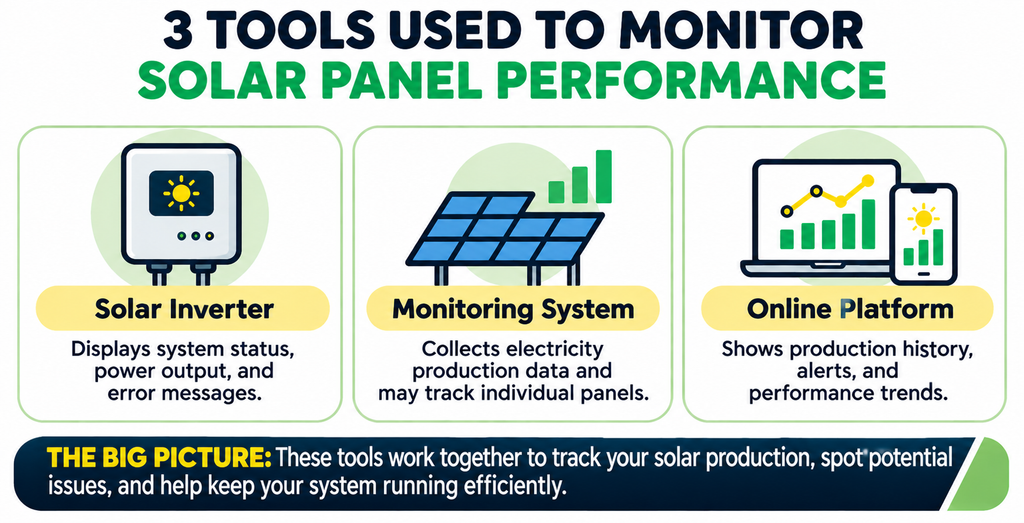
Solar Inverter
The solar inverter is a key component of your solar power system, converting direct current (DC) from the solar panels into alternating current (AC) for use in your home. Most modern inverters come with built-in monitoring features:
- LCD Display: Many inverters feature an LCD display that provides real-time data on energy production and system status.
- Web Portal: Some inverters offer web portals where you can log in to access detailed performance metrics and historical data.
- Mobile App: Manufacturers often provide mobile apps that allow for convenient monitoring and management of your solar system from anywhere.
Solar Monitoring Systems
Standalone solar monitoring systems provide in-depth data and analytics about your solar energy system:
- Energy Meters: Installed between the solar panels and the inverter, these meters measure the amount of electricity produced and can help diagnose performance issues.
- Environmental Sensors: These sensors measure factors like temperature, irradiance, and wind speed, which can impact the performance of your solar panels.
- Software Platforms: These platforms offer real-time data, historical performance analysis, and alerts for any system maintenance needs.
Online Monitoring Platforms
Many solar panel manufacturers and third-party providers offer online monitoring platforms that provide comprehensive performance tracking:
- User Interface: Typically features dashboards displaying key metrics like energy production, consumption, and savings, allowing for easy monitoring and management.
- Alerts and Notifications: Set up to notify you of any performance anomalies or maintenance reminders, ensuring timely intervention if issues arise.
- Comparative Analysis: Allows you to compare performance data over different periods to identify trends, optimize system settings, and address any discrepancies.
What Should You Look for in a Solar Monitoring App?
When reviewing your solar monitoring dashboard, focus on the following information:
- Current Power Output (kW): Shows how much electricity your system is generating at a particular moment.
- Daily Energy Production (kWh): Shows the total electricity generated throughout the day.
- Monthly and Annual Production: Helps you compare longer-term performance and identify unusual changes.
- System Alerts: Notifies you of inverter errors, communication problems, or other potential issues.
- Panel-Level Performance: Available on certain systems, allowing you to compare the production of individual solar panels.
- Home Energy Consumption: Available when compatible consumption-monitoring equipment is installed.
Not every solar monitoring platform provides all these features. The information available depends on your inverter, monitoring equipment, and system configuration.
For most homeowners, daily and monthly energy production, system status, and alerts are the most useful starting points.
Steps to Monitor Solar Panel Performance
To effectively monitor the performance of your solar panels, follow these steps:
- Check Your Monitoring Equipment: Confirm that your solar inverter and monitoring equipment are properly installed, connected, and communicating with the monitoring platform. Most modern residential solar systems include monitoring capabilities, so additional equipment may not be necessary.
- Set Up Online Monitoring: Download the monitoring app or access the web portal associated with your solar inverter or monitoring system. Use the login credentials provided by your installer to connect your account and begin reviewing production data.
- Regularly Check the Inverter Display: Make it a habit to check the inverter display daily or weekly to monitor real-time performance and ensure the system is operating correctly.
- Analyze Data from Monitoring Platforms: Log in to your online monitoring platform regularly to review data and performance trends. Look for any deviations from expected performance and take corrective actions if needed.
- Compare with Expected Performance: Compare your actual electricity production with the estimates provided in your solar installation proposal or monitoring platform. Account for seasonal changes, weather, shading, and other conditions that affect output. If production remains significantly below expectations, contact your installer to investigate.
- Schedule Regular Maintenance: Regular maintenance is important for optimal performance. Clean the panels, check for shading, and inspect for any hardware issues to keep your system in top condition.
Common Issues Affecting Solar Panel Performance
Several factors can impact the performance of your solar panels. Being aware of these issues can help you address them proactively:
- Shading: Trees, buildings, or other obstructions can cast shadows on your panels, reducing their efficiency. Regularly trim vegetation and ensure panels are installed in a location with maximum sunlight exposure.
- Dirt and Debris: Accumulation of dirt, leaves, and bird droppings can block sunlight and reduce efficiency. Inspect for visible dirt and debris from a safe location, and follow the manufacturer’s cleaning recommendations. If cleaning requires accessing the roof or working near electrical equipment, contact a qualified professional.
- Weather Conditions: Extreme weather events like snow, hail, or heavy rain can impact panel performance. Solar panels are designed to withstand normal outdoor conditions, but snow accumulation, severe storms, and other weather events can temporarily reduce production. Avoid climbing onto the roof or using tools that could damage the panels to remove snow; consult your installer if snow accumulation or storm damage is a concern.
- Inverter Problems: Issues with the inverter can lead to reduced or no energy conversion. Regularly check the inverter for error messages or warning lights and schedule professional maintenance as needed.
- Degradation: Over time, solar panels naturally degrade, leading to a gradual decrease in efficiency. Track the degradation rate and check the manufacturer’s warranty for coverage on performance decline.
What to Do If Your Solar Panels Are Producing Less Electricity Than Expected
If your monitoring app shows unusually low solar production, it doesn’t always mean something is wrong with your panels. Weather conditions, seasonal changes, shading, and temporary communication issues can affect the information you see.
Before requesting service, take these steps:
- Check the weather: Cloud cover, storms, and shorter winter days can reduce electricity production.
- Review your monitoring connection: If the app has stopped updating, check whether your internet connection or monitoring gateway is offline.
- Look for system alerts: Review any inverter error messages or notifications in your monitoring platform.
- Compare production trends: Check whether the decrease is unusual compared with similar weather conditions or your system’s expected output.
- Contact your solar installer: If the system continues underperforming or shows repeated errors, ask a qualified technician to investigate.
Avoid opening electrical equipment, handling exposed wiring, or attempting inverter repairs yourself. A licensed professional should diagnose electrical faults and perform necessary repairs.
The Role of Professional Maintenance Services
While homeowners can handle regular monitoring and basic maintenance, professional maintenance services are crucial for ensuring the longevity and optimal performance of your solar panels:
- Annual Inspections: Schedule annual inspections with a professional to thoroughly assess the system and address any potential issues.
- Advanced Diagnostics: Professionals can perform advanced diagnostics to detect issues that may not be visible during routine checks.
- Repairs and Replacements: Professionals are equipped to handle repairs and replacements of any faulty components, ensuring your system remains in optimal condition.
Benefits of Regular Monitoring
Regularly monitoring the performance of your solar panels provides numerous advantages:
- Increased Efficiency: Ensures your panels operate at their highest efficiency, maximizing energy production and savings.
- Cost Savings: By maintaining optimal performance, you reduce reliance on grid electricity and lower your energy bills.
- Extended Lifespan: Regular monitoring and maintenance can extend the lifespan of your solar panels, enhancing the overall value of your investment.
- Peace of Mind: Knowing that your solar panels are performing well provides peace of mind and confidence in the reliability of your solar energy system.

Frequently Asked Questions About Solar Panel Monitoring
How Can I Monitor My Solar Panels From My Phone?
Most modern solar systems offer a monitoring app or online portal connected to the inverter or monitoring equipment. Once your account is set up, you can review electricity production, system status, historical data, and available alerts directly from your smartphone.
How Do I Know If My Solar Panels Are Producing Enough Electricity?
Compare your system’s actual electricity production with the estimates provided by your solar installer. Weather, shading, seasonal sunlight changes, and system age can affect production, so comparing longer-term trends is usually more useful than evaluating a single day.
What Does kWh Mean on a Solar Monitoring App?
A kilowatt-hour (kWh) measures the amount of electricity produced or consumed over time. Your monitoring app uses kWh to show how much energy your solar system generates during a day, month, or year.
Can I Monitor Each Solar Panel Individually?
Some solar systems offer panel-level monitoring through compatible microinverters or power optimizers. Other systems provide production data for the entire installation or individual strings of panels. The level of detail depends on your equipment and monitoring platform.
Why Is My Solar Monitoring App Not Updating?
A monitoring app may stop updating because of an internet connection problem, communication gateway issue, or temporary platform outage. Check your connection and system notifications. If the issue continues, contact your solar installer or monitoring provider.
How Often Should I Check My Solar Panel Performance?
Checking your monitoring app weekly can help you notice alerts and unexpected changes. Reviewing monthly production trends is also useful for understanding seasonal differences and identifying possible long-term performance issues.
Can Solar Panels Still Work If the Monitoring App Is Offline?
Yes. A monitoring connection problem does not necessarily stop your solar panels from generating electricity. However, an inverter fault or other system issue may affect both monitoring and production. Check the system status or contact your installer if you’re unsure.
Investing in Your Solar Future
Monitoring your solar panels doesn’t have to be complicated. By checking your monitoring app, reviewing electricity production over time, and paying attention to system alerts, you can stay informed about your solar installation’s performance. When something appears unusual, comparing production with expected output and contacting your installer can help you determine whether maintenance is necessary.
8MSolar, a leader in the solar industry, provides comprehensive solutions to ensure your solar panels operate at peak performance. Our advanced monitoring systems, expert maintenance services, and innovative technology help you achieve maximum efficiency and long-term savings. With 8MSolar, you can trust that your investment in solar energy is in good hands, delivering not only financial benefits but also a positive impact on the environment.
Choose 8MSolar for reliable solar solutions and experience the benefits of clean, renewable energy. From installation to ongoing support, we are committed to helping you harness the power of the sun for a brighter, more sustainable future.