Most solar permits in North Carolina are approved within 1 to 4 weeks, although timelines vary depending on the municipality, utility provider, project complexity, and local permitting workload. The complete process from initial consultation to system activation typically takes 2 to 4 months for most residential installations.
Permitting is one of the parts of going solar that homeowners ask about most and understand least. This guide explains what happens during the permitting process, who is involved, what causes delays, and what the realistic timeline looks like from start to finish in North Carolina.
The Short Answer: How Long Does Solar Permitting Take in NC?
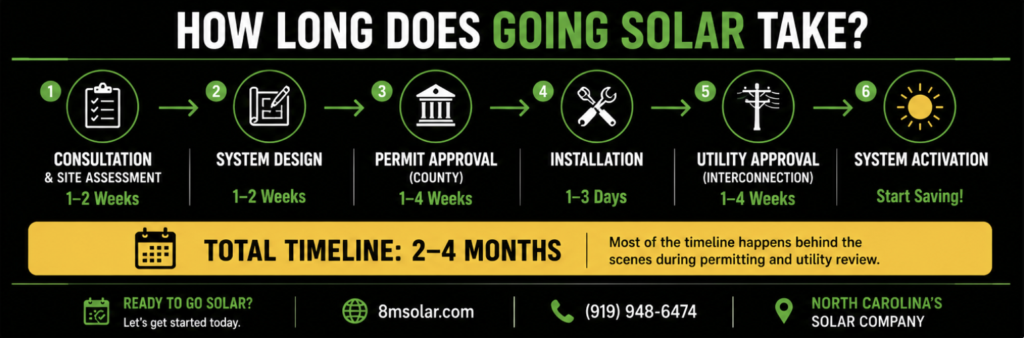
Here is a straightforward breakdown of the typical timeline for each stage of the permitting process:
| Stage | Typical Timeline |
| Site assessment and system design | 1 to 2 weeks |
| Permit application preparation | 3 to 7 days |
| County permit approval | 1 to 4 weeks |
| Utility interconnection application | 2 to 6 weeks |
| Installation | 1 to 3 days |
| County inspection | 1 to 2 weeks |
| Permission to Operate (PTO) from utility | 1 to 4 weeks |
| Total: Consultation to System Activation | 2 to 4 months |
These are typical ranges for straightforward residential projects in North Carolina. Complex projects, HOA requirements, or high-demand permitting periods can add time. An experienced local installer will give you a project-specific timeline based on your county and utility provider.
What Is Solar Permitting?
Solar permitting is the process of getting official approval from your local government and utility company before a solar system can be installed on your home. It exists to protect homeowners, ensure safe installation, and confirm that the system meets local building and electrical codes.
For a residential solar installation in North Carolina, permitting typically involves two main types of approval:
- Building permit: Issued by your county or city building department. This covers the structural aspects of the installation, including how panels are attached to your roof and whether the roof can support the added weight.
- Electrical permit: Also issued by the local building department. This covers the wiring, inverter, disconnect switches, and how the system connects to your home’s electrical panel.
In addition to these local permits, your utility company must approve the interconnection of your solar system to the grid before the system can legally be turned on. This is separate from the building permit process and runs on its own timeline.
Permitting is not optional, and skipping it creates serious problems. An unpermitted solar installation can affect your homeowner’s insurance, complicate a home sale, and in some cases require the system to be removed or reinstalled. Working with a licensed installer who handles permitting correctly from the start protects your investment.
Who Approves Solar Permits in North Carolina?
Local Building Departments
Your county or city building department is the primary authority for issuing solar permits in North Carolina. Each county operates its own permitting office with its own submission requirements, review timelines, and inspection schedules. Wake County, Mecklenburg County, Durham County, and other high-growth areas have generally streamlined their solar permitting processes due to high application volumes, but timelines still vary.
Some municipalities in North Carolina have adopted simplified or expedited solar permitting processes in recent years, which can reduce review times significantly for straightforward residential systems. Your installer should know which counties offer expedited review and how to take advantage of it.
Utility Companies
Duke Energy is the primary utility provider for most of North Carolina, and their interconnection review process runs parallel to the local permitting process. Duke Energy requires a formal interconnection application before your system can be connected to the grid. Their review includes confirming that your system meets technical standards, that the local grid can accommodate your system’s output, and that your billing arrangement is set up correctly.
Duke Energy’s net metering and interconnection applications typically take 2 to 6 weeks to process, though this can vary based on application volume and project specifics. The utility issues a Permission to Operate (PTO) letter once everything is approved, and your system cannot legally be turned on until that letter is received.
If you are installing before the December 31, 2026 Duke Energy Bridge Rate deadline, your interconnection application must be submitted and approved in time to qualify. This is one reason why starting the process early matters.
Homeowners Associations
If your home is governed by an HOA, you may need to obtain HOA approval before installation can begin. North Carolina law limits HOAs from outright prohibiting solar panels, but they can regulate placement and appearance within reason. HOA approval timelines vary widely and are not within your installer’s control. Getting this started early is one of the most practical things a homeowner can do to keep their project on schedule.
What Happens During the Solar Permitting Process?
- Site evaluation. Your installer visits your property to assess your roof, electrical panel, shading conditions, and available mounting space. This information is used to design a system that meets both your energy needs and local code requirements.
- Engineering and system design. A licensed engineer produces the stamped drawings and documentation required for permit submission. This includes roof load calculations, electrical diagrams, equipment specifications, and a site plan showing panel placement.
- Permit submission. Your installer submits the permit application to your local building department, along with all required documentation. Some counties accept online submissions; others require in-person or mail submission.
- Permit review. The building department reviews your application for code compliance. Reviewers may request additional information or corrections, which is one of the most common sources of delay. A well-prepared application from an experienced installer minimizes the likelihood of revision requests.
- Permit approval. Once the review is complete and all requirements are satisfied, the building department issues the permit. Installation can be scheduled once the permit is in hand.
- Installation. Your installer completes the physical installation, typically over one to three days depending on system size. No system is turned on at this stage.
- Inspection and Permission to Operate. After installation, the county conducts an inspection to confirm the work matches the approved plans. Once the county inspection passes and Duke Energy issues the Permission to Operate letter, your system is officially activated.
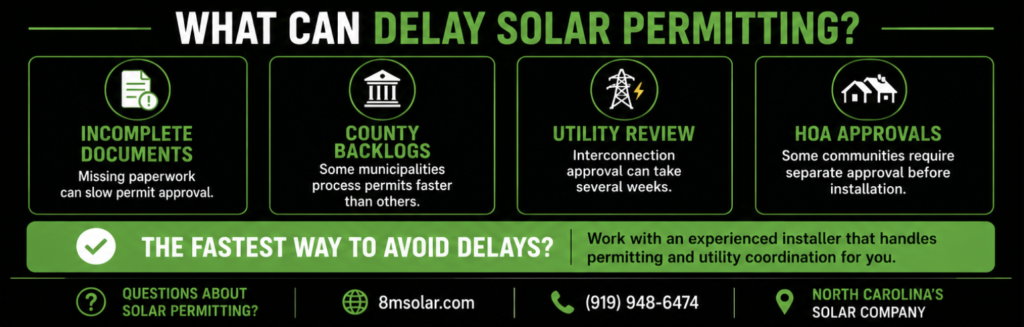
What Can Delay Solar Permitting?
Incomplete Documentation
The most common cause of permitting delays is a permit application that is missing required documents or contains errors. This triggers a correction request from the building department, which adds days or weeks to the timeline. Experienced installers submit complete, accurate applications the first time.
County Permit Backlogs
High-demand periods can create backlogs at county building departments, particularly in growing areas like the Triangle and Charlotte region. Some counties have longer standard review windows than others. Your installer should know which counties are running behind and factor that into your timeline estimate.
Utility Review Delays
Duke Energy’s interconnection review can take longer during high-volume periods. Submitting the interconnection application as early as possible and ensuring all technical specifications are correct the first time helps avoid unnecessary back-and-forth with the utility.
Design Changes
If the system design changes after a permit has been submitted or approved, the revised design may require a new application or amendment. This most commonly happens when homeowners request changes after the design phase. Finalizing your system design before permit submission avoids this issue.
HOA Requirements
HOA review and approval processes operate independently of the permitting timeline and can add weeks to a project if they are not started early. Some HOAs meet monthly and can only review applications at those meetings, which means a missed submission window can delay the project by a full month.
How Long Does the Entire Solar Installation Process Take?
Here is how the full project timeline looks from first contact to system activation:
| Phase | What Happens | Typical Duration |
| Consultation | Review energy usage, roof assessment, system design options, financing | 1 to 2 weeks |
| Design | Engineering drawings, equipment selection, permit documentation preparation | 1 to 2 weeks |
| Permitting | County permit submission, review, and approval. Utility interconnection application filed in parallel | 2 to 6 weeks |
| Installation | Physical installation of panels, inverter, wiring, and electrical work | 1 to 3 days |
| Inspection | County inspection of completed installation | 1 to 2 weeks |
| Utility Interconnection | Duke Energy reviews interconnection and issues Permission to Operate | 2 to 4 weeks |
| System Activation | System is turned on and begins producing energy | Day of PTO receipt |
For most NC homeowners, the total timeline from signing a contract to a live system is 2 to 4 months. The installation itself is the fastest part of the process. Most of the elapsed time is spent in permitting and utility review, which run largely in the background and do not require active involvement from the homeowner.
Can Homeowners Speed Up Solar Permitting?
Respond Quickly to Requests
If your installer or the permitting authority requests additional information or documentation, responding quickly keeps your application moving. Delays in returning information are one of the most controllable causes of timeline extensions.
Have Utility Information Ready
Your installer will need your Duke Energy account number and recent electric bills to complete the interconnection application. Having these ready at the start of your project avoids a common early delay.
Address HOA Requirements Early
If your neighborhood has an HOA, submit your approval request as early in the process as possible. Do not wait until after permits are approved to start the HOA process. The two can and should run in parallel.
Choose an Experienced Installer
Working with an installer who knows the permitting requirements of your specific county and has an established relationship with Duke Energy’s interconnection team is the single most impactful factor in keeping your project on schedule. Experienced installers submit complete applications, anticipate common issues, and know how to navigate county-specific requirements without delays caused by unfamiliarity with local processes.
What Happens After Solar Permits Are Approved?
Once your county permit is approved, your installer schedules your installation date. The installation itself typically takes one to three days depending on system size and roof complexity.
After installation is complete, your county building inspector visits the property to confirm the work matches the approved permit drawings. This inspection is typically scheduled within one to two weeks of installation completion.
Once the county inspection passes, Duke Energy completes their side of the interconnection review and issues the Permission to Operate letter. This letter is the official authorization to turn your system on. From the day you receive PTO, your system begins producing energy and your savings clock starts.
The gap between installation completion and system activation is one of the most common sources of homeowner frustration. Understanding that this final utility review is a required step and not a delay within your installer’s control helps set the right expectations.
How 8MSolar Helps Homeowners Navigate Solar Permitting
Local NC Expertise
8MSolar has been installing solar across North Carolina for over 20 years. Our team knows the permitting requirements, timelines, and processes for counties across the state. That local knowledge translates directly into faster, smoother permit approvals for our customers.
Permit Submission Management
We prepare and submit all permit applications on your behalf, including engineering drawings, site plans, electrical diagrams, and all supporting documentation. You do not have to interact with your county building department at any point during the process.
Utility Coordination
We manage the Duke Energy interconnection application from submission through Permission to Operate. Our team tracks the status of your application and follows up with the utility to keep things moving. We also handle the solar financing coordination if you are using a loan or lease program that requires utility documentation.
Project Tracking
Throughout the permitting and installation process, our team keeps you informed about where your project stands. You will know when permits are submitted, when they are approved, and when your installation date is confirmed.
Long-Term Customer Support
Our relationship with you does not end when your system is activated. We remain your point of contact for monitoring, maintenance, warranty issues, and any future questions about your system. Our solar panel maintenance team is available throughout the life of your system.
Permitting is one of the most important parts of a successful residential solar installation and one of the most misunderstood. At 8MSolar, we handle permitting, utility coordination, inspections, and paperwork so you do not have to. Schedule your free solar consultation today.
Frequently Asked Questions
How long does it take to get a solar permit in North Carolina?
Most solar permits in North Carolina are approved within 1 to 4 weeks of submission. Timeline varies by county, application completeness, and current permitting workload.
Why does solar permitting take so long?
Permitting involves multiple review steps, including structural, electrical, and code compliance review by your county building department. High application volumes, incomplete submissions, and revision requests are the most common causes of extended timelines.
Can solar permits be denied?
Yes, permits can be denied if the proposed installation does not meet local building or electrical codes. Denials are rare for well-designed systems submitted by experienced installers. Incomplete applications are far more common and result in revision requests rather than outright denials.
Does Duke Energy need to approve my solar installation?
Yes. Duke Energy must approve the interconnection of your solar system to the grid before the system can legally be turned on. This is separate from your county building permit and typically takes 2 to 6 weeks.
What happens after solar permits are approved?
After permit approval, your installer schedules installation. Once installation is complete, the county conducts an inspection and Duke Energy issues a Permission to Operate letter. Your system is activated on the day PTO is received.
How long does solar installation take after permits are issued?
The physical installation typically takes 1 to 3 days. However, the county inspection and Duke Energy PTO process after installation can take an additional 3 to 6 weeks before the system is live.
Does 8MSolar handle solar permits?
Yes. 8MSolar manages the entire permitting process on your behalf, including application preparation, submission, county coordination, and utility interconnection. Homeowners do not need to interact with their building department or utility during the permitting process.
Can homeowners apply for solar permits themselves?
Technically yes, but it is not recommended. Permit applications for solar installations require licensed engineering drawings and specific documentation that most homeowners are not equipped to produce. Errors in self-submitted applications frequently cause delays. Your installer should handle this as part of their standard service.