The storm clouds roll in, lightning strikes, and suddenly your neighborhood goes dark. You glance at your roof, confident that your solar panels will keep your home running smoothly. But then, to your surprise, your lights flicker off just like everyone else’s. Wait—don’t solar panels generate their own electricity? Why isn’t your system working?
This is one of the most common misconceptions about residential solar energy. While solar panels do generate clean, renewable power for your home, most systems will not keep your lights on during a grid outage. The reason has everything to do with safety, not a limitation of solar technology itself. The good news? There’s a straightforward solution that transforms your solar system into a true backup power source: solar battery storage.
Understanding why your panels shut down during an outage and how battery backup systems work is important for any homeowner considering solar energy or looking to maximize their existing installation. This guide will walk you through the mechanics of grid-tied solar systems, explain the safety features that cause them to shut down, and show you how to achieve uninterrupted power and energy independence.
Why Most Solar Systems Shut Down During an Outage
If you have solar panels on your roof, you might assume they’ll keep working no matter what happens with the utility grid. After all, the sun is still shining, and your panels are still generating electricity. But the reality is more complex, and for very good reasons.
Understanding Grid-Tied Solar Systems
The majority of residential solar installations in North Carolina are grid-tied systems. Here’s how they work: Your solar panels capture sunlight and convert it into direct current (DC) electricity. That DC power flows to an inverter, which transforms it into alternating current (AC) electricity that your home appliances can use. Any electricity your panels generate beyond what your home needs at that moment flows back into the utility grid, often earning you credits through net metering programs.
This connection to the grid is what makes solar practical for most homeowners. You don’t need to generate enough power to meet your needs every single moment of every single day. When your panels produce more than you need, that excess energy goes to your neighbors. When the sun goes down or on cloudy days, you pull power from the grid. It’s a balanced, efficient system that works beautifully under normal conditions.
The problem arises when the grid goes down. Even though your panels are still generating power, your inverter will automatically shut itself off within seconds of detecting a grid failure. This isn’t a malfunction or design flaw. It’s actually a safety feature that’s required by law.
The Critical Safety Feature
When your solar system continues to feed electricity into a power grid that’s been shut down, it creates a dangerous condition called “islanding.” Imagine utility workers responding to repair downed power lines after a storm. They expect those lines to be dead, without any electrical current running through them. But if your solar panels are still feeding power into those lines, those workers could be electrocuted.
This is why every grid-tied inverter sold in the United States has to include anti-islanding protection, as required by the safety standard UL 1741. This technology monitors the grid connection. The moment it detects that the grid has gone down, it shuts off your solar system within a fraction of a second. This happens automatically, with no action needed from you, and it happens every single time there’s an outage.
While this safety feature protects utility workers and prevents dangerous backfeeding into the grid, it does mean that your standard solar panel system offers no blackout protection on its own. Your panels could be generating abundant power on a sunny afternoon, but if the grid is down, that electricity has nowhere to safely go.
How to Keep Your Lights On
The anti-islanding requirement means that simply having solar panels isn’t enough if you want backup power during an outage. But don’t worry. Several solutions exist that allow you to harness your solar energy even when the grid fails.
Solar Battery Storage Systems
Solar battery storage is the most effective and popular solution for homeowners who want energy independence. These systems integrate seamlessly with your solar panels, storing excess energy instead of sending it all back to the grid. When the power goes out, the battery takes over, creating what’s called a “microgrid” for your home.
Here’s how it works: During normal operation, your solar panels generate electricity that powers your home, with any excess charging your battery. Once your battery is full, additional excess can still flow to the grid for net metering credits. When a power outage occurs, the battery system’s automatic transfer switch safely disconnects your home from the utility grid. This isolation allows your solar inverter to keep operating without any risk of dangerous islanding.
With your home now operating on its own microgrid, your solar panels continue generating power during daylight hours. That power runs your appliances and recharges your battery. When the sun goes down, your battery takes over, supplying stored energy throughout the night. This cycle can repeat for days during an extended outage, giving you unlimited backup power as long as you manage your usage wisely.
The beauty of this setup is that it provides benefits even when the grid is up and running. You can use your stored solar energy during evening peak hours when utility rates are highest, reducing your electric bills even further. You can also participate in programs where you discharge your battery to help stabilize the grid during high-demand periods, potentially earning additional income.
Spotlight on Top Solutions
The solar battery market has exploded in recent years, with several excellent options available. The Tesla Powerwall remains one of the most popular choices for homeowners. Each Powerwall unit stores 13.5 kWh of usable energy and can deliver 5 kW of continuous power, with surge capacity up to 7 kW. The Powerwall includes a built-in inverter for easy installation, connects to a smartphone app for monitoring and control, and comes with a 10-year warranty. Multiple Powerwalls can be stacked together for homes with higher energy needs.
Another leading option is the Enphase IQ Battery system. Enphase takes a modular approach, with smaller battery units that can be combined to meet your capacity requirements. The IQ Battery uses lithium iron phosphate chemistry, known for its safety and longevity. It integrates particularly well with Enphase microinverter systems, creating an all-Enphase solution that many installers find straightforward to work with.
Both systems offer advanced features like weather monitoring that can automatically charge your battery when storms are forecast. They provide detailed energy usage data and remote monitoring capabilities. The choice between them often comes down to your existing equipment, your energy needs, and your installer’s recommendations.
Generators and Sunlight-Direct Inverters
Solar batteries aren’t the only backup power option, though they’re the preferred choice for most homeowners. Traditional generators can be integrated with solar systems, either as a main backup source or as a supplemental system to extend your battery backup during long outages. Standby generators automatically start when they detect a power loss and can run on natural gas or propane. However, they produce emissions, require fuel, need regular maintenance, and can be noisy during operation.
An emerging technology worth mentioning is the latest generation of microinverters with sunlight-direct capabilities. Systems like the Enphase IQ8 can provide limited power to a few designated outlets during a daytime outage, even without any battery backup. This happens because these advanced inverters can create a small microgrid and regulate power output without needing the grid as a reference. While this sounds appealing, the limitations are significant. You only get power when the sun is shining, only to a few pre-wired outlets, and the amount of power available fluctuates with cloud cover and time of day. It’s a partial solution that works for charging phones or running a few lights, but it can’t compare to the protection of a full battery backup system.
Investing in Energy Independence
Once you’ve decided that battery backup makes sense for your home, the next questions are how much battery capacity do you need, and what will it cost?
How Much Power Do You Need? Sizing Your Battery Backup
Sizing a battery system starts with understanding your goals. Most homeowners fall into one of two categories when it comes to backup power.
The first approach is essential-load backup. With this strategy, you identify the appliances and systems you need to keep running during an outage. This usually includes your refrigerator to prevent food spoilage, a few lights in main living areas, enough outlets to charge phones and laptops, your internet router to stay connected, and any medical equipment if applicable. If you have a well pump for water, that usually makes the essential list too. An essential-load backup system might require one or two battery units and can keep your most important functions running for 12 to 24 hours on a single charge, with solar recharging during the day extending that indefinitely.
The second approach is whole-home backup. This design aims to keep everything in your house running during an outage, just as if the grid were still operating. That includes high-draw appliances like your air conditioning system, electric water heater, electric stove, clothes dryer, and even an electric vehicle charger if you have one. Whole-home backup requires much more battery capacity, often three to five battery units or more, depending on your home’s size and how many high-power appliances you want to support.
Your installer will perform a detailed load analysis to determine exactly what size system you need. They’ll look at your energy usage patterns, identify your priorities, and design a system that matches your budget and goals.
Solar Battery Cost Breakdown
Investing in a home battery system is a big financial commitment, but costs have decreased over the past few years as the technology has matured and production has scaled up. In 2025, you can expect a fully installed battery backup system to cost between $10,000 and $20,000 for most homes.
Several factors influence where your specific project falls within that range. Battery capacity measured in kilowatt-hours is the primary driver of cost. Larger batteries cost more, and if you need multiple batteries for whole-home backup, costs increase accordingly. The brand you choose matters as well. Premium options like the Tesla Powerwall cost more than some newer market entrants, though they often include more features and longer warranties. Installation complexity also affects the final price. If your home needs electrical work, like installing a new critical loads panel or upgrading your main service panel, those costs add to the total. Finally, local labor rates and permitting fees vary by region, creating some geographic variation in pricing.
It’s worth noting that battery technology continues to improve while costs trend downward. The system you can afford today offers more capability at a better price than would have been possible just a few years ago.
The Long-Term Benefits of a Solar + Storage System
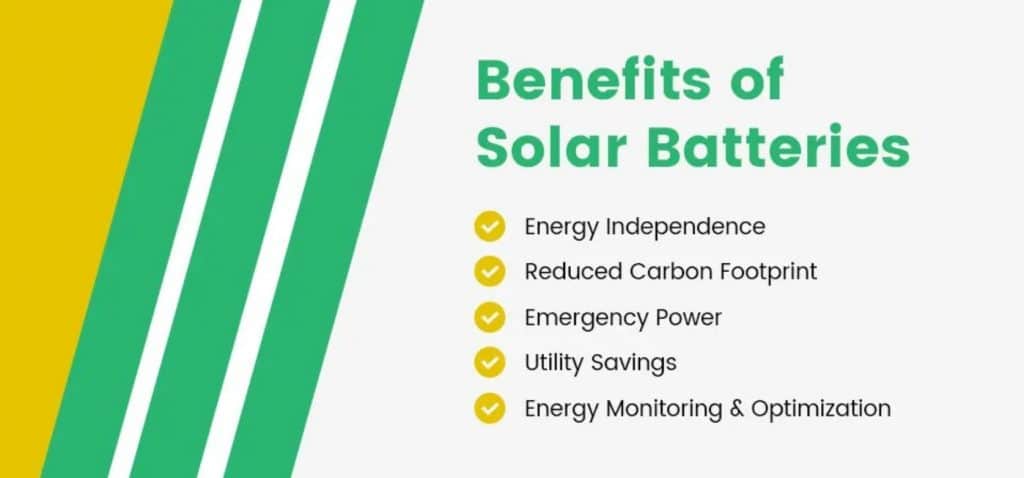
Battery backup does more than just keep your lights on during the occasional outage. It transforms your relationship with energy and provides lasting benefits that justify the investment.
Peace of Mind and Emergency Preparedness: Severe weather events seem to be increasing in frequency and intensity. Whether it’s a hurricane, ice storm, or summer thunderstorm, you gain the security of knowing your family will have power when your neighbors don’t. Your food stays fresh, your medical devices keep running, your home security system stays active, and you maintain a comfortable, normal environment even during extended grid failures.
Maximizing Your Solar Investment: With battery storage, you capture and use more of your own solar energy instead of sending it to the grid. If your utility has time-of-use rates, charging higher prices during evening peak hours, you can use stored solar power instead of buying expensive grid electricity. This optimization can increase your savings from your solar system.
Reducing Your Carbon Footprint: Every kilowatt-hour you use from your battery instead of the grid is clean solar energy displacing fossil fuels. Battery storage allows you to run your home on solar power 24 hours a day, reducing your environmental impact beyond what panels alone can achieve.
Gaining True Energy Independence: Rising utility rates affect every household budget. By generating and storing your own power, you insulate yourself from future rate increases and reduce your dependence on the utility company. You’re in control of your energy, not at the mercy of external factors that drive electricity prices higher year after year.
Frequently Asked Questions
How long can a solar battery power my home?
The duration depends on three factors: your battery’s capacity, how much power your home is using, and whether the sun is shining to recharge the battery. An average-sized battery powering only essential loads might last 12 to 24 hours on a single charge. If your panels are generating power during the day, they’ll recharge the battery while powering your home, effectively giving you unlimited backup duration as long as you manage your energy use wisely.
Can I add a battery to my existing solar panel system?
Yes, in most cases you can retrofit battery storage to an existing solar installation. This process is called AC coupling. Your existing panels and inverter continue to work as they always have, and the battery system adds on with its own inverter to manage the storage and backup functions. The installation is more straightforward if you have a modern inverter, but even older systems can usually be upgraded.
Do solar panels still charge the battery during a power outage?
Yes, this is one of the advantages of solar battery backup systems. As long as the sun is shining, your panels will continue generating electricity. That power can run your home’s loads in real time while recharging your battery. This solar recharging capability means you can potentially ride out multi-day outages without any reduction in your quality of life, something a generator can’t match without refueling.
Is a solar battery worth the cost?
The value depends on your situation and priorities. If you live in an area with frequent power outages, battery backup might save you from thousands of dollars in spoiled food, lost productivity, and hotel stays over the system’s lifetime. If you have critical power needs like medical equipment, the value is even clearer. Even if outages are rare in your area, the combination of energy bill savings through time-of-use optimization, protection from rising electricity rates, and increased home value can justify the investment. The peace of mind knowing you’re prepared for any emergency has real value that’s difficult to quantify but easy to appreciate when the next outage hits your neighborhood.
Take Control of Your Power with 8MSolar
Solar panels are a smart investment in clean energy and lower electricity bills, but they reach their full potential when paired with battery storage. While standard grid-tied systems will shut down during an outage for essential safety reasons, adding a battery transforms your solar installation into a comprehensive energy independence solution. You gain protection from blackouts, maximize the value of your solar generation, reduce your environmental impact, and insulate yourself from rising utility rates.
The technology has matured, costs have come down, and generous incentives make battery backup more accessible than ever. Whether you’re considering a new solar installation or looking to upgrade your existing system, now is an excellent time to explore your options for achieving true energy security.
Ready to power through the next outage without interruption? The experts at 8MSolar can design a custom solar and battery backup system tailored specifically for your home’s needs and your family’s priorities. We’ll help you determine the right size system, navigate available incentives, and guide you through every step of the installation process. Contact us today for a free, no-obligation consultation and take the first step toward complete energy independence.