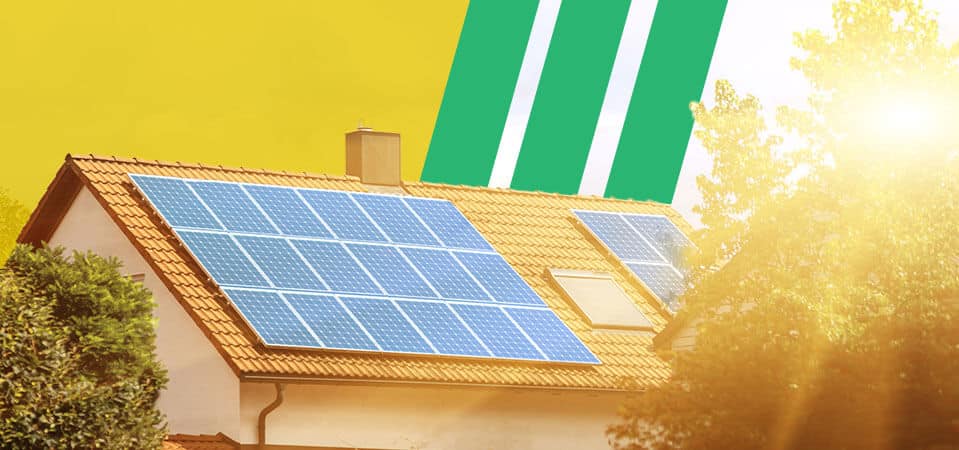
Solar energy is reshaping the global energy landscape at an unprecedented pace. Massive solar farms sprawl across deserts, floating solar panels cover reservoirs, and utility-scale projects are breaking records for clean energy production. In 2024 alone, global solar capacity grew by over 400 gigawatts, enough to power millions of homes and a sign that solar has moved from alternative energy to mainstream power source.
While utility-scale projects are reshaping our grid, the most exciting part of the future of solar energy is happening on your rooftop. The residential solar revolution depends on creating an intelligent, integrated energy ecosystem that gives you control, resilience, and independence from rising utility costs.
The future of residential solar isn’t decades away. It’s already here, and it looks nothing like the basic systems of even five years ago. Modern residential solar power systems have evolved into sophisticated energy hubs that do far more than generate electricity. They store power, charge your car, communicate with your home, and even use artificial intelligence to optimize your energy usage in real-time.
In this article, we’ll explore what defines a modern residential solar power system and dive into the four major trends that are transforming home energy right now. Whether you’re considering solar for the first time or looking to upgrade an older system, understanding these developments will help you make the smartest decision for your home’s energy future.
Table of Contents
- What Is a Modern Residential Solar Power System?
- Trend 1: The Integrated Home Ecosystem
- Trend 2: The EV as a Power Source (Vehicle-to-Home – V2H)
- Trend 3: Breakthroughs in Solar Panel Technology
- Trend 4: More Powerful and Affordable Battery Storage
- Frequently Asked Questions
- How to Prepare for the Future of Solar, Today
What Is a Modern Residential Solar Power System?
Today’s residential solar power systems bear little resemblance to their predecessors from a decade ago. What started as simple panels generating electricity has evolved into a complete home energy solution that integrates multiple technologies working in tandem.
The Core Components
At the foundation of every solar system, you’ll find three essential elements. Solar panels remain the most visible component, converting sunlight into direct current (DC) electricity. Modern panels have become remarkably efficient, with many residential units now exceeding 20% efficiency and some premium models pushing past 22%. These aren’t your grandfather’s solar panels, they’re engineered to capture more energy from direct sunlight and diffuse light on cloudy days.
The inverter serves as the brain of your system, converting that DC power into the alternating current (AC) electricity your home uses. Today’s inverters do much more than simple conversion. They monitor system performance, communicate with your utility, and in many cases, manage the flow of power between your panels, battery, and the grid.
Finally, the racking and mounting hardware secures your system safely to your roof or property. While it might seem like simple metal brackets, modern mounting systems are engineered to withstand decades of weather while maximizing panel angle and airflow for optimal performance.
The Energy Hub: Batteries and EV Chargers
What defines a modern residential solar power system is what happens beyond the core components. The addition of battery storage has transformed solar from a daytime-only solution into a 24/7 power source. Modern solar batteries store excess energy generated during sunny hours, then release it when the sun goes down or during peak rate periods when grid electricity costs the most.
Forward-thinking homeowners are now adding EV chargers to their solar systems, creating a complete energy ecosystem. When you charge your electric vehicle with solar power, you’re eliminating one of your household’s largest energy expenses. The average American drives about 40 miles per day, which translates to roughly 12 kWh of electricity for an EV. A properly sized residential solar power system can easily cover this demand while still powering your home.
Trend 1: The Integrated Home Ecosystem
The biggest shift in the future of solar energy is the move from standalone components to fully integrated systems. Your panels, battery, EV charger, and home appliances no longer operate independently, they communicate and coordinate to optimize your energy usage automatically.
Smart Panels as the Command Center
Smart electrical panels have created a quantum leap in home energy management. These intelligent panels replace your traditional breaker box with a connected system that can monitor and control power flow to every circuit in your home. During a power outage, a smart panel can automatically prioritize essential circuits—keeping your refrigerator, internet, and medical devices running while temporarily cutting power to less critical loads like your electric dryer.
Companies like Span and Lumin are leading this revolution, offering panels that integrate seamlessly with solar systems and provide real-time monitoring through intuitive smartphone apps. You can see which appliances are using power at any moment and make informed decisions about your energy consumption.
AI-Powered Energy Management
The future of residential solar isn’t just smart, it’s intelligent. Advanced software platforms use artificial intelligence and machine learning to optimize when your home uses solar power, when it charges your battery, and when it’s most profitable to sell excess energy back to the grid.
These systems learn your household’s energy patterns over time. They know when you run your dishwasher, when your air conditioning demand peaks, and when utility rates are highest. With this information, the AI can make split-second decisions that maximize your savings without any input from you. It might charge your battery during off-peak solar production hours when rates are low, then discharge that power during expensive peak periods while ensuring you have backup power available in case of an outage.
Trend 2: The EV as a Power Source (Vehicle-to-Home – V2H)
Perhaps the most revolutionary development in the future of solar energy for homeowners is the emergence of bidirectional charging technology. This innovation transforms your electric vehicle from a consumer of energy into a massive battery on wheels that can power your entire home.
Defining Vehicle-to-Home (V2H)
Vehicle-to-home technology, or V2H, allows electricity to flow both ways through your EV charger. During normal operation, your solar panels charge your EV just like any other appliance. But when the grid goes down or during peak rate periods, your EV can reverse that flow and send power back into your home.
The numbers are staggering. The average electric vehicle has a battery capacity between 60 and 100 kWh—roughly five to seven times larger than a typical home solar battery. The average American home uses about 30 kWh per day, which means a fully charged EV could theoretically power your entire house for two to three days without any solar input at all.
The Impact of V2H on Energy Resilience
For homeowners in North Carolina, where severe weather can knock out power for days at a time, V2H technology offers unprecedented resilience. Imagine riding out a multi-day outage with your air conditioning running, your refrigerator preserving your food, and your family staying connected, all powered by the same vehicle sitting in your driveway.
The economics are equally compelling. When you combine solar panels with battery storage and V2H capability, you create a system that can essentially eliminate your electricity bill. Your solar panels charge your battery and your EV during the day. At night or during peak rate periods, you draw from your battery or EV instead of buying expensive grid power. During prolonged cloudy periods, you have massive backup capacity in your vehicle’s battery.
Trend 3: Breakthroughs in Solar Panel Technology
While batteries and smart systems grab headlines, solar panels themselves continue to evolve. The future of residential solar power systems depends on panels that generate more power from less space, work better in challenging conditions, and last longer than ever before.
Higher Efficiency as the New Norm
Today’s premium residential solar panels routinely achieve efficiency ratings above 22%, with laboratory prototypes pushing toward 30%. This matters tremendously for homeowners with limited roof space. A modern high-efficiency panel can generate 400 to 450 watts compared to 250 to 300 watts for panels from just a few years ago.
Technologies like PERC (Passivated Emitter and Rear Cell), TOPCon (Tunnel Oxide Passivated Contact), and bifacial panels are becoming standard in residential installations. Bifacial panels are particularly exciting as they can capture sunlight from both the front and back surfaces, generating up to 30% more power by reflecting light off your roof or the ground below.
These efficiency gains mean you need fewer panels to meet your energy needs. That’s crucial for homes with limited roof space, but also for keeping installation costs down and maximizing your return on investment.
What’s on the Horizon: Perovskites and Beyond
Looking further ahead, perovskite solar cells are one of the most promising developments in photovoltaic technology. These next-generation cells use a crystal structure that’s cheaper to produce than traditional silicon and can theoretically achieve much higher efficiency rates. Some researchers have created perovskite-silicon tandem cells with efficiency above 30% in laboratory settings.
While commercial perovskite panels are still a few years away from widespread availability, their potential impact on the future of solar energy is enormous. They could dramatically reduce the cost per watt of solar installations while increasing the total power output, making solar even more attractive for residential applications.
Trend 4: More Powerful and Affordable Battery Storage
Solar panels only generate electricity when the sun shines, but you need power 24 hours a day. That’s where battery storage comes in, and this technology has seen major improvements in recent years. The future of residential solar is inextricably linked to better, cheaper, more capable batteries.
New Chemistries for Safety and Longevity
The industry is quickly moving away from traditional lithium-ion batteries toward safer, longer-lasting alternatives. Lithium iron phosphate (LFP) batteries are becoming the new standard for residential solar storage. These batteries offer several advantages: they’re more stable and less prone to thermal runaway, they can be cycled more times before degradation, and they perform better across a wider temperature range.
Modern LFP batteries can handle 6,000 to 10,000 charge cycles before dropping to 70% capacity—meaning they can last 15 to 20 years in typical residential use. Compare that to older battery technologies that might only last 5 to 10 years, and the economics become much more favorable.
Increased Capacity for Whole-Home Backup
Today’s residential batteries have grown in capacity to the point where whole-home backup is not just possible but practical. Systems like the Tesla Powerwall 3, with 13.5 kWh of usable capacity and 11.5 kW of continuous power output, can run most homes entirely off-grid for extended periods when paired with adequate solar panels.
Even more impressive is the ability to stack multiple batteries for homes with higher energy needs. A two or three-battery system can power everything in your home, including energy-intensive appliances like air conditioners, electric dryers, and well pumps. This wasn’t feasible with earlier battery technology, which required homeowners to choose which circuits to back up and which to leave unpowered during outages.
The cost of battery storage has also plummeted. Prices have dropped by more than 80% over the past decade, making what was once a luxury add-on into a standard component of most new residential solar power systems.
Frequently Asked Questions
Should I wait for future solar technology before buying a system?
This is one of the most common questions we hear, and the answer is almost always no. While solar technology continues to improve, the systems available today are highly efficient, reliable, and cost-effective. Every month you wait is a month you’re paying your utility company instead of investing in your own energy independence. The best time to go solar is when you’re ready and the technology meets your needs, which it absolutely does right now.
What is V2H and how is it different from V2G (Vehicle-to-Grid)?
V2H (Vehicle-to-Home) allows your electric vehicle to power your house during outages or peak rate periods. V2G (Vehicle-to-Grid) goes a step further, allowing your EV to send power back to the utility grid for compensation. V2H is primarily about energy independence and backup power for your home, while V2G is about earning revenue by supporting the grid during high-demand periods. Currently, V2H technology is more readily available for homeowners, though V2G pilot programs are expanding in some areas.
How does the future of solar energy affect home values?
Study after study shows that homes with solar installations sell for more than comparable homes without solar. As solar technology becomes more sophisticated, this value premium is likely to increase. Buyers recognize that a modern residential solar power system means lower utility bills, energy independence, and protection against rising electricity rates. In many markets, solar is moving from a nice-to-have feature to an expected amenity, much like central air conditioning or a two-car garage.
How to Prepare for the Future of Solar, Today
The future of solar energy is unfolding right now, and it’s more exciting than generating electricity from sunlight. Today’s residential solar power systems are energy hubs that combine high-efficiency panels, intelligent battery storage, EV charging capability, and AI-powered management software into a seamless ecosystem.
This transformation means that going solar in 2025 isn’t just about reducing your electricity bill—though you’ll certainly do that. It’s about taking control of your energy future, protecting your family from grid instability, and positioning your home at the forefront of the clean energy revolution.
The key to maximizing the value of solar is thinking holistically. Don’t just install panels, create a complete ecosystem that includes battery storage for nighttime power and backup, an EV charger to eliminate your transportation fuel costs, and smart monitoring systems that optimize every watt. This approach is what defines the future of residential solar, and it’s available to you right now.
The future of home energy is here. Don’t get left behind. Future-proof your home with a free solar consultation from our expert team at 8MSolar today. We’ll help you design a residential solar power system that meets your needs now and adapts to your changing energy demands for decades to come.