Investing in solar is a major decision, and you’re asking the right questions: What are the downsides? What are the real solar panel problems people face? This kind of due diligence is smart. Any company that tells you solar energy is perfect for everyone, in every situation, without any drawbacks is either uninformed or dishonest.
The truth is that solar panels do have disadvantages. The upfront cost can be large. They don’t generate power at night. Not every home is an ideal candidate. These are real concerns that deserve real answers.
But here’s what’s changed: Nearly every major disadvantage that existed a decade ago now has a practical solution. Modern technology, smarter financing options, and better installation practices have addressed the vast majority of solar panel problems. This guide will walk you through the seven biggest disadvantages of solar panels and show you exactly how today’s solutions turn these potential dealbreakers into manageable considerations.
Table of Contents
- Disadvantage #1: The High Upfront Cost
- Disadvantage #2: Solar Panels Don’t Work at Night (Intermittency)
- Disadvantage #3: Grid-Tied Systems Shut Down During Outages
- Disadvantage #4: Not Every Home is a Good Candidate
- Disadvantage #5: Finding a Reputable Installer Can Be Challenging
- Disadvantage #6: The Environmental Impact of Manufacturing
- Disadvantage #7: Complex and Changing Government Policies
- Frequently Asked Questions
- Are Solar Panels Worth It?

Disadvantage #1: The High Upfront Cost
The single biggest barrier to solar adoption is the initial investment. A residential solar installation can cost between $15,000 and $30,000 before incentives. For most families, that’s a big financial commitment. This upfront cost is often the first reason people hesitate when considering solar energy.
The concern is understandable. Even when you know the long-term savings are worth the investment, finding that initial capital can be challenging. Many homeowners wonder if they should wait until they have more cash available or if there’s a better time to invest.
Financing and Incentives
The solar industry has evolved to make installation accessible without requiring a large cash payment upfront. Today, most homeowners don’t pay cash for their systems. Instead, they use one of several financing options that can actually lower their monthly energy costs from day one.
Solar loans work similarly to auto loans or home improvement loans. You own the system, get all the benefits and incentives, and make manageable monthly payments. Many solar loans are structured so your monthly payment is less than your previous electricity bill, creating immediate positive cash flow.
Solar leases and Power Purchase Agreements (PPAs) require zero money down. A solar company installs panels on your roof at their expense, and you pay them a lower rate for the electricity those panels produce. While you won’t own the system or receive the tax credits, you’ll still save money on your electricity bills without any upfront investment.
Many states and local utilities offer additional rebates, tax credits, or performance payments. North Carolina residents, for example, have access to various Duke Energy incentive programs that can further reduce installation costs. A qualified local installer will know exactly which incentives you’re eligible for and how to maximize your savings.
When you factor in financing options and incentives, the return on investment for solar becomes compelling. Most systems pay for themselves within 7 to 12 years, then continue generating free electricity for another 15 to 20 years or more. Over the lifetime of the system, homeowners save $20,000 to $50,000 or more compared to continuing with grid electricity.
Disadvantage #2: Solar Panels Don’t Work at Night (Intermittency)
Photovoltaic cells require sunlight to generate electricity. When the sun sets, your panels stop producing power. On heavily overcast days, production drops. This intermittency means solar panels alone can’t provide round-the-clock electricity for your home.
Without a solution for nighttime power, grid-tied solar systems must pull electricity from the utility grid after dark. While net metering programs compensate for this by crediting you for excess daytime production, you’re still dependent on the grid for reliable 24-hour electricity.
Modern Solar Battery Storage
Battery storage has become the standard solution for solar intermittency. Modern lithium batteries store excess solar energy produced during peak sunlight hours for use after sunset or during cloudy weather. This technology has matured quickly over the past five years, becoming more affordable, more reliable, and more efficient.
Systems like the Tesla Powerwall, LG Chem RESU, and Enphase IQ Battery can store 10 to 20 kilowatt-hours or more of electricity. That’s enough to power most homes through the night and into the following morning. During extended cloudy periods, these batteries can be recharged from the grid during off-peak hours when electricity rates are lowest.
Battery storage increases your energy independence. Instead of sending excess solar production back to the grid for modest credits, you store it for your own use. This is valuable in areas with Time-of-Use (TOU) electricity rates, where power costs more during evening peak hours. Your battery allows you to use cheap solar energy you generated during the day instead of expensive grid power in the evening.
The combination of solar panels and battery storage creates a resilient home energy system that works around the clock. While batteries add to the cost, the long-term value they provide justifies the investment.
Disadvantage #3: Grid-Tied Systems Shut Down During Outages
This catches many new solar owners by surprise. During a power outage, your standard grid-tied solar system will shut down automatically, even if the sun is shining brightly. Your home will lose power just like your neighbors without solar.
This safety feature protects utility workers repairing power lines. If your solar panels continued feeding electricity into the grid during an outage, they could electrocute workers who assume the lines are dead. While this shutdown is necessary for safety, it means solar panels alone don’t provide backup power during emergencies.
Batteries and Grid-Forming Inverters
A solar system paired with battery storage creates what’s called a microgrid. During an outage, your system safely disconnects from the utility grid and switches to battery power. Your solar panels continue generating electricity during the day to recharge the batteries, and those batteries power your home day and night until grid power is restored.
This setup provides energy security. During hurricanes, ice storms, or other events that knock out power for days, your home can continue operating normally. You’ll keep your refrigerator running, maintain heating or cooling, and power essential devices while your neighbors are in the dark.
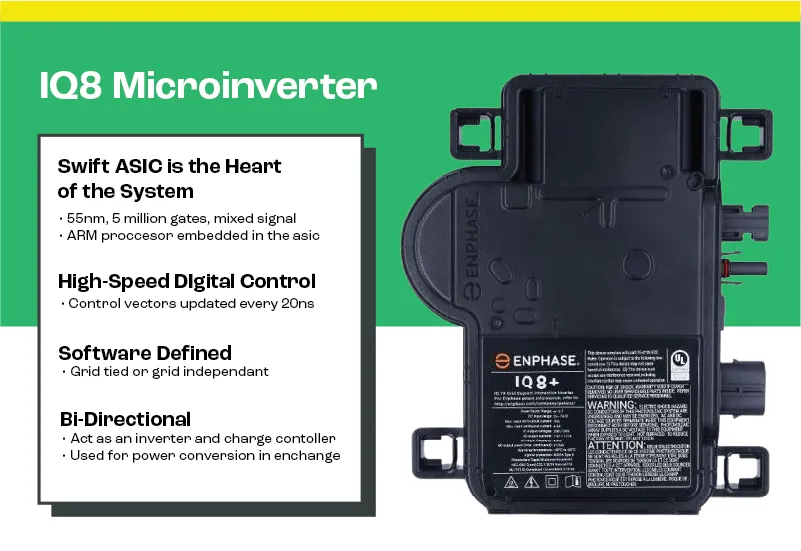
Advanced microinverter systems like the Enphase IQ8 offer an innovative feature called Sunlight Backup. Even without a battery, these systems can provide limited power to essential circuits during daytime hours when the sun is shining. While not as comprehensive as full battery backup, this technology can keep appliances running during daylight hours at a lower cost than full battery storage.
The key is working with an installer who designs your system with backup power in mind. Not all solar systems are configured for outage protection, even when they include batteries. The system has to include the right equipment and wiring to safely island your home from the grid during emergencies.
Disadvantage #4: Not Every Home is a Good Candidate
Physical limitations can make some homes poor candidates for solar installation. These limitations include roof age and condition, available roof space, shading from trees or nearby buildings, roof orientation, and the capacity of your home’s electrical panel.
An old roof nearing the end of its lifespan should be replaced before installing solar panels. Solar panels last 25 to 30 years or more, and you don’t want to remove and reinstall them after just a few years to replace the roof underneath. Heavy shading from mature trees can reduce solar production. A small roof might not have enough space for panels to offset a meaningful portion of your electricity usage.
Professional Site Assessments and Modern Tech
A professional site assessment is the first step in determining if solar makes sense for your home. Reputable installers like 8MSolar perform detailed evaluations before providing a quote. This assessment examines your roof’s age, condition, and structural integrity. If your roof needs replacement soon, a quality installer will recommend addressing that first.
Modern high-efficiency solar panels generate more power per square foot than older models. Today’s premium panels can produce 400 watts or more per panel, compared to 250 to 300 watts for panels from just a few years ago. This means you need fewer panels to generate the same amount of electricity, making solar viable for homes with limited roof space.
Microinverters have revolutionized how solar systems handle partial shading. Traditional string inverter systems see production drop across all panels when just one is shaded. Microinverter systems optimize each panel independently, so shading on one panel doesn’t affect the others. This technology makes solar practical for homes with unavoidable shading issues.
If your roof isn’t suitable due to orientation, condition, or shading, ground-mounted systems offer an alternative. If you have available yard space, panels can be installed on ground-mounted racks positioned for optimal sun exposure. While ground mounts cost slightly more than roof installations, they can be the perfect solution for homes with unsuitable roofs.
Older homes may need electrical panel upgrades to handle solar power safely. A 100-amp or older service panel might need replacement with a modern 200-amp panel. While this adds to project costs, it’s a valuable home improvement that increases safety and supports future electrical needs beyond just solar.
Disadvantage #5: Finding a Reputable Installer Can Be Challenging
The quality of your installer is as important as the quality of your equipment. A poorly installed system can underperform, void warranties, damage your roof, or create safety hazards. Unfortunately, the rapid growth of the solar industry has attracted some companies more focused on quick sales than quality installation.
Common problems with unreliable installers include disappearing after installation, providing poor customer service, using substandard equipment, employing undertrained installation crews, and offering vague or misleading warranty coverage.
A Homeowner’s Vetting Checklist
Protect yourself by vetting potential installers before signing any contract. Here are the credentials and characteristics to look for:
NABCEP certification demonstrates that installers have met rigorous training and experience requirements. This credential isn’t mandatory, but it signals professionalism and expertise.
Strong local reviews and references from recent customers provide real-world insight into an installer’s quality and reliability. Check multiple review platforms and ask for references you can contact directly.
At least five to ten years in business indicates stability. While newer companies aren’t necessarily bad, established firms have proven they can weather industry changes and will be around to honor long-term warranties.
Comprehensive workmanship and equipment warranties protect your investment. Quality installers stand behind their work with 10-year or longer workmanship warranties and offer 25-year equipment warranties through manufacturers.
Transparent, detailed quotes clearly break down equipment costs, installation labor, permit fees, and any additional expenses. They specify the exact equipment models that will be used. Avoid installers who provide vague quotes or pressure you to sign quickly.
Local presence and ownership mean your installer understands local building codes, utility requirements, and regional incentive programs. Local companies have reputations to protect in the community.
Disadvantage #6: The Environmental Impact of Manufacturing
Solar panels are often promoted as environmentally friendly, but their manufacturing process does have environmental costs. Producing solar panels requires energy, raw materials like silicon and metals, and various chemicals. The mining and processing of these materials can impact local ecosystems.
This concern is valid. While solar panels generate clean energy during their operational life, their production isn’t completely without environmental impact. Some critics argue this undermines solar’s environmental benefits.
Short Energy Payback Periods and Recycling
The main metric for evaluating solar’s environmental impact is the Energy Payback Period (EPBP). This measures how long it takes for a solar panel to generate the same amount of clean energy that was required to manufacture it.
In 2025, the EPBP for crystalline silicon solar panels is between one and two years. This means a panel pays back its manufacturing energy cost in just one to two years, then continues generating completely carbon-free electricity for another 25 to 30 years. Over its lifetime, a solar panel generates 10 to 20 times more clean energy than was used to produce it.
Manufacturing processes have become more efficient as the industry has matured. Modern solar manufacturers use renewable energy in their facilities, recycle materials, and continuously improve efficiency. The carbon footprint of solar panel production has dropped over the past decade.
The solar panel recycling industry is growing rapidly. At the end of their useful life, solar panels can be recycled to recover valuable materials like silicon, silver, glass, and aluminum. While recycling infrastructure is still developing, responsible manufacturers and installers are implementing take-back programs to ensure proper disposal.
When you compare solar’s full lifecycle environmental impact to fossil fuel electricity generation, solar wins decisively. Coal and natural gas power plants emit greenhouse gases throughout their entire operational life. Solar panels have a modest upfront environmental cost, then produce clean energy with zero emissions for decades.
Disadvantage #7: Complex and Changing Government Policies
Solar incentives, net metering policies, and regulations vary by state and utility company. These policies can change over time, creating uncertainty about the long-term value of your solar investment. What’s generous today might be less favorable in the future.
Net metering programs, which credit you for excess solar electricity sent to the grid, have faced challenges in some states. Some utilities have reduced credit rates or imposed additional fees on solar customers. Federal tax credits have an uncertain future beyond their current expiration dates. Navigating this complex and shifting policy landscape can be overwhelming.
Partnering with a Local Expert
This is where working with an established local installer becomes invaluable. A quality local company like 8MSolar stays current on federal, state, and utility policies that affect solar economics. They can design systems that maximize value under current regulations and remain resilient if policies change.
For example, as net metering becomes less generous in some areas, battery storage becomes more valuable. An expert installer will evaluate your utility’s rate structure and net metering policies to recommend whether adding a battery makes economic sense for your situation.
Local installers also help you navigate the permitting and interconnection process, ensuring your system meets all local building codes and utility requirements. They maintain relationships with local building departments and utility companies, streamlining approval processes that can otherwise be frustrating and time-consuming.
The best protection against policy changes is a well-designed system that provides value through multiple mechanisms: reducing your electricity consumption, storing energy for later use, providing backup power during outages, and taking advantage of available incentives. A system designed holistically provides benefits regardless of specific policy details.

Frequently Asked Questions
What are the biggest problems with solar panels?
The most common solar panel problems include high upfront costs, intermittent energy production at night and during cloudy weather, lack of backup power during grid outages with standard systems, roof suitability issues, and finding a trustworthy installer. Modern solutions address nearly all of these concerns through financing options, battery storage, professional site assessments, and careful installer vetting.
Do solar panels require a lot of maintenance?
Solar panels require minimal maintenance. They have no moving parts and are designed to withstand decades of weather exposure. Most systems only need occasional cleaning to remove dust, pollen, or debris, and periodic inspections to ensure optimal performance. Reputable installers offer monitoring systems that alert you to any performance issues. Annual professional inspections can help catch minor problems before they become serious, but day-to-day maintenance requirements are extremely low.
Will solar panels damage my roof?
When properly installed by qualified professionals, solar panels should not damage your roof. In fact, panels can protect the portion of roof they cover from weather and UV damage. Quality installers assess roof condition before installation, use proper mounting techniques that maintain roof integrity, and seal all penetrations to prevent leaks. If your roof is old or in poor condition, a reputable installer will recommend replacement before solar installation to avoid complications down the road.
Are Solar Panels Worth It?
The biggest disadvantages of solar panels from a decade ago now have proven solutions. High costs are offset by financing options and generous incentives. Intermittency is solved with battery storage. Backup power is achievable with the right system design. Modern technology accommodates most home situations. Reputable installers are identifiable through careful vetting. Manufacturing impacts are minimal compared to decades of clean energy production. Policy complexity is navigable with expert guidance.
A well-designed solar system from a reputable installer can overcome nearly all of these traditional disadvantages. The key is approaching your solar decision with realistic expectations and thorough research. Solar panels aren’t magic, and they’re not right for every single home. But for most homeowners, the disadvantages are outweighed by the advantages: decades of reduced electricity costs, increased energy independence, protection from rising utility rates, and environmental benefits.
The decision to go solar isn’t a risk. It’s a calculated investment in your home’s future, backed by mature technology, proven savings, and comprehensive warranties. The disadvantages are real, but they’re manageable. The advantages are substantial and long-lasting.
Ready to see how a modern solar system can overcome these challenges for your home? Get a transparent, no-obligation solar quote from our team of experts at 8MSolar. We’ll assess your situation honestly, design a system that addresses your concerns, and show you what solar can do for you.