You want to go solar, but a single question is holding you back: “What will my HOA say?”
If you’re like most North Carolina homeowners, you’ve heard horror stories about homeowners associations blocking solar installations or demanding costly modifications that kill the financial benefits. Maybe you’ve even put off your solar plans because you assumed your HOA would say no.
Those days are over. Thanks to the game-changing NC Solar Access Act, the question is no longer if you can install solar panels in your HOA community, but how to do it smoothly and efficiently. North Carolina law now firmly protects your right to harness the sun’s power, and your HOA can no longer stand in your way.
This guide will explain your rights under North Carolina’s solar HOA laws and provide a roadmap for a hassle-free HOA approval process. By the end, you’ll understand what your association can and can’t restrict, and you’ll have the confidence to move forward with your solar installation.
The New Law of the Land
North Carolina took a stand for homeowner energy rights when it passed solar access legislation. This landmark law changed the relationship between homeowners and their associations when it comes to renewable energy installations.
What the Law Explicitly States
The NC Solar Access Act makes it clear: a homeowners association “shall not prohibit, or have the effect of prohibiting,” the installation of solar panels for residential use. This language is intentionally strong. Your HOA cannot create rules, restrictions, or procedures that effectively block your solar installation, even if they don’t explicitly say “no solar panels allowed.”
The law recognizes that energy independence isn’t just a personal choice but a state priority. North Carolina understands that widespread solar adoption benefits everyone through reduced strain on the electrical grid, lower energy costs, and environmental protection. Your HOA must respect this priority.
What Your HOA Can Still Do (The Rules of the Game)
While the law protects your right to install solar panels, it also acknowledges that HOAs have legitimate interests in maintaining community standards and property values. The key phrase is “reasonable restrictions.” Understanding these limitations helps you plan your installation and avoid unnecessary conflicts.
Location restrictions are the most common type your HOA might impose. They can require panels to be placed on roof surfaces that don’t face the street or common areas. However, this restriction has important limits we’ll discuss in the next section.
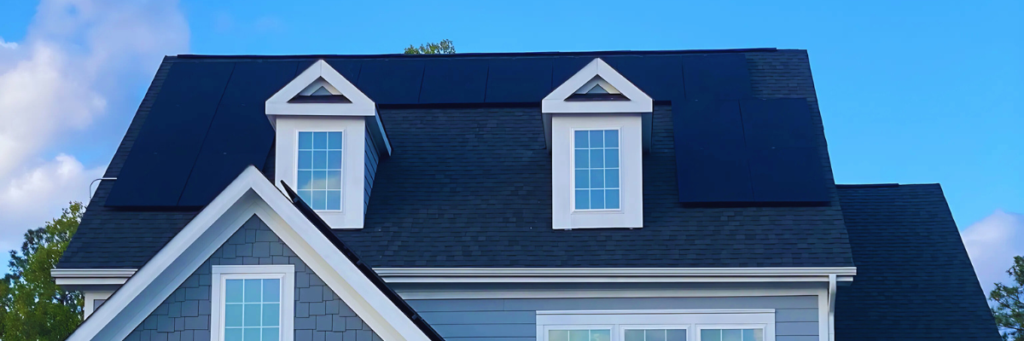
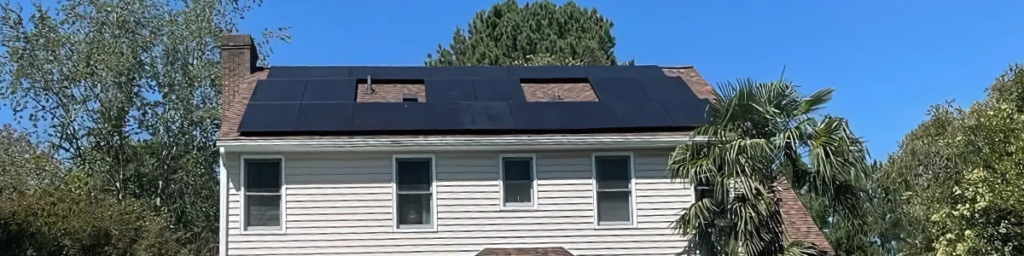
Aesthetic requirements allow your HOA to maintain visual consistency in the community. They might require panels to be flush with your roofline, mandate specific colors (typically black-on-black panels), or require that wiring and equipment aren’t visible from the ground level.
Safety and code compliance requirements make sure your installation meets all relevant building codes and doesn’t create hazards. Your HOA can require proper permits, professional installation, and compliance with electrical safety standards.
The critical point is that all these restrictions must be truly “reasonable.” They can’t be used as backdoor methods to prevent solar installations or make them prohibitively expensive.
The “10% Production” Rule: Your Most Powerful Tool
This section covers the most important protection in North Carolina’s solar access law. Understanding and using this rule can make the difference between a successful solar installation and a frustrating battle with your HOA.
What is the 10% Rule?
Here’s where North Carolina’s law gets really smart. The legislature recognized that HOAs might try to comply with the letter of the law while violating its spirit. They might say, “Sure, you can install solar panels… on the north-facing roof where they’ll barely produce any electricity.”
The 10% rule prevents this kind of sabotage. If your HOA’s requested modification to your solar panel placement would reduce your system’s annual energy production by more than 10% compared to the prime location, that request legally “has the effect of prohibiting” solar installation and becomes unenforceable.
For example, if your south-facing roof installation would produce 12,000 kWh annually, your HOA can’t force you to move the panels to a location that produces less than 10,800 kWh annually. This protection guarantees that your solar installation remains financially viable.
How to Use This Rule to Your Advantage
The 10% rule is why working with a professional solar installer is essential. Companies like 8MSolar provide energy production estimates that serve as official evidence in any HOA dispute. These calculations are based on modeling that accounts for roof angle, shading, local weather patterns, and panel specifications.
When you receive your solar design, you’ll get production numbers for different roof sections. If your HOA requests changes, your installer can quickly calculate whether the modification violates the 10% rule. This approach transforms what might otherwise become an emotional argument into a straightforward legal matter.
Most HOAs, when presented with clear production data showing their requested changes would exceed the 10% threshold, will work with you to find alternatives that maintain system effectiveness.
A Step-by-Step Guide to a Smooth HOA Solar Approval
Most North Carolina homeowners find the HOA approval process much easier than expected when they follow a systematic approach. Here’s the proven method for securing quick approval while maintaining positive relationships with your association.
Step 1: Review Your HOA’s Covenants
Start by locating your community’s architectural guidelines or exterior modification requirements. These documents, usually available through your HOA management company or community website, will outline the specific procedures and requirements for solar installations.
Look for sections covering “exterior modifications,” “architectural improvements,” or “renewable energy systems.” Some newer HOAs have specific solar panel guidelines that streamline the process. Understanding these requirements prevents surprises and helps you prepare a complete application.
Pay attention to application deadlines, required documentation, and review timelines. Many HOAs have monthly architectural review board meetings, so timing your submission correctly can speed up the approval process.
Step 2: Get a Professional, HOA-Compliant Solar Design
The foundation of a successful HOA application is a professional solar design that maximizes energy production while respecting common association guidelines. Experienced installers understand HOA requirements and can design systems that meet aesthetic standards without sacrificing performance.
Your solar design should include detailed roof plans showing exact panel placement, elevation views showing how the installation will look from street level, and production estimates for the proposed configuration. This documentation demonstrates professionalism and makes it easy for your HOA to visualize the finished project.
Professional installers also stay current with the latest high-efficiency panels and mounting systems that offer better aesthetics. Modern solar installations look much cleaner and more integrated than older systems, addressing traditional HOA concerns.
Step 3: Submit a Complete and Professional Application
A winning HOA application includes several components that demonstrate you’ve done your homework and respect the community’s standards.
Your site plan should clearly show the proposed panel locations, including measurements and distances from roof edges. Visual mockups or renderings help board members understand how the installation will appear from different angles.
Include equipment specifications for your solar panels, inverters, and mounting systems. This documentation shows you’re using quality components and professional installation methods.
Your cover letter should be respectful and informative. Briefly explain your project, reference your compliance with HOA guidelines, and mention the NC Solar Access Act if you anticipate any issues. Keep the tone collaborative rather than confrontational.
Step 4: Navigating a Denial or Modification Request
Don’t panic if your HOA requests changes or initially denies your application. Most concerns can be resolved through clear communication and data.
First, carefully read their reasoning. Are they requesting aesthetic changes, different placement, or additional documentation? Understanding their concerns helps you address them.
If they request location changes, have your solar installer calculate the production impact. If the changes would reduce production by more than 10%, you have legal grounds to maintain your original design while still working collaboratively to address their concerns.
Many apparent “denials” are actually requests for more information or minor modifications. Approach these discussions as problem-solving opportunities rather than battles.
Frequently Asked Questions about NC’s HOA Solar Laws
Can my HOA force me to put panels only on the back of my house?
Only if moving them to the back roof does not decrease your system’s annual energy production by more than 10% compared to the optimal location. In most North Carolina homes, south-facing roofs outperform north-facing installations, making such requirements unenforceable under state law.
Does the Solar Access Act apply to townhomes or historic districts?
The Solar Access Act applies to most residential properties, including many townhomes. Properties within designated historic districts may have different rules governed by local historic preservation ordinances. Some townhome communities have complex ownership structures that can affect solar installations. It’s best to confirm your situation with an experienced local installer.
What if my HOA’s rules were written before the 2022 law was passed?
State law supersedes any older HOA covenants that outright prohibit solar installations. Existing restrictions that conflict with the Solar Access Act are unenforceable. However, reasonable restrictions that don’t have the effect of prohibiting solar remain valid.
Can my HOA make me use a specific color of solar panel?
Possibly. HOAs can often set aesthetic guidelines, such as requiring black-on-black panels instead of panels with visible silver frames, as long as these requirements don’t significantly increase the cost or reduce the system’s effectiveness. Most modern solar panels come in aesthetic options that satisfy HOA requirements without performance penalties.
Go Solar with Confidence in Your HOA Community
North Carolina’s Solar Access Act has changed the solar landscape for homeowners in HOA communities. Your association is now a partner to work with, not a barrier to overcome. The law has empowered homeowners while maintaining community standards, making smooth solar approval the standard rather than the exception.
The key to success is combining your legal rights with the expertise of an experienced local installer who understands the approval process inside and out. With proper preparation, professional design, and clear communication, most North Carolina homeowners find their HOA approval process straightforward and stress-free.
The financial benefits of solar energy are too great to let uncertainty hold you back. Between federal tax credits, net metering benefits, and long-term energy savings, solar installations in North Carolina pay for themselves within 6-8 years and continue generating savings for decades.
Your HOA community can be an ideal place for solar installation. Many neighbors who see your successful project become interested in their own solar installations, creating a positive cycle that benefits property values and community sustainability.
Stop wondering and start saving. Get a free solar design that meets HOA guidelines and maximizes your savings. Schedule your consultation with 8MSolar today and take the first step toward energy independence with complete confidence in your HOA approval.